

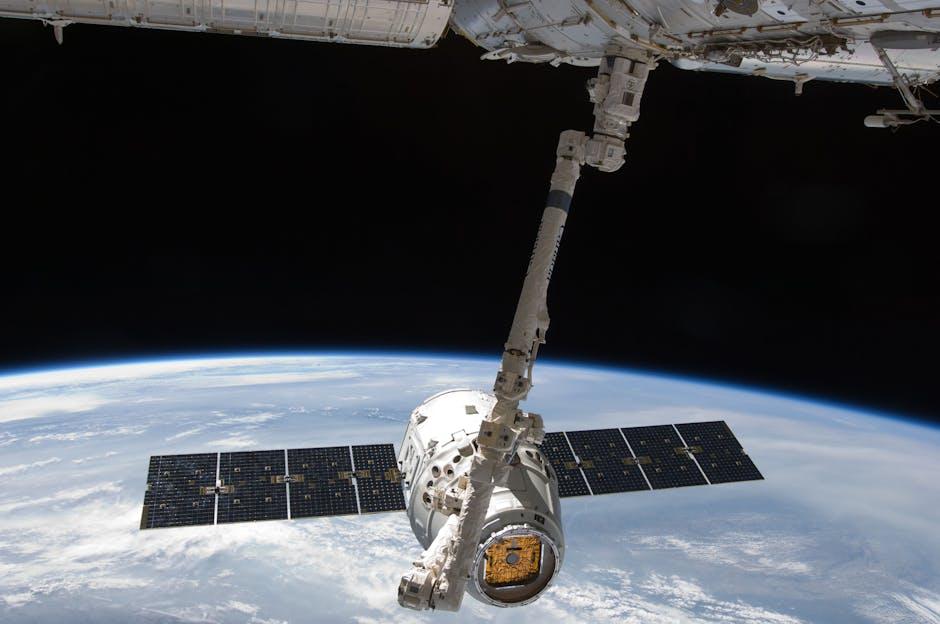
From reusable rockets to AI-guided probes, a wave of new technology is redrawing the map of space exploration. Launches are accelerating at a record pace, costs have fallen sharply with booster reuse, and a broader cast of players-from national agencies to startups and universities-is reaching the Moon, near-Earth asteroids, and beyond. In just two years, a spacecraft nudged an asteroid off course, a billion-dollar telescope began rewriting cosmic history, and new landers from India and Japan touched down with unprecedented precision.
What’s changing is not only who goes to space, but how missions are conceived and executed. Advances in propulsion, autonomy, miniaturized sensors, and on-orbit manufacturing are shrinking timelines and budgets while expanding scientific ambition. As NASA’s Artemis program targets a sustained lunar presence and commercial heavy-lift vehicles promise larger, cheaper payloads, the center of gravity is shifting from bespoke, once-a-decade flagships to faster, iterative campaigns.
This article examines the technologies behind the shift-from reusable launch systems and small satellites to AI navigation and in-situ resource tools-and how they are reshaping the economics, risks, and geopolitical stakes of the new space age.
Table of Contents
- Artificial intelligence takes the controls in mission planning and navigation as agencies require transparent models red team testing and human oversight
- Reusable launch economics reshape exploration budgets and timelines with calls for open pricing data diversified suppliers and dual manifest strategies
- Mini satellites crowd low Earth orbit raising collision risk while regulators set debris removal targets shared tracking and space traffic rules
- Laser links and onboard autonomy expand deep space communications recommending investment in optical ground stations cross link standards and fault tolerant software
- To Wrap It Up
Artificial intelligence takes the controls in mission planning and navigation as agencies require transparent models red team testing and human oversight
Artificial intelligence is moving from pilot projects to the flight deck, optimizing trajectories, coordinating formations, and updating guidance in-flight as conditions change. Space agencies and prime contractors are pairing this acceleration with stricter guardrails, writing procurement language that mandates explainable pipelines, testable behavior, and auditable decisions. Programs now emphasize measurable reliability over hype, requiring that algorithms disclose assumptions, cope with degraded sensors, and fail gracefully under radiation or comms gaps.
- Transparency by design: model cards, data lineage, and rationale traces exposed to mission assurance teams.
- Red-team campaigns: adversarial scenarios in simulation and hardware-in-the-loop to probe spoofing, GPS loss, and sensor drift.
- Human-in-the-loop authority: shadow-mode trials, delegated limits, and explicit go/no‑go controls with continuous oversight.
- Fail-safe autonomy: watchdogs, safe-mode fallbacks, and bounded action spaces to contain errors.
- Independent V&V: third-party audits, reproducible test sets, and mission-time monitoring with immutable logs.
The payoffs are already visible in operations. Edge-deployed models are trimming hours from maneuver planning and enabling faster responses to conjunction alerts, while onboard perception improves situational awareness beyond ground latency. In cislunar and deep-space campaigns, learning-driven guidance and terrain-relative navigation are sharpening landing precision and docking reliability-without removing human judgment from the loop.
- Trajectory optimization: continuous replanning for fuel-efficient burns and debris avoidance.
- Optical and terrain-relative navigation: starfield, landmark, and plume-aware sensing for high-precision state estimation.
- Autonomous rendezvous and docking: robust to sensor dropouts and lighting extremes, with human override.
- Swarm and formation flight: distributed coordination under limited bandwidth and intermittent contact.
- Operations agility: fewer uplink cycles, quicker anomaly triage, and more observation time for science.
Reusable launch economics reshape exploration budgets and timelines with calls for open pricing data diversified suppliers and dual manifest strategies
Launch cost curves flattened by reusability are forcing finance chiefs to rethink mission accounting and schedule risk. With marginal prices per kilogram falling and cadence rising, programs are shifting from lump-sum, bespoke liftoffs to repeatable, service-like buys. Yet procurement officers note that the “all-in” bill still swings on opaque items-range fees, integration changes, insurance riders, and delay penalties-complicating year-ahead budgeting. In response, agencies and venture-backed operators are pressing for standardized, open pricing data to improve comparability and hedge against volatility. Stakeholders say that a public baseline, refreshed quarterly, would accelerate competitive bids and tighten schedule confidence by revealing real bottlenecks, not just headline fares.
- Line-item transparency: base price by orbit class, payload mass tiers, and fairing size
- Integration fees: payload processing, adapter/ESPA costs, late-change and re-manifest charges
- Operational metrics: launch cadence, scrub rates, median delay, range availability
- Backlog disclosure: firm vs. optional slots, overbooking policies, waitlist mechanics
- Risk and coverage: insurance requirements, liability limits, force majeure terms
- Performance history: on-time percentages by corridor (LEO/MEO/GEO/cislunar), anomaly reporting
Procurement playbooks are also evolving toward diversified suppliers and dual-manifest hedges. Buyers are splitting constellations and science payloads across multiple providers, reserving a primary slot while optioning a backup to cap delay exposure. Contract structures increasingly mirror cloud and freight markets-option premiums, index-linked adjustments (fuel, range), and service-level credits for missed windows-while engineering teams standardize to adapter-agnostic interfaces to switch rides without redesigns. Analysts say these tactics aim to turn schedule risk into a priced, manageable variable rather than a program-killing shock.
- Diversification guardrails: cap single-provider exposure; require at least two qualified launchers per campaign
- Dual-manifest strategies: book a secondary slot with refundable option; synchronize export and safety reviews
- Late-binding integration: common separation systems, modular harnessing, rapid verification kits
- Contract levers: option premiums, re-manifest windows, delay SLAs tied to measurable cadence metrics
- Data-first sourcing: bids scored on open metrics-price, reliability, backlog, and range access-not just sticker cost
Mini satellites crowd low Earth orbit raising collision risk while regulators set debris removal targets shared tracking and space traffic rules
A surge of compact satellites launched by commercial constellations is tightening traffic lanes in low Earth orbit, intensifying conjunction alerts and straining legacy tracking systems. Operators report more frequent last‑minute avoidance maneuvers as small, dim spacecraft and millimeter‑scale fragments challenge radar and optical sensors, raising uncertainty in predicted orbits. The result is a growing reliance on onboard automation, standardized ephemeris sharing, and cross‑operator coordination-steps that buy time but do not fully offset cumulative collision risk as launch cadence accelerates.
- Risk drivers: short design lifetimes, limited propulsion on some buses, and higher cross‑section density in popular altitudes (≈500-700 km).
- Detection gaps: sub‑10 cm debris often falls below routine cataloging thresholds, complicating probability estimates.
- Operational fragility: single points of failure in legacy alert pipelines and inconsistent maneuver policies across fleets.
- Cascading exposure: fragments from past breakups persist for years, elevating background hazard even as new satellites launch.
Regulators and industry are moving toward enforceable norms: the United States has imposed a 5‑year post‑mission disposal requirement for LEO licenses, Europe is advancing a “Zero Debris” agenda, and multiple authorities are funding first‑of‑a‑kind active debris removal missions while converging on shared tracking standards. Civil space traffic coordination is shifting to open services, with commercial data augmenting government catalogs, and operators publishing precise ephemerides to reduce warning fatigue. The emerging rulebook blends carrots and sticks-license conditions, insurance incentives, and data‑sharing obligations-signaling a pivot from voluntary guidelines to measurable performance.
- Debris targets: stricter deorbit timelines, passivation requirements, and end‑of‑life reliability thresholds in licenses and procurements.
- Shared tracking: common data formats for ephemerides and maneuvers, public-private sensor fusion, and cross‑notification protocols.
- Traffic rules: right‑of‑way conventions, keep‑out zones around critical assets, and minimum maneuverability standards for high‑density shells.
- Accountability: audit trails for conjunction decisions and transparency reports to benchmark collision‑avoidance performance across fleets.
Laser links and onboard autonomy expand deep space communications recommending investment in optical ground stations cross link standards and fault tolerant software
Laser links are moving deep-space data off radio bottlenecks, delivering order-of-magnitude capacity gains with narrow beams and high spectral efficiency. Recent demonstrations, including NASA’s Deep Space Optical Communications experiment, show stable downlinks across tens of millions of kilometers, while proliferated constellations add inter-satellite crosslinks that route science packets without waiting for Earth to rise. In parallel, onboard autonomy is scheduling contacts, compressing imagery, and triaging anomalies at the edge, cutting latency and mission-operations load.
- Optical ground stations: expand site diversity, adaptive optics, and cloud-integrated tasking to mitigate weather and daylight constraints.
- Cross-link standards: common pointing, acquisition, and tracking profiles, interoperability specs, and time-sync to enable multi-vendor mesh networking from LEO to cislunar space.
- Fault-tolerant software: radiation-aware, formally verified flight code with health monitoring, rollback, and autonomy safeguards to maintain service through upsets.
Agencies and startups are shifting budgets accordingly, pairing multi-node optical networks with AI-driven flight stacks that reconfigure on orbit after faults. The projected payoff is strategic: higher return on science per watt, resilient relay during solar events, and scalable architectures for Mars sample return and outer-planet probes. Early movers are standardizing interfaces now, piloting mixed RF/optical operations, and proving autonomy in hardware-in-the-loop to accelerate certification and reduce risk across the communications chain.
To Wrap It Up
As costs fall and capabilities scale, the center of gravity in space exploration is shifting from singular, state-led feats to a networked, technology-driven ecosystem. Reusable launch systems, miniaturized spacecraft, AI-enabled operations and advances in propulsion and communications are compressing timelines and broadening access, drawing in new nations, universities and companies.
That acceleration is also testing the policy and safety frameworks built for a slower era. Regulators are racing to keep pace with traffic management, debris mitigation and spectrum allocation, even as partnerships expand from low-Earth orbit to the Moon and beyond. Scientific payoffs are mounting, but so are the stakes.
What comes next will be shaped as much by software, automation and data as by rockets and fuel. If the past decade proved technology can open the door, the next will show how far-and how responsibly-the world chooses to walk through it.