

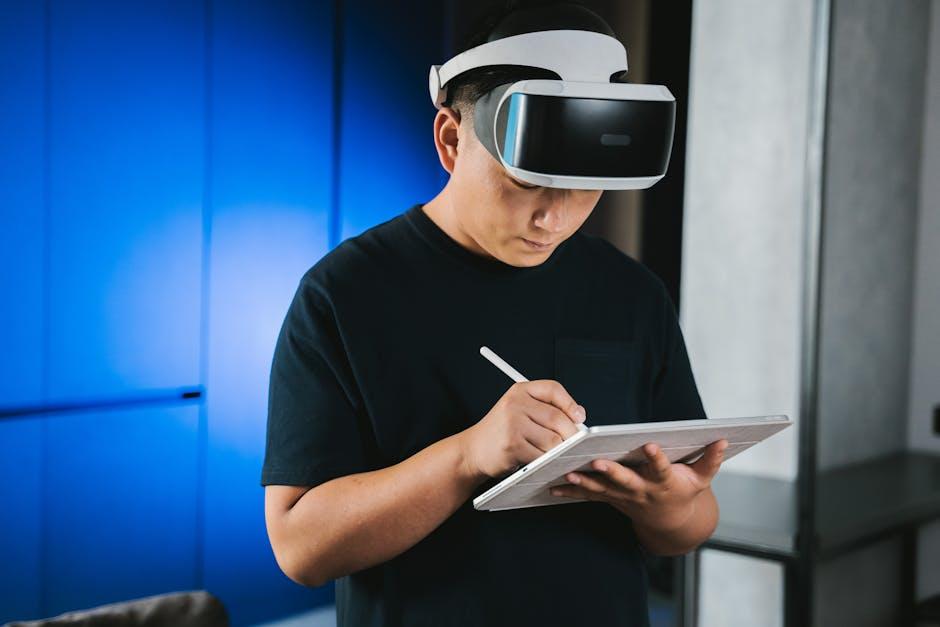
As schools search for ways to make learning more tactile without the costs and constraints of labs, field trips, and specialized equipment, virtual reality is moving from novelty to instructional tool. Districts and universities are piloting headsets and immersive software to let students run chemistry experiments, practice welding, dissect a frog, or tour ancient sites-without leaving the classroom.
The push is fueled by more capable, easier-to-manage devices and a growing catalog of curriculum‑aligned simulations. Vendors are courting educators with classroom management features and content tied to science, career and technical education, and health programs. Early adopters report higher student engagement and more opportunities for repeatable, risk‑free practice that traditional settings can’t easily provide.
Yet questions about cost, evidence, and equity loom. Researchers and advocates urge caution over motion sickness and accessibility, teacher training needs, data privacy, and whether pilot results will scale. As procurement cycles and new partnerships take shape, the coming school year will test whether VR can deliver on its promise of hands‑on learning at scale.
Table of Contents
- VR turns classrooms into labs expanding access to rare fieldwork and equipment
- Studies from middle school science to nursing show gains in retention and practical skills
- Districts weigh costs content quality and student safety in scaling deployments
- Roadmap for adoption start small choose standards aligned content invest in teacher training and measure outcomes
- In Summary
VR turns classrooms into labs expanding access to rare fieldwork and equipment
School systems are piloting immersive headsets to give students supervised access to high-stakes environments once limited by budgets, safety policies, or geography. From coastal ecology to precision manufacturing, instructors can schedule simulated lab blocks where learners manipulate virtual instruments, rehearse procedures, and log observations while teachers monitor progress through real-time dashboards. Administrators describe the approach as a way to expand equity in hands-on learning-particularly for rural and under-resourced campuses-while conserving consumables and meeting safety requirements that often constrain time on task.
- Operate rare or costly tools-such as mass spectrometers or wind tunnels-via accurate digital twins with guided workflows.
- Enter hazardous or remote sites (volcano rims, offshore reefs, cleanrooms) to practice protocols without physical risk.
- Fast-forward slow processes (crystal growth, erosion, cell culture) to observe cause-and-effect in minutes.
- Collect field notes collaboratively, pinning samples and media to shared 3D maps for later analysis.
- Receive just-in-time feedback as errors occur, supporting procedural fluency and reducing repeat mistakes in real labs.
Implementation is trending toward district-wide packages that bundle content libraries, device management, and alignment to science and CTE standards. Tech leads cite priorities such as accessibility (captions, color adjustments, seated modes), hygiene (UV cases, replaceable facial interfaces), and data privacy controls. To address infrastructure gaps, many deployments cache lessons for offline use and sync results to the LMS when connected. Assessment is shifting from multiple choice to performance evidence-heat maps of exploration, instrument settings, and decision checkpoints-feeding rubrics that track skill mastery. Professional development remains pivotal: teachers are trained to scaffold experiences, translate virtual findings to physical labs, and use analytics to close learning gaps without inflating screen time.
Studies from middle school science to nursing show gains in retention and practical skills
Classroom pilots and early peer-reviewed findings point to a consistent pattern: learners retain more and perform better on hands-on tasks after practicing in immersive modules. In middle grades, teachers report that VR pre-labs help students arrive at benches with procedural fluency and fewer safety slips, while career and technical programs use virtual rigs to rehearse complex steps before touching real equipment. University programs, including nursing and allied health, are leaning on high-fidelity scenarios to sharpen clinical judgment, triage communication, and dosage calculations-competencies that are difficult to scale with limited lab time.
- Higher retention: Follow-up quizzes and delayed recall checks trend upward after simulations compared with slides or video.
- Skill transfer: Learners complete tasks faster and with fewer errors after practicing in interactive, feedback-rich environments.
- Safety and consistency: Risky or rare scenarios can be repeated until mastery, standardizing experiences across cohorts.
- Instructor efficiency: Analytics surface where learners struggle, allowing targeted remediation rather than broad reteaching.
The gains appear most pronounced when modules mirror authentic workflows and embed immediate feedback-for example, step-by-step lab protocols for seventh graders or iterative debriefs in acute-care simulations. Researchers caution that outcomes hinge on content quality, motion comfort, and alignment with standards, yet districts and nursing schools say the value proposition is strengthening as headsets get lighter, software improves, and assessment data integrates with LMS dashboards. The emerging consensus: immersive practice is moving from novelty to a practical lever for measurable learning outcomes.
Districts weigh costs content quality and student safety in scaling deployments
District leaders are tightening procurement frameworks as pilots move to districtwide adoption, weighing budgets against measurable learning outcomes. Beyond headset sticker prices, technology teams are mapping the full lifecycle-refresh cycles, charging and storage, cleaning protocols, and device management-while curriculum offices press for standards-aligned content and reliable analytics. With COVID-era funds receding, purchasing shifts toward sustainable models that blend grants, capital, and operating budgets, and demand clearer return-on-investment signals such as usage fidelity and impact on lab time, simulation exposure, and certification pathways.
- Total cost of ownership: headsets, warranties, replacement parts, charging carts, and device management software factored over 3-5 years.
- Licensing models: per-seat vs. site licenses, offline access, and content portability across vendors and hardware generations.
- Infrastructure: Wi‑Fi density, edge caching, content filtering, and classroom casting without sacrificing bandwidth for testing windows.
- Professional development: paid training time, instructional coaching, and sub coverage embedded in rollout plans.
- Operations & accessibility: sanitization routines, prescription inserts, adjustable straps, and quick user resets to minimize downtime.
Equally decisive are content quality and student protections. Instructional teams are applying rubric-based reviews for rigor, accuracy, and alignment, while special education departments assess accommodations for sensory sensitivities, seated modes, captions, and alternative pathways. Safety protocols emphasize shorter sessions, clear sightline supervision, and teacher dashboards for real-time oversight. Privacy reviews scrutinize authentication, data minimization, and data residency, with districts preferring platforms that support SSO, audit logs, and parent transparency.
- Instructional fit & evidence: standards alignment, bias checks, formative assessment hooks, and third-party efficacy studies.
- Student safety & wellbeing: motion comfort settings, age-appropriate experiences, and documented incident-response procedures.
- Privacy & compliance: COPPA/FERPA-aligned data flows, admin controls for retention, and clear vendor disclosure of telemetry.
- Classroom control: teacher casting, kiosk modes, content whitelisting, and rostering that mirrors existing SIS groups.
- Family engagement: opt-in consent, plain-language data notices, and take-home guides on safe, healthy use.
Roadmap for adoption start small choose standards aligned content invest in teacher training and measure outcomes
Districts that are piloting immersive learning are moving deliberately: limited rollouts, clear guardrails, and content chosen for curriculum fit. Leaders report that cart-based headsets and scheduled “lab blocks” keep costs predictable while minimizing disruption. Procurement teams are vetting libraries for standards mapping, LMS integration, and accessibility features, with privacy and safety policies established upfront to address parent consent, screen-time limits, and device hygiene.
- Start small: Launch with one subject, a few high-impact units, and a shared set of devices to validate logistics and instructional value.
- Align to standards: Prioritize experiences mapped to NGSS, state ELA/math frameworks, CTE competencies, or ISTE, with clear objectives and teacher-facing guides.
- Infrastructure and safety: Require SSO, MDM support, offline modes, and age-appropriate content filters; set protocols for supervision and motion comfort.
- Equity and access: Ensure accommodations (captions, audio description, adjustable pacing) and plan for students who cannot or should not participate in VR.
Sustained impact is tied to teacher readiness and evidence. Districts are structuring professional learning with coaching, model lessons, and micro-credentials, embedding VR into existing scope and sequence rather than treating it as a novelty. At the same time, schools are tracking outcomes with pre/post assessments, observational rubrics, and engagement analytics, using findings to refine content choices and justify scale-up.
- Train and support: Offer co-teaching, planning time, and troubleshooting playbooks; build site-level champions who mentor peers.
- Measure what matters: Define success metrics (content mastery, lab skills, attendance, on-task time) and collect comparison baselines.
- Iterate and scale: Review data each term, retire weak modules, negotiate license tiers, and expand to additional grades only when outcomes are consistent.
- Report transparently: Share results with boards and families, including costs, usage, and learning gains, to sustain trust and funding.
In Summary
For now, virtual reality’s promise in the classroom remains tethered to practical questions: cost, reliable hardware, teacher training, and a steady pipeline of standards-aligned content. Districts piloting immersive modules are testing whether short, targeted experiences can deepen understanding without adding logistical friction or screen fatigue. Accessibility and student data protections also loom large, as schools weigh headsets alongside existing devices and broadband constraints.
Industry and research groups are racing to produce evidence beyond novelty effects, focusing on outcomes in fields that benefit from spatial reasoning and simulated practice. Meanwhile, state curricula and procurement policies will shape how quickly pilots scale, and whether smaller or under-resourced schools can participate.
As the technology matures, the measure of success will be less about spectacle than fit: where VR can safely replicate hands-on learning that would otherwise be costly, rare, or impossible. Whether it becomes a classroom staple will hinge on demonstrable gains, equitable access, and teacher readiness.