

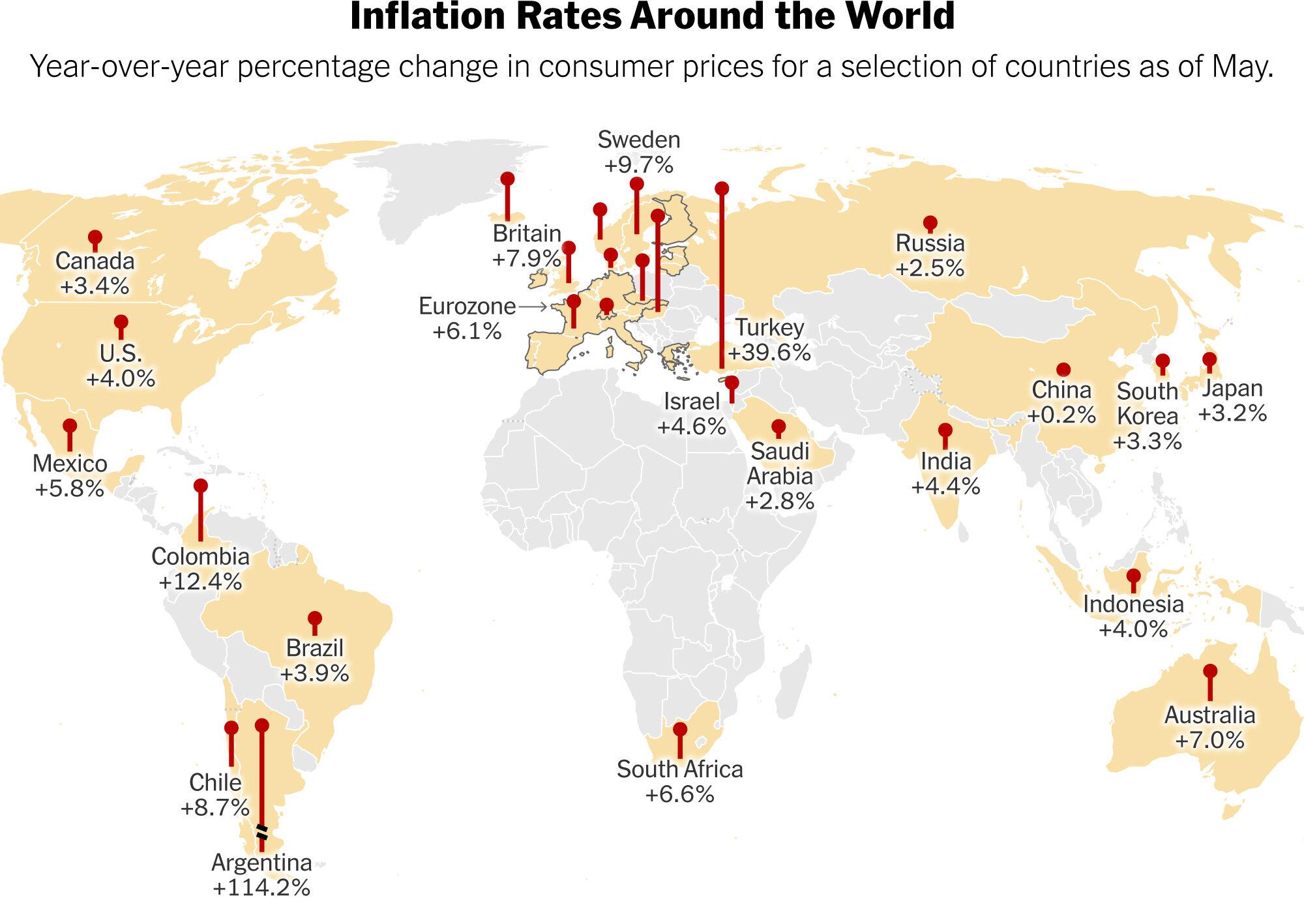
Inflation that remains elevated across major economies is eroding household purchasing power and curbing consumer outlays, tightening a key engine of global growth. From the United States and Europe to parts of Asia and Latin America, families are trading down to cheaper brands, delaying big-ticket purchases, and prioritizing essentials as wages fail to keep pace with rising prices and borrowing costs remain high after aggressive central-bank rate hikes.
The squeeze is most acute for lower-income households and in countries where food and energy account for a larger share of budgets. Retailers and service providers are adjusting with heavier discounts and smaller package sizes, while policymakers weigh the risk that weaker spending could slow the broader recovery even as it helps cool price pressures.
Table of Contents
- Essentials Lead Global Price Pressures as Wages Lag
- Households Trade Down Delay Big Ticket Purchases and Tap Credit as Savings Fade
- Policy Priorities Keep Rates Restrictive Index Safety Nets to Inflation Cut VAT on Staples and Speed Port and Trucking Reforms
- Wrapping Up
Essentials Lead Global Price Pressures as Wages Lag
Basic necessities-from food staples and household energy to rent-are delivering the sharpest price gains across major economies even as real wage growth trails, tightening household budgets and curbing discretionary spending. Retailers signal persistent trade‑down behavior, manufacturers lean on shrinkflation to protect margins, and policymakers balance the risk of premature easing against sticky services inflation. Currency weakness in import‑reliant markets and weather‑driven supply disruptions are amplifying costs, while targeted subsidies and tax relief offer only partial relief to pressured real incomes.
- Consumers: shifting to private labels, accepting smaller pack sizes, delaying big‑ticket purchases.
- Retailers: deeper promotions and “everyday low price” tactics to sustain footfall.
- Producers: reformulating products and tilting toward higher‑margin SKUs.
- Labor: wage settlements lag cost of living, weakening purchasing power.
- Policy: cautious rate‑cut timelines amid volatile food and energy and firm core services.
Households Trade Down Delay Big Ticket Purchases and Tap Credit as Savings Fade
With price pressures lingering, households in both advanced and emerging markets are shifting to lower-cost alternatives, postponing discretionary outlays on cars, furniture, and electronics, and leaning more on credit as cash buffers erode. Retailers report smaller basket sizes and a pivot to private labels, while service providers note longer replacement cycles for durable goods. As revolving balances climb and installment plans proliferate, borrowing costs remain elevated, squeezing disposable income and curbing demand. Analysts warn the pattern could slow momentum in goods-heavy sectors through year-end, making credit performance and consumer sentiment crucial indicators to watch.
- Trading down: Greater substitution toward store brands, value packs, and discounted bundles.
- Delayed purchases: Deferrals on autos, major appliances, and home improvement projects.
- More credit use: Heavier reliance on credit cards and buy-now-pay-later as savings fade.
- Early stress signals: Rising payment frictions among lower-income cohorts and subprime borrowers.
Policy Priorities Keep Rates Restrictive Index Safety Nets to Inflation Cut VAT on Staples and Speed Port and Trucking Reforms
With household budgets under strain from persistent price pressures, policy signals are shifting toward tighter financial conditions paired with targeted relief and supply-side fixes designed to cool inflation without crushing demand. Officials are preparing to keep borrowing costs firm until core prices retreat, recalibrate social supports to protect the poorest from real-income erosion, trim consumption taxes on essential goods to ease grocery bills, and unclog freight corridors that amplify costs from port to checkout. The approach emphasizes clear timelines, strict targeting, and measurable outcomes to minimize fiscal leakage and ensure relief reaches consumers swiftly.
- Restrictive rates: Maintain positive real policy rates and hawkish guidance until inflation expectations realign, while preserving credit access for viable small firms via temporary guarantee schemes.
- Indexed safety nets: Link cash transfers, food vouchers, and child benefits to headline CPI with quarterly updates and caps, prioritizing the bottom income deciles and funded by reprioritized subsidies.
- VAT relief on staples: Time‑bound cuts for a narrow, verified basket (grains, dairy, cooking oil), with mandatory pass‑through audits, digital receipt monitoring, and automatic sunset clauses.
- Logistics acceleration: 24/7 port operations, pre‑arrival customs clearance, electronic bills of lading, faster truck permitting, axle‑weight harmonization, and targeted investments in cold chain and last‑mile links.
- Accountability metrics: Track core inflation, pass‑through to shelf prices, food price dispersion, container dwell times, and truck turnaround to calibrate the pace of policy normalization.
Wrapping Up
For now, the strain of higher prices is reshaping how households shop, save, and borrow, with many trading down, delaying big-ticket purchases, and stretching paychecks in ways that are filtering through to retailers and service providers worldwide. While headline inflation has eased from recent peaks in several economies, elevated costs for essentials like food, energy, and housing continue to erode real incomes and test consumer resilience.
The path ahead hinges on the interplay of cooling price pressures, wage growth, and the durability of labor markets, alongside the speed and impact of interest-rate moves that are still working through the system. Investors and policymakers will watch upcoming inflation and retail sales data, corporate earnings, and the trajectory of energy prices for signs of a turning point. Until then, the world’s shoppers remain cautious, and the recovery in consumer spending-long a key engine of global growth-looks set to proceed unevenly, one budget at a time.