

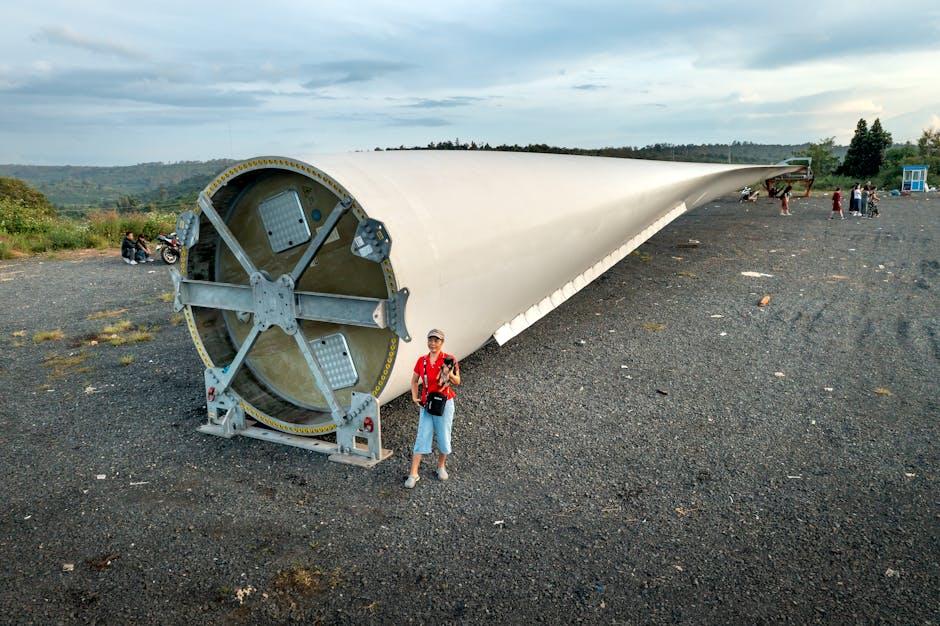
Renewable energy is not just growing-it’s being rewired by technology. After a record year for new capacity, driven largely by solar, the next phase of expansion is being powered by advances that make clean electricity cheaper to produce and easier to integrate into the grid. From AI that sharpens wind and solar forecasts to grid-scale batteries that smooth out supply, innovations once seen as experimental are now shaping day-to-day operations.
Hardware is evolving just as quickly. Larger offshore wind turbines, high-efficiency solar modules, and power electronics that stabilize voltage and frequency are pushing more renewable megawatts through aging networks. High-voltage direct-current lines, virtual power plants, and smarter inverters are addressing the intermittency and congestion that have long constrained growth.
The shift comes as policymakers push electrification and companies chase lower, more predictable energy costs. Even amid higher interest rates and supply-chain volatility, technology is redefining project economics and reliability. This article examines how these tools-from advanced manufacturing to green hydrogen and enhanced geothermal-are accelerating deployment, changing grid planning, and setting the pace of the energy transition.
Table of Contents
- Advanced Forecasting and AI Powered Dispatch Boost Wind and Solar Performance and Revenues
- Digital Grid Upgrades Using Sensors Digital Twins and Dynamic Line Rating Ease Bottlenecks
- Long Duration Storage and Grid Forming Inverters Improve Reliability and Cut Curtailment
- Action Plan for Leaders Invest in Data Platforms Reform Interconnection Rules and Localize Supply Chains
- Future Outlook
Advanced Forecasting and AI Powered Dispatch Boost Wind and Solar Performance and Revenues
Forecasting engines built on machine learning and high‑resolution weather data are reshaping day‑ahead and intra‑day decisions across wind and solar fleets. By fusing mesoscale models with SCADA streams, satellite imagery, and turbine‑level signals, operators generate probabilistic power curves and five‑minute nowcasts that narrow uncertainty bands and sharpen market bids. Portfolio managers report tighter spreads between expected and realized output, more precise maintenance windows, and improved hedge alignment as forecasts are fed directly into trading desks and energy management systems.
- Reduced curtailment through intraday re‑dispatch and congestion‑aware scheduling
- Lower imbalance charges as forecast error and reserve needs decline
- Higher capture prices via dynamic bidding that tracks locational price signals
- Storage co‑optimization to shift surplus generation and firm deliveries
- Ancillary services participation as confidence in ramp and availability increases
AI‑driven dispatchers extend these gains by orchestrating turbines, inverters, and batteries against evolving grid and price constraints. Constraint‑aware optimizers ingest locational marginal prices, congestion patterns, and weather ensembles to sequence charge/discharge, respect ramp limits and wake effects, and co‑optimize energy, reserves, and grid‑support services. The result: steadier capture of premium intervals, faster response to volatility, and measurable uplift in net revenues. Operators are layering in explainability for bids and setpoints, deploying edge models for millisecond decisions, and tightening data governance and cybersecurity-moves aimed at scaling automation across fleets without sacrificing compliance or reliability.
Digital Grid Upgrades Using Sensors Digital Twins and Dynamic Line Rating Ease Bottlenecks
Utilities are deploying a triad of technologies to move more clean power across existing wires: field sensors deliver granular visibility, cloud-scale digital twins simulate contingencies in seconds, and dynamic line rating (DLR) recalculates safe capacity based on weather and conductor temperature. Early pilots in North America and Europe indicate measurable relief on congested corridors, with operators reporting double‑digit improvements in transfer capability and reduced curtailment during peak renewable output. The approach, increasingly embedded in control rooms, shifts grid management from static limits to data-driven operations, unlocking latent capacity while targeting upgrades where they matter most.
- Edge and line sensors: PMUs and line monitors track voltage, current, and phase angles in near real time, flagging bottlenecks minutes ahead of traditional alarms.
- Weather-aware DLR: Ampacity is recalculated every 5-15 minutes using wind, ambient temperature, and solar loading, often yielding 10-20% more headroom versus static ratings.
- System digital twins: High-fidelity models test switching plans, DER injections, and contingency events before issuing safe setpoints to the field.
Operational changes are moving quickly from trials to scale. Dispatchers are receiving automated recommendations for reconfiguration, while planners use twin-based studies to defer or right-size capital projects and accelerate interconnection queues. Regulators are signaling support by aligning incentives around congestion relief and reliability metrics, and cybersecurity frameworks are being embedded from the outset to safeguard expanded telemetry and control surfaces.
- Interoperability first: Standardized data models (e.g., IEC 61850, CIM) and open APIs reduce vendor lock-in and speed integration.
- Guarded automation: Closed-loop controls with fallback modes, thresholds, and human-in-the-loop validation protect system stability.
- Workforce enablement: Training for operators and planners on analytics, model validation, and scenario testing ensures effective adoption.
- Outcome-based regulation: Performance targets tied to curtailment cuts, outage reduction, and increased hosting capacity support cost recovery.
Long Duration Storage and Grid Forming Inverters Improve Reliability and Cut Curtailment
Utilities and developers are accelerating procurement of long-duration energy storage as variable wind and solar climb to new records, shifting surplus generation into evening demand peaks and seasonal gaps that once drove curtailment. Beyond four-hour lithium-ion, projects are advancing in flow batteries, thermal and hydrogen-based storage, pairing duration with location to relieve congested corridors and stabilize nodal prices. Early market results show fewer renewable shutdowns when assets can dispatch across extended windows, smoothing ramp events and reducing reliance on fast-start gas. Key value streams now being contracted include:
- Energy shifting from midday or high-wind periods into peak net load
- Firming and shaping of renewable profiles for predictable delivery
- Congestion relief and curtailment mitigation at grid bottlenecks
- Resource adequacy and seasonal coverage under extreme weather
Grid-forming inverters are emerging as the operational backbone for these storage fleets, delivering capabilities traditionally provided by synchronous machines as thermal retirements accelerate. By establishing a stable voltage and frequency reference, they enable higher shares of inverter-based resources while preserving system security in low-inertia conditions. Pilot projects and new grid codes in multiple regions are validating performance under disturbance and restoration scenarios, with vendors racing to standardize models and tests. The services stack is expanding to include:
- Synthetic inertia and fast frequency response under sudden imbalances
- Voltage support, fault ride-through and improved protection coordination
- Black-start and islanding to accelerate recovery after outages
- Hosting capacity increases that reduce renewable curtailment
Action Plan for Leaders Invest in Data Platforms Reform Interconnection Rules and Localize Supply Chains
Leaders can compress deployment timelines by pairing capital with software infrastructure and predictable grid access. Priority moves include transparent data pipes, common standards, and enforceable timelines that let projects clear queues and markets clear price signals faster.
- Fund open energy data platforms: unify SCADA, AMI, weather, and market feeds via open APIs; require utility data-sharing; publish substation-level hosting capacity maps; and harden privacy/cyber via zero-trust architectures.
- Institutionalize AI-driven planning: run probabilistic forecasting for load, DER, and renewables; deploy digital twins for siting and congestion modeling; and publish quarterly grid-readiness dashboards.
- Fix interconnection queues: adopt “first-ready, first-served,” standardized study templates, pre-certified inverters, and automated impact assessments; set 90-150 day shot clocks with penalties for misses.
- Price constraints transparently: enable capacity release auctions, dynamic curtailment credits, and congestion pricing that guide projects to low-friction nodes.
Supply-chain resilience now determines build rates as much as policy ambition. Local manufacturing, secure materials, and skilled labor pools are emerging as decisive advantages for regions competing to host clean energy growth.
- Localize critical components: stand up inverter, transformer, and battery lines near ports and transmission hubs; tie incentives to domestic content and uptime; pool public procurement to anchor demand.
- Secure inputs end-to-end: expand critical-mineral recycling, strike offtake agreements with allied suppliers, and standardize parts to cut lead times and SKU complexity.
- Back the workforce: fund rapid training for power electronics, high-voltage installation, and battery safety; recognize credentials across states; and deploy mobile training units in energy communities.
- Streamline permits and logistics: greenlight factory expansions within 180 days, prioritize grid-component freight corridors, and digitize customs for clean-tech equipment.
Future Outlook
As costs fall and performance improves, technology is shifting renewables from intermittent add-ons to core power assets. Advances in storage, power electronics, software and materials are tightening the link between forecast and delivery, while digital tools are helping operators wring more capacity from existing infrastructure.
The next test is scale and integration. Grid build‑outs, permitting, supply chains and workforce training will determine how quickly new hardware and algorithms translate into reliable gigawatts. Policymakers are aligning incentives, and capital is flowing, but bottlenecks remain.
For now, the trajectory is clear: innovation is accelerating deployment, and deployment is feeding further innovation. Whether developers and grids can convert promising pilots into predictable, system‑level gains will decide how much of the decade’s climate targets are met on time. In the energy transition, the speed of diffusion-not invention alone-will be the metric to watch.