

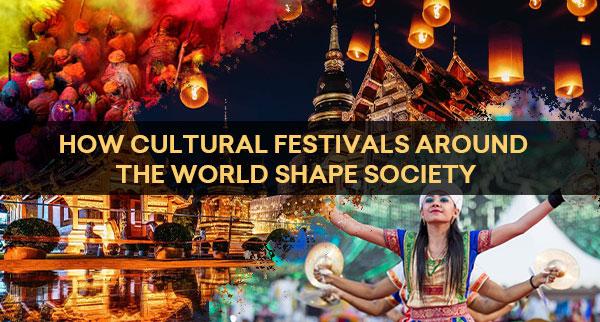
From the riot of powdered pigment at India’s Holi and the thunder of Rio’s Carnival to Kyoto’s stately Gion Matsuri and Mexico’s reflective Día de Muertos, the world’s landmark festivals draw millions and compress centuries of ritual into days of public spectacle. More than celebrations, they are engines of local economies, stages for cultural identity and, increasingly, flashpoints in debates over tourism, commercialization and preservation.
This report goes inside the best cultural festivals around the world to reveal what audiences rarely see: the yearlong craftwork behind a 10-minute parade, the rules that protect sacred rites, the volunteer networks that keep streets safe and the environmental pressures that accompany global fame. Through on-the-ground detail and expert insight, we examine what makes these events endure, why some are changing and how to experience them responsibly-whether under lantern-lit skies in Taiwan, amid alpine cowbells at Switzerland’s désalpe or along Edinburgh’s late-summer streets.
Table of Contents
- Inside Rio Carnival Samba Schools Routes Best Grandstand Seats and Rehearsal Access
- Holi in Mathura Vrindavan Safety Color Etiquette Local Guides and Quiet Viewpoints
- Kyoto Gion Matsuri Shrine Processions Craft Workshops and Where to Eat Between Parades
- In Conclusion
Inside Rio Carnival Samba Schools Routes Best Grandstand Seats and Rehearsal Access
On parade nights in Rio, each samba school launches from the Concentração and surges down the Marquês de Sapucaí’s 700-meter runway toward the Apotheosis Square under a strict 70-minute clock, syncing floats, wings, and the bateria with the samba-enredo as judges assess rhythm, harmony, costumes, choreography, and narrative at multiple cabins along the route; the placement of the recuo da bateria-typically mid-course-creates a thunderous sound pocket, while the dramatic opening acts (comissão de frente and abre-alas) unfold closer to the start, shaping where spectators choose to sit; meanwhile, off the big nights, access to the culture runs deep via quadra rehearsals inside community headquarters and free technical run-throughs at the Sambadrome in the months prior, where visitors can hear the anthem take shape, watch new choreography, and, for the committed, secure a costume to march as part of an ala.
- Best all-round view: Sectors 6-7 give balanced sightlines of floats, dancing wings, and formation changes.
- Entrance drama: Sectors 2-3 capture the first reveal of the comissão de frente and the towering abre-alas.
- Biggest drum impact: Sectors 10-11 sit near the recuo da bateria for peak percussion.
- Numbered comfort: Sector 9 offers allocated seating with reliable angles for photos.
- Budget and atmosphere: Sectors 12-13 by the Apotheosis are cheaper, popular with locals, and high-energy at the finish.
- Closer to the action: Frisas (ground-level boxes) rows A-B deliver eye-to-eye performance detail; camarotes add amenities.
- Rehearsal access: Quadra sessions (paid) run most nights Jan-Feb; technical rehearsals at the Sambadrome are typically free-check the LIESA schedule, arrive early, bring cash, dress light, and use ear protection.
- How to march: Contact schools (e.g., Mangueira, Portela, Salgueiro, Beija-Flor) weeks in advance to buy a fantasia; attendance at rehearsals is often mandatory.
- Transport: Metro Praça Onze serves sectors near the start; Cidade Nova/Central and Saara access the far end-plan exits and avoid street closures.
Holi in Mathura Vrindavan Safety Color Etiquette Local Guides and Quiet Viewpoints
On the ground in Mathura-Vrindavan, the festival plays out as a high-density street event shaped by temple timetables, police advisories, and rapidly evolving norms: authorities and community groups push eco-friendly powders, priests enforce tighter rules inside sanctums, and travelers increasingly seek calm vantage points to observe without the crush.
- Safety: Use plant-based gulal; wear wraparound eyewear, scarf, long sleeves; oil skin/hair; waterproof phones; avoid motorbikes in lanes; in Lathmar zones (Barsana/Nandgaon) stick to police-marked corridors and posted exit routes.
- Etiquette: Ask before applying-“Radhe Radhe?“; never force color, especially on women, elders, or children; no water balloons; shoes off in temples; follow color windows at Banke Bihari/Dwarkadhish; respect no-photography signs.
- Local guides: Book licensed guides via Uttar Pradesh Tourism desks or vetted hotels; they manage timed temple entries, safe alley navigation, and rooftop access; expect surge pricing and reserve at least a day ahead.
- Quiet viewpoints: Choose Yamuna ghats at dawn, pre-arranged rooftops near Loi Bazaar, upper galleries at Pagal Baba Temple, and Seva Kunj edges off-peak; keep voices low and observe prayer hours.
- What to wear/carry: Modest light cotton, closed shoes, compact crossbody, photocopied ID, saline drops, spare mask; avoid jewelry; agree on a meet-up point in case networks fail.
Kyoto Gion Matsuri Shrine Processions Craft Workshops and Where to Eat Between Parades
Kyoto’s July spectacle reaches its peak as towering yamaboko floats rumble along Shijo and Kawaramachi during the Saki Matsuri (July 17) and Ato Matsuri (July 24), with night-time Yoiyama street openings (July 14-16 and 21-23) revealing lantern-lit neighborhoods and heirloom tapestries; watch the dramatic tsuji-mawashi corner turns at Shijo-Kawaramachi and Shijo-Karasuma, then follow the mikoshi portable shrines departing from Yasaka Shrine as prayers, flutes, and drums sweep through the grid of the old capital.
- Hands-on craft briefings: Pop-up studios in Nishijin run Kyo-yuzen stencil dyeing; Gojo-zaka kilns offer quick Kiyomizu-yaki painting; artisans near Shijo host kumihimo braiding for omamori cords; fan workshops print summer sensu; select studios schedule beginner-friendly kintsugi sessions-book early on Yoiyama nights.
- Where to refuel between parades: At Nishiki Market, grab hamo tempura, tsukemono skewers, and matcha soft serve; on Pontocho, slip into riverside izakaya for yakitori and chilled sake; around Karasuma-Oike, air-conditioned kissaten serve cold somen and coffee jelly; convenience stores on Shijo-dori stock electrolytes and onigiri for curbside vantage points.
- Logistics at a glance: Closest hubs are Karasuma, Kawaramachi, and Gion-Shijo stations; streets close ahead of processions; arrive 45-60 minutes early for barrier spots; cash is preferred at stalls; light cotton layers and a folding fan help in peak humidity.
In Conclusion
From ritual performance to street processions, the world’s marquee cultural festivals are doubling as living archives and economic engines-showcases of identity that also test how communities manage crowding, safety, and sustainability at scale. Many are expanding digital access and retooling programming to foreground local artisans, language, and cuisine, even as tourism and sponsorship reshape formats on the ground.
The outlook is brisk. With calendars returning to capacity, organizers are balancing heritage with environmental targets, accessibility mandates, and tighter security protocols. Weather volatility and geopolitical shifts continue to force contingency planning, but hybrid models and regional partnerships are widening reach without diluting authorship. However the itineraries change, the core function remains constant: collective gathering that preserves memory, transmits craft, and renews civic life-one season, and one celebration, at a time.