

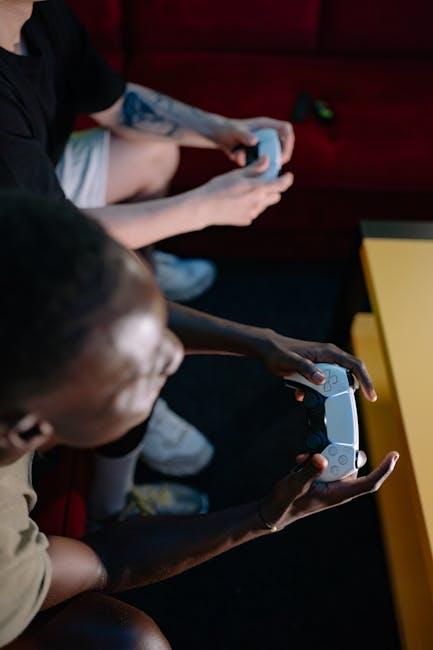
Esports competitors outpaced traditional athletes on rapid-response tests, according to a new study that adds fuel to the debate over the cognitive demands of competitive gaming. Researchers reported that elite gamers registered faster reaction and decision times than athletes across a battery of standardized tasks, while maintaining comparable accuracy under time pressure.
The findings, which compare split-second responsiveness central to both arenas, suggest that high-level gaming may cultivate neural processing advantages often associated with sport. The results could influence training programs, scouting, and discussions about how to evaluate performance beyond physical metrics.
While the study focuses on controlled laboratory measures rather than on-field scenarios, it arrives as esports’ global audience and prize pools continue to expand, and as questions persist about where competitive gaming fits within the broader sports landscape.
Table of Contents
- Esports players post faster reaction times than traditional athletes in controlled lab tasks
- Research links high frequency visual stimuli and intensive practice to superior split second responses
- Scientists caution on real world transfer while noting implications for scouting and performance analysis
- Coaches advised to implement cognitive drills eye tracking and high refresh rate training to narrow the gap
- In Conclusion
Esports players post faster reaction times than traditional athletes in controlled lab tasks
In tightly controlled experiments using high-refresh hardware and standardized stimuli, competitive gamers consistently outpaced varsity counterparts on core psychomotor benchmarks. The study reports a mean simple reaction time of ~208 ms for the esports cohort versus ~228 ms for field and court athletes, alongside a choice reaction time gap of ~356 ms vs. ~382 ms. Researchers also observed markedly steadier performance, with intra-individual variability reduced by ~15-20% in the gaming group after controlling for sleep, caffeine, and prior activity.
- Tasks: simple and choice reaction, go/no-go inhibition, and cross-modal (visual/auditory) trials
- Controls: uniform 240 Hz displays, 1,000 Hz input devices, latency-corrected software timing
- Outcomes: faster mean responses, lower jitter, and fewer premature presses at matched accuracy
Analysts attribute the edge to high-volume, precision-focused training typical of top-level gaming, where millisecond decisions are repeated thousands of times per session. Notably, the advantage did not require sacrificing accuracy, suggesting a recalibrated speed-accuracy balance rather than mere risk-taking. Effects were strongest among first-person shooter specialists and correlated with reported weekly practice hours.
- Why it matters: informs talent ID, cognitive conditioning, and baseline testing across performance programs
- Limits: lab tasks isolate reaction speed and may not capture strength, endurance, or tactical constraints in sport
- Next steps: longitudinal tracking to test training transfer, fatigue sensitivity, and pressure resilience in mixed cohorts
Research links high frequency visual stimuli and intensive practice to superior split second responses
Researchers report that exposure to high-frequency visual streams-the kind produced by 240-360 Hz displays-and intensive, task-specific practice are associated with measurably faster split-second responses in controlled trials. Participants trained on rapid, dynamic scenes showed quicker transitions from perception to action in simple and choice reaction tasks, improved saccadic timing, and more stable mouse-path corrections when trajectories changed unexpectedly. The authors attribute the advantage to a blend of perceptual learning and motor preparation, with frequent, low-latency feedback tightening the loop between visual sampling and decision commitment. In lab protocols mirroring esports conditions, players required fewer visual frames to authorize an action and maintained accuracy under compressed time budgets.
- Higher temporal sampling: training at 240-360 Hz increased sensitivity to rapid state changes and peripheral cues.
- Shorter decision latencies: fewer frames needed to commit in go/no-go and multi-choice paradigms.
- Reduced refractory bottlenecks: quicker recovery between sequential cues during multi-target drills.
- Stable accuracy under time pressure: fewer premature clicks and better inhibition on bait stimuli.
The findings suggest that structured, high-intensity routines-common in competitive gaming-systematically compress the perception-action interval by conditioning attention, anticipation, and motor readiness to operate at higher sampling rates. Beyond raw reflexes, the study highlights predictive coding gains: players learn to forecast motion and intent from minimal evidence, enabling rapid, low-variance responses without sacrificing control. Researchers note that similar methods could translate to traditional sport training when matched with comparable stimulus frequency and feedback cadence.
- Deliberate micro-drills: randomized flicks, tracking, and target-switching with variable inter-stimulus intervals.
- Perceptual tuning: contrast, motion, and color-cue discrimination under shifting noise and clutter.
- Adaptive scheduling: short, frequent sessions with progressive speed ramps and fatigue checks.
- Hardware parity: low-latency peripherals and high-refresh displays to align practice with competition conditions.
Scientists caution on real world transfer while noting implications for scouting and performance analysis
Researchers emphasize limits on direct applicability, noting that laboratory reaction-time advantages may not map cleanly onto complex, embodied athletic tasks that demand spatial awareness, physical contact readiness, and sustained decision-making under fatigue. The study’s authors point to differences in perception-action coupling, sensory load, and motor execution between mouse-keyboard responses and on-field movements, and caution that cross-sectional snapshots can overstate performance gaps without longitudinal tracking or task-specific validation.
- Ecological validity: Simple stimuli and binary responses in lab tests differ from multi-cue, dynamic real-world play.
- Motor constraints: Faster clicks do not equal faster cuts, accelerations, or ball-handling under pressure.
- Context effects: Hardware familiarity, screen latency, and sport-specific training history can skew comparisons.
- Sample design: Small, non-random cohorts limit generalizability and warrant replication across disciplines.
Even with those caveats, analysts see actionable use-cases for talent identification and performance analysis. Teams could treat high-frequency cognitive metrics as one input within a weighted model, pairing in-game telemetry with biomechanical and tactical data to flag prospects whose visual processing speed and attention control exceed peer baselines, then validate on sport-accurate drills before investment.
- Scouting screens: Deploy standardized reaction batteries and cross-modal tests (visual-auditory) to profile candidates.
- Data fusion: Integrate eye-tracking, click-to-target latency, and decision-time stamps with GPS/IMU movement data.
- Role fit: Map cognitive strengths to position demands (e.g., rapid target selection for playmakers, vigilance for defenders).
- Intervention tracking: Use repeated measures to quantify training gains and establish sport-relevant transfer.
Coaches advised to implement cognitive drills eye tracking and high refresh rate training to narrow the gap
Coaching staffs are being pushed to broaden performance prep beyond traditional conditioning and into the neuro-visual domain. In practice, that means inserting short, high-repetition decision tasks, deliberate gaze control, and exposure to displays that minimize blur and input lag. The aim is not only faster presses but tighter variability, cleaner saccades, and expanded perceptual span-capacities that translate to interception, marking, officiating, and clutch decision-making under time pressure.
- Cognitive drills: go/no-go and stop-signal tasks; multiple object tracking; dual-task and task-switching with sport video; n-back using game-state cues. Track mean reaction time, variability, and accuracy trade-offs.
- Eye-tracking work: smooth-pursuit and antisaccade drills; quiet-eye timing on targets; peripheral cueing and scan-path optimization; micro-saccade control using head-mounted or tablet-based systems.
- High refresh-rate exposure: train on 240-360 Hz displays with low-latency inputs; conduct latency audits (motion-to-photon); integrate strobe/flicker and dynamic contrast sensitivity blocks; use high-speed video for feedback.
- On-field integration: reactive LED cones and light boards; small-sided games with rapid rule shifts; vestibular-visual pairing for balance; 5-7 minute pre-session primers to prime decision speed.
- KPIs: mean and coefficient of variation for reaction time; accuracy; pursuit gain; antisaccade error rate/latency; visual processing speed; transfer tests during sport-specific scenarios.
Implementation guidance favors micro-doses of 10-15 minutes, 3-4 times weekly, front-loaded when athletes are fresh and stacked before technical drills. Programs can begin with consumer 240 Hz monitors, low-latency controllers, and vetted apps, with elite layers adding mobile eye-tracking, VR, and instrumented light systems. Progress via complexity before speed, periodize to prevent cognitive fatigue, and include safeguards such as blue-light hygiene and screening for migraine or concussion history. Establish baselines, run monthly reports, and map stimulus design to sport roles-pitchers tracking seam cues, midfielders scanning off-ball lanes, or goaltenders improving puck pickup-to ensure measurable transfer from high-refresh-rate training to game-day performance.
In Conclusion
While the findings add weight to the cognitive demands of competitive gaming, researchers caution that faster reaction times don’t necessarily translate to broader athletic performance, where strength, endurance, and tactical play remain decisive. The study’s authors also note that variables such as training volume, screen-based testing environments, and sample diversity may limit how far the results can be generalized.
Even so, the data is likely to fuel ongoing debates over esports’ place in the sporting landscape and could influence how teams across disciplines design training for reflexes and decision-making. With follow-up studies already planned to track long-term changes in reaction speed, the race to define the modern athlete may be getting faster-no matter the arena.