

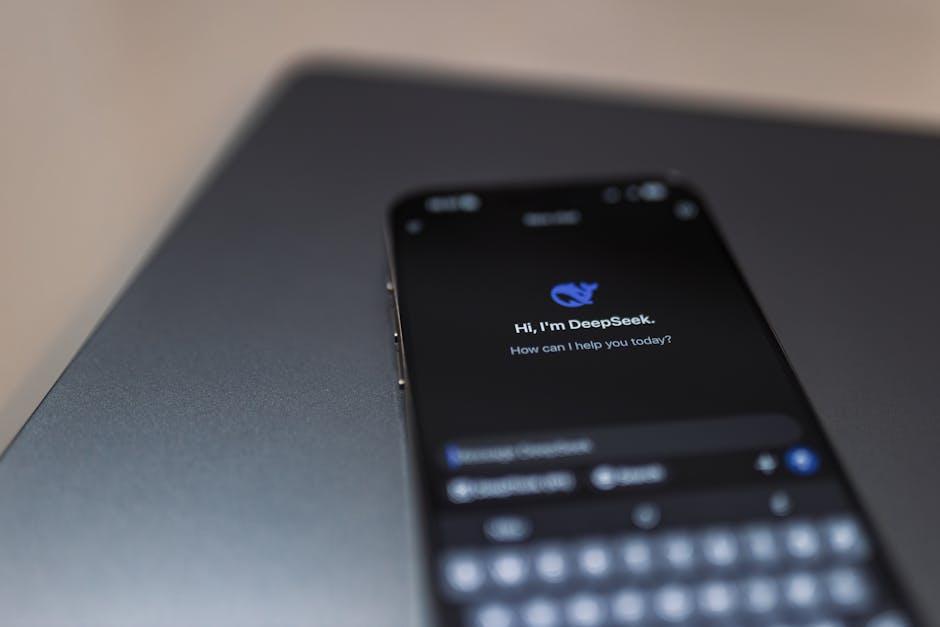
Artificial intelligence is remaking personal digital assistants, pushing them beyond simple voice commands to context‑aware agents that can see, listen and act across apps. After years of incremental updates, the category is entering a new phase as Apple, Google, Amazon and Microsoft overhaul Siri, Gemini/Assistant, Alexa and Copilot, while startups test specialized “agents” for scheduling, shopping and customer service.
The shift is powered by generative and multimodal models, on‑device processing and deeper ties into calendars, email, messages and payments. New capabilities promise to summarize inboxes, complete forms, book travel and coordinate tasks by conversation, blurring the line between consumer tools and workplace software.
The ambitions are matched by risks. Accuracy, privacy and liability remain unresolved, regulators are sharpening scrutiny, and companies are racing to curb hallucinations without slowing features. How these assistants balance capability with trust will determine whether they become a new default interface for computing-or another cycle of hype that fails to deliver.
Table of Contents
- Proactive assistants move from simple commands to intent prediction and workflow orchestration: map repeatable daily tasks and track time saved
- On device AI becomes pivotal for privacy latency and cost control: route sensitive queries to local models and reserve cloud for heavy summarization with differential privacy
- Multimodal context expands utility across email meetings documents and sensors: unify data access through user consent APIs and mitigate hallucinations with retrieval and verification
- Governance and measurement set the pace for enterprise rollout: define KPIs such as task success rate and containment add human in the loop review for critical actions and maintain audit logs with rollback options
- In Summary
Proactive assistants move from simple commands to intent prediction and workflow orchestration: map repeatable daily tasks and track time saved
Digital assistants are shifting from reactive tools to anticipatory operators, using intent prediction to pre-assemble actions across calendars, email, chat, documents, and payments. Rather than waiting for prompts, new systems infer goals from context signals-time, location, collaborators, and prior sequences-then execute workflow orchestration with human-in-the-loop checkpoints. The model builds a living map of routines and dependencies, spotting handoffs and bottlenecks, and turns them into reusable automations that surface at the moment of need.
- Inbox triage: cluster, summarize, and draft replies for recurring threads.
- Calendar hygiene: propose agendas, attach files, and align stakeholders before meetings.
- Sales ops: log calls to CRM, update pipeline stages, and generate follow-ups.
- Finance admin: auto-categorize expenses, reconcile receipts, and request approvals.
- Project cadence: assemble stand-up notes, flag risks, and schedule next steps.
Vendors are pairing these capabilities with rigorous measurement, turning automation into a quantifiable asset. Dashboards now track time saved, clicks avoided, and cycle-time deltas per workflow, while audit trails record what the assistant did, when, and with what confidence. Enterprises gain governance via policy-based controls and role-aware access; individuals get opt-in transparency and one-tap reversions. The result is a clearer ROI story-automation scored against impact KPIs such as deal velocity or ticket resolution-pushing assistants from novelty to infrastructure in daily operations.
On device AI becomes pivotal for privacy latency and cost control: route sensitive queries to local models and reserve cloud for heavy summarization with differential privacy
Personal assistants are shifting to a hybrid compute model, with private, context-rich requests handled locally and only the most compute-intensive workloads escalated to the cloud. Manufacturers are leaning on device NPUs, quantized small language models, and optimized runtimes to keep interactions immediate while reducing exposure of personal data. The approach reflects regulatory pressure and consumer expectations: keep sensitive inputs on the handset, minimize network hops, and deliver consistent performance even when offline.
- Privacy-first handling: PII, biometrics, and on-screen context stay local; redaction occurs before any uplink; encrypted temporary caches clear by policy.
- Responsiveness: Local inference cuts round trips, shrinking latency for wake words, command parsing, and ambient understanding.
- Cost discipline: On-device execution avoids per-token cloud fees and reduces data egress, making assistants economically sustainable at scale.
- Policy controls: User and enterprise rules gate what never leaves the device, with transparent indicators when escalation is required.
The cloud becomes a specialist tier for heavy summarization, long-context reasoning, and cross-app retrieval, protected by differential privacy in aggregation pipelines, secure enclaves, and strict privacy budgets. Orchestration engines now route by confidence scores, energy and carbon impact, and workload price caps; they redact or synthesize data before upload, then produce auditable logs of when and why escalation occurred. The result is a pragmatic split: local models for sensitive, real-time intent; cloud models for scale tasks-both governed by verifiable safeguards and measurable service levels.
Multimodal context expands utility across email meetings documents and sensors: unify data access through user consent APIs and mitigate hallucinations with retrieval and verification
Personal assistants are extending context across email, calendar, conferencing, document repositories, and ambient sensors, moving from siloed chats to situational awareness. Vendors are standardizing consent APIs that unify data access under explicit permissions, event scopes, and revocation, enabling real‑time summaries, proactive nudges, and cross‑app continuity without duplicating data. Early deployments emphasize least‑privilege tokens, on‑device preprocessing, and redaction at the edge, balancing utility with compliance mandates such as data minimization and auditability.
- Email and calendar: intent extraction, deadline tracking, travel and attendee context
- Meetings: live transcription, action items, decisions, and follow‑up routing
- Documents and wikis: policy lookups, template filling, and enterprise‑specific definitions
- Device/IoT signals: presence, location, and network state to tailor responses
To curb hallucinations, platforms are embedding retrieval and verification in the serving path, requiring claims to be grounded in authorized sources and returning citations by default. Production stacks pair vector search with structured queries, apply confidence thresholds and “do‑not‑answer” fallbacks, and maintain signed provenance trails for post‑hoc review. Tooling now favors model‑agnostic orchestration, dynamic policy checks at call time, and user‑visible controls that refresh consent when scopes change.
- Retrieval grounding: source‑first prompts, freshness checks, and cache invalidation
- Verification: cross‑model agreement, rule‑based validators, and anomaly flags
- Consent lifecycle: granular scopes, time‑boxed tokens, and revocation telemetry
- Operational guardrails: latency‑aware fallbacks, redaction, and audit‑ready logs
Governance and measurement set the pace for enterprise rollout: define KPIs such as task success rate and containment add human in the loop review for critical actions and maintain audit logs with rollback options
As personal digital assistants move from pilots to production, enterprises are pivoting to quantifiable oversight that can stand up to compliance and board scrutiny. Leaders are standardizing scorecards to demonstrate reliability, safety, and cost efficiency across functions, with baselines established against human benchmarks and A/B gates enforcing progressive rollout. Measurement is shifting from generic accuracy to operational impact, with weekly reviews tying model changes to service-level outcomes and budget performance, ensuring AI consistently meets business intent rather than ad‑hoc expectations.
- Task success rate: end-to-end completion of defined workflows without human correction
- Containment rate: proportion of interactions resolved by the assistant without escalation
- Time to completion: median and P95 task duration versus human baselines
- Escalation/override rate: frequency and context of human takeovers
- Safety/policy violation rate: detected breaches, hallucinations, or privacy flags
- User satisfaction (CSAT): post-interaction feedback tied to specific intents
- Cost per task: token, API, and infrastructure spend normalized by outcome
- SLA adherence: uptime, response latency, and backlog metrics under load
Risk controls are being codified with human‑in‑the‑loop gates for high-impact actions-financial transfers, data deletion, privilege changes-using approval workflows, step-up authentication, and dual control. Production systems maintain immutable audit logs with event replays, cryptographic checksums, and data lineage tags, while execution is wrapped in transactional rollback options to restore pre-change states on error or dispute. Together, these controls enable granular accountability-from prompt to action-while allowing teams to scale capability safely and verify that each increment in autonomy is earned by measurable performance.
In Summary
As AI systems grow more capable and more compact, personal digital assistants are moving from scripted helpers to adaptive operators-able to see, hear and act across apps and devices. The promise is clear: lower friction, faster decisions, and services that anticipate needs rather than react to commands.
The risks are just as concrete. Accuracy, transparency, and data protection remain unresolved, even as costs and energy demands mount. Interoperability is another fault line: assistants that can coordinate calendars, payments, travel, and enterprise workflows will need common standards and clear liability when things go wrong. Regulators are watching, and compliance could shape where computation runs-on device, in the cloud, or a mix of both.
The next test will be execution. Companies are racing to push multimodal features, agent-like automation, and on‑device models into mainstream products without sacrificing trust. Consumers and businesses will decide whether these systems are copilots or curiosities. If the technology delivers reliability at scale, personal assistants could shift from novelty to infrastructure-quietly embedded in daily life, and increasingly difficult to live without.