

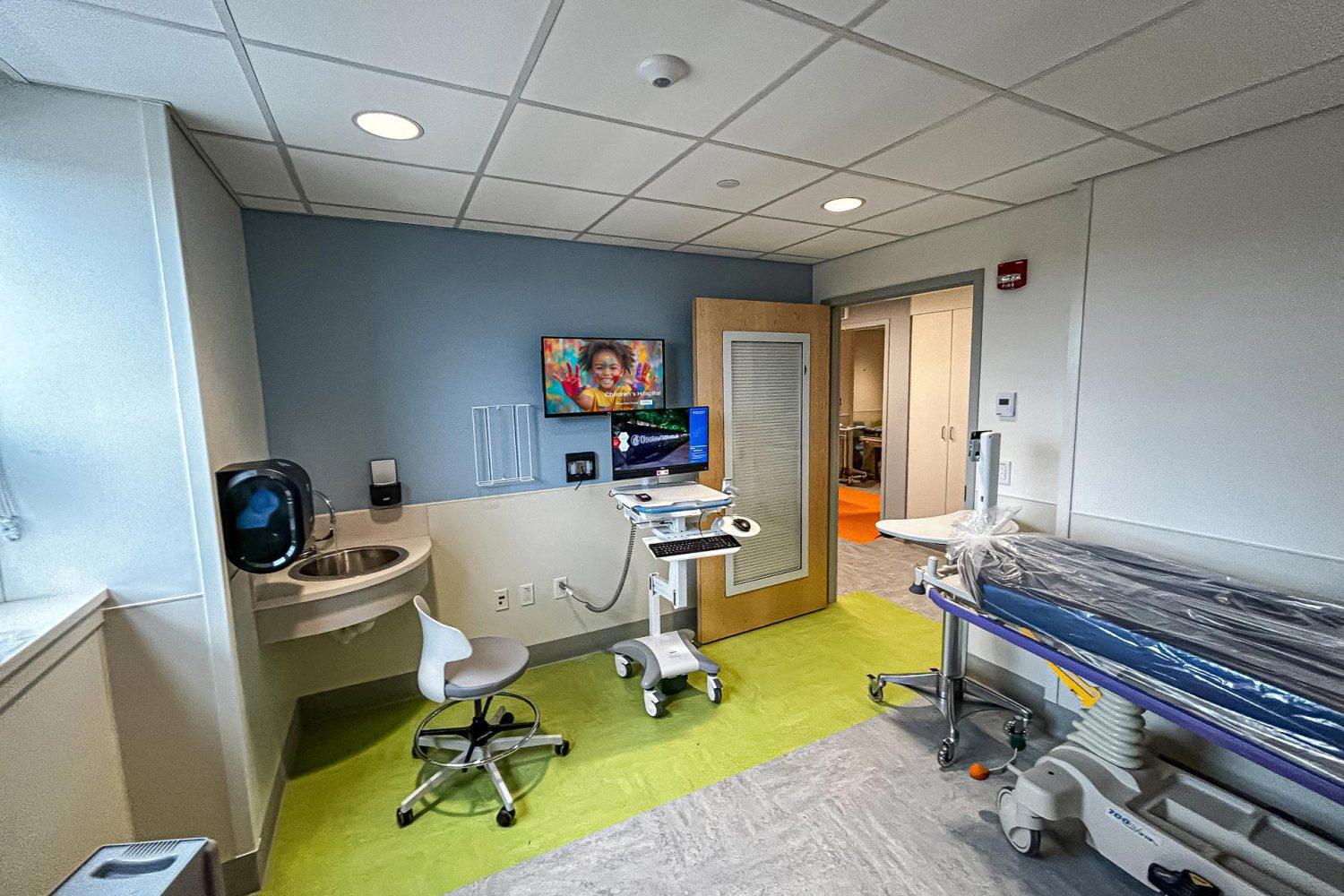
BOSTON – Boston-area hospitals are accelerating investments in cutting-edge technology, rolling out AI-enabled diagnostics, surgical robotics, and remote patient monitoring in a bid to expand capacity and improve outcomes. The surge reflects one of the region’s most assertive pushes into digital and automated care, leveraging Greater Boston’s tech and biotech ecosystem to reshape everything from operating rooms to appointment scheduling.
Hospital leaders say the spending is designed to ease staffing strains, shorten wait times, and curb costs after years of pandemic pressure. But the rapid adoption also brings scrutiny over data privacy, equity, and whether the tools will deliver measurable gains at the bedside. With pilot programs moving into systemwide deployment, the stakes are rising for a healthcare hub aiming to set the pace on how modern medicine is delivered.
Table of Contents
- AI Diagnostics and Robotic Surgery Reshape Care Pathways Across Boston Hospitals
- Telehealth Scale Up Demands Interoperability Standards and Equity Safeguards
- Procurement Playbook Vendor Due Diligence Outcome Metrics Pilot Timelines and Exit Criteria
- Workforce Training and Cybersecurity Readiness Emerge as Top Budget Priorities
- Final Thoughts
AI Diagnostics and Robotic Surgery Reshape Care Pathways Across Boston Hospitals
Boston’s leading medical centers are fast-tracking deployments of AI-enabled diagnostics and robot-assisted procedures, retooling clinical workflows from the ED to post-op recovery. Hospital executives say the upgrades are moving from pilot to production: imaging suites now layer machine-learning reads onto radiologist assessments, operating rooms integrate robotic platforms with real-time analytics, and command centers orchestrate beds, staffing, and case sequencing. Clinicians involved in the rollouts report tighter handoffs, lower variability in routine cases, and earlier flags on high-risk patients-changes they say are beginning to shift throughput and outcomes while keeping human oversight at the core.
- Mass General Brigham: Scaling AI triage for chest pain and stroke alerts; robotic systems standardizing minimally invasive procedures in urology and thoracic surgery.
- Beth Israel Deaconess: Radiology decision-support tools embedded in PACS; OR scheduling engines aligning robotic block time with predicted case duration.
- Boston Children’s Hospital: Pediatric-tailored algorithms assisting rare disease workups; precision robotics reducing incision size and recovery times.
- Tufts Medical Center: Sepsis and deterioration prediction integrated into the EHR; robotic platforms paired with tele-mentoring for complex cases.
- Dana-Farber/Brigham Cancer Center: AI pathology for slide prioritization; robot-assisted biopsies coordinated with same-day molecular testing.
Hospital leaders emphasize governance and guardrails alongside speed, citing FDA-cleared models, bias audits, and real-time performance dashboards as prerequisites for scale. Workforce plans include expanded training for nurses and OR techs, simulation labs for surgeons, and new roles in data stewardship. Patient consent language now discloses algorithmic support, while payers evaluate value-based contracts that recognize shorter stays and lower complication rates. With multiple systems sharing de-identified datasets to improve generalizability, the region is positioning itself as a proving ground-where clinical rigor, cybersecurity, and equity considerations advance in lockstep with the technology.
Telehealth Scale Up Demands Interoperability Standards and Equity Safeguards
Boston health systems scaling virtual care say the next phase hinges on shared data rails, not more apps. Leaders point to FHIR-based interoperability, real-time exchange with community partners, and device data normalization as prerequisites for safe, continuous care from hospital to home. Aligning with national frameworks such as TEFCA while tightening identity, consent, and cybersecurity controls is emerging as a common playbook to curb vendor lock-in and reduce duplicative workflows for clinicians. The aim: consolidate clinical context from EHRs, remote monitoring, imaging, and pharmacy systems so care teams can escalate or de-escalate treatment quickly without chasing information across portals.
- Standards first: FHIR APIs, USCDI-aligned data sets, and event-driven exchange for labs, meds, and care plans
- Device data coherence: Normalization and provenance tracking for RPM wearables and home diagnostics
- Identity and consent: Robust patient matching, OAuth2/OpenID Connect, granular sharing preferences
- Security hardening: Zero-trust architecture, endpoint attestation, and continuous monitoring
- Operational guardrails: Downtime procedures and audit trails to support clinical safety and accountability
Hospital executives also warn that momentum will stall without equity safeguards baked into design and financing. To prevent virtual care from bypassing patients with limited broadband, language access needs, disabilities, or unstable housing, systems are budgeting for device loans and data stipends, multilingual navigation, WCAG-compliant interfaces, and interpreter-integrated visits. Payers and providers are testing audio-only parity where clinically appropriate, SMS fallbacks for reminders, and community site hubs that offer private rooms with connectivity. Equity dashboards that stratify outcomes by race, language, zip code, and disability status-paired with bias audits for triage algorithms-are moving from pilots to policy as Boston-area institutions try to ensure digital expansion closes gaps instead of widening them.
Procurement Playbook Vendor Due Diligence Outcome Metrics Pilot Timelines and Exit Criteria
Procurement leaders across Boston’s major medical centers have aligned on a common playbook to accelerate adoption of AI, robotics, and digital platforms while tightening risk controls, according to documents shared with clinical chiefs this week. The framework requires suppliers to clear a pre-pilot screen focused on clinical safety, cyber resilience, and fiscal sustainability before any deployment reaches patient-care units.
- Regulatory and safety: Evidence mapped to FDA classifications, IEC 62304/14971 where applicable, and documented clinical risk assessments.
- Security and resilience: SOC 2 Type II or ISO 27001, SBOM disclosure, vulnerability remediation SLAs, incident response playbooks, and disaster recovery testing.
- Data governance: HIPAA-compliant BAAs, data minimization, retention/erasure terms, data lineage, and provenance for training sets.
- Integration readiness: EHR interoperability (HL7/FHIR), DICOM where relevant, single sign-on, and API rate/latency benchmarks.
- Clinical evidence: Peer-reviewed results or prospective quality-improvement data demonstrating efficacy and safety in comparable populations.
- Ethics and equity: Bias audits, explainability disclosures, human-in-the-loop safeguards, and performance stratified by demographic groups.
- Financials: Total cost of ownership, milestone-based pricing, uptime credits, and vendor viability (runway, references, contingency plans).
- Contracting protections: IP and data ownership clarity, exit and transition assistance, audit rights, and change-control governance.
Executives also set measurable outcomes and time-boxed pilots with staged decisions to ensure technologies deliver value without disrupting care. Program managers will report cross-site results to a centralized steering group, enabling go/no-go calls and coordinated rollouts across facilities.
- Outcome metrics (reported weekly): Clinical (time-to-diagnosis, LOS, readmissions), operational (throughput, OR turnover), safety (med-error rate, near-miss capture), workforce (task time saved, alert fatigue), technical (uptime ≥99.9%, latency targets), patient experience (HCAHPS), and equity (no performance gaps across race/ethnicity/language).
- Pilot timelines: Standard 12-week cycle with gates at weeks 0-2 (build/integration), 3-6 (limited rollout), 7-10 (expanded use and validation), 11-12 (evaluation and decision).
- Go/no-go and exit criteria: Advance only if predefined thresholds are met (for example, ≥10% throughput gain, ≤5% increase in alerts, zero critical safety events). Exit requires 24-hour rollback, complete data export in interoperable formats, clear model disposition, capped wind-down costs, and a vendor remediation plan if reapplication is sought.
Workforce Training and Cybersecurity Readiness Emerge as Top Budget Priorities
Hospital systems across Greater Boston are directing a larger share of their new budgets toward equipping staff for next‑generation clinical technology, pairing AI‑enabled tools and robotics with expanded education. Leaders describe a pivot from ad hoc seminars to continuous, role‑based development: protected training hours on units, simulation labs blending clinical and cybersecurity scenarios, and support for industry‑recognized certifications. The emphasis is on measurable outcomes-adoption rates, reduced downtime, and faster onboarding-under executive oversight and board‑level reporting that ties workforce skills directly to patient safety and operational efficiency.
In parallel, security teams are accelerating resilience programs amid rising attack activity against healthcare networks, hardening identity controls and recovery capabilities to keep care delivery uninterrupted. Governance committees are demanding clearer risk metrics, regular incident rehearsals, and tighter oversight of third‑party connections, reflecting insurer requirements and federal guidance. The resulting spend clusters around proactive detection and response, medical device segmentation, and streamlined recovery playbooks designed to restore critical systems within hours while safeguarding clinical data and bedside operations.
- Role‑based training at scale: standardized curricula for clinicians, biomed, and IT, with protected time and simulation‑based refreshers.
- Certification pathways: funded courses and exams for security, cloud, and data competencies tied to defined career ladders.
- Clinical‑security drills: interdisciplinary tabletop exercises that test escalation, communication, and EHR downtime procedures.
- Identity and access controls: multi‑factor authentication, privileged access management, and just‑in‑time provisioning.
- Network and device segmentation: isolating medical IoT to limit lateral movement and protect patient‑facing systems.
- 24/7 monitoring and response: enhanced SOC capabilities, endpoint detection, and threat intelligence tuned for healthcare.
- Resilient backups and recovery: immutable storage, frequent drills, and predefined runbooks to meet recovery time goals.
- Vendor risk oversight: continuous assessment of third‑party integrations, data‑sharing controls, and contractual safeguards.
Final Thoughts
As Boston-area hospitals pour money into artificial intelligence, robotics, virtual care and next‑generation data platforms, the region is positioning itself as a proving ground for tech-enabled medicine. The promise is better outcomes and smoother operations; the test will be whether these tools integrate cleanly with legacy systems, protect patient privacy, earn clinician trust and deliver a return amid tight margins.
The next year will bring early results from pilots, clearer signals from regulators and payers, and a closer look at whether investments narrow disparities or widen them. For now, the nation’s medical capital is betting that innovation at scale-measured in patient benefit, not press releases-will keep it at the forefront of health care.