

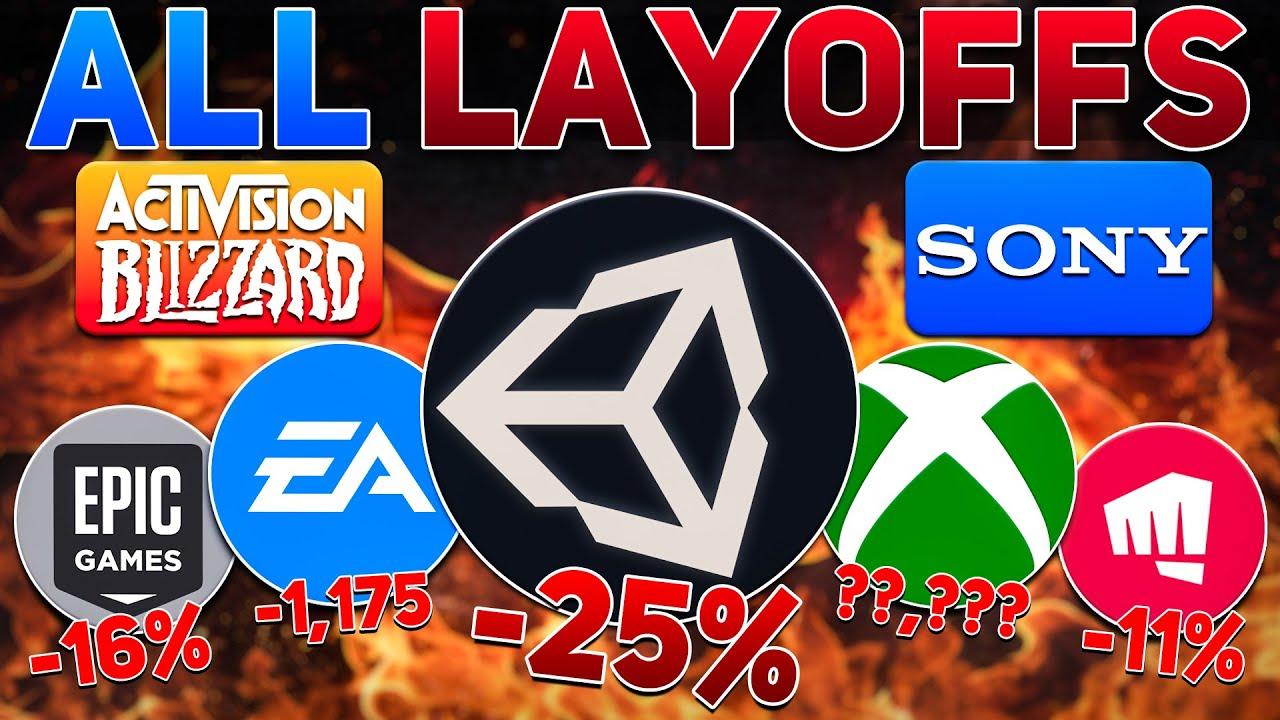
A sweeping round of layoffs across the video game sector is reshaping the industry’s job market, flooding it with experienced talent even as studios tighten headcounts and cancel projects. From major publishers to indie teams, restructuring moves that gathered pace after the pandemic-era boom have altered hiring patterns, compensation, and career paths for developers, artists, and support staff.
Behind the cuts are rising production costs, shifting player habits, slower dealmaking, and pressure to focus on fewer, larger franchises. The result is a more crowded candidate pool, a tilt toward contract and outsourced work, and growing interest in adjacent fields such as film, animation, and enterprise tech. As studios recalibrate-and as unions, universities, and regional hubs respond-the balance of power in game-making is moving, with long-term implications for how and where games get built.
Table of Contents
- Layoffs at major publishers shift hiring toward live service support and monetization
- QA community support localization and trust and safety roles bear the brunt while graphics backend and tools engineering remain resilient
- Job seekers should upskill in analytics economy design user acquisition technical art platform compliance and pipeline automation and show measurable impact in portfolios
- Studios and policymakers should expand paid apprenticeships targeted retraining grants contractor protections portable benefits and visa flexibility to retain talent
- To Wrap It Up
Layoffs at major publishers shift hiring toward live service support and monetization
Following months of headcount reductions at well-known studios, open roles are clustering around sustaining and growing existing games rather than building new ones. Budgets are being reallocated from pre‑production and experimental R&D to retention, monetization, and live operations, with more openings routed through vendors and contract engagements. Recruiters report that portfolios showcasing shipped seasonal updates, event cadences, and revenue lift are now outperforming traditional launch-focused reels.
- Trending roles: Live Ops Producers, Economy/Monetization Designers, Data/BI Analysts, CRM & Lifecycle Marketing Managers
- Technical demand: Backend/Commerce Engineers, DevOps for event pipelines, Experimentation/AB Testing PMs
- Player-facing support: Community Management, Player Support, Trust & Safety/Moderation
- Growth channels: UA/Performance Marketers, Storefront Merchandisers, Partnerships & Platform Relations
The reshaped market is favoring candidates with telemetry fluency, cohort analysis, and economy balancing, alongside experience running seasonal passes, limited‑time modes, and pricing experiments at scale. Compensation is shifting toward variable pay indexed to KPIs, while hiring concentrates in cost-efficient hubs and remote contractor networks, raising concerns about the pipeline for single‑player and experimental projects even as tools vendors and indies absorb displaced talent.
- Skills now prioritized: SQL/LookML, Python for analysis, LiveOps tooling, remote config, event orchestration
- Key metrics literacy: D1/D7/D30 retention, payer conversion, ARPDAU, ARPPU, churn, LTV modeling
- Platform know-how: entitlement/checkout systems, cross‑platform account linking, compliance (privacy and spend controls)
- Operational readiness: incident response, rollback plans, content gating, experimentation frameworks
QA community support localization and trust and safety roles bear the brunt while graphics backend and tools engineering remain resilient
Studio restructuring has fallen disproportionately on customer-facing and pre-release support functions, with internal teams in QA, community operations, localization, and trust and safety trimmed as publishers consolidate vendors and automate routine workflows. Leaders cite centralization into shared service hubs, variable-cost outsourcing, and maturing off-the-shelf tools as primary drivers-changes that are narrowing traditional entry routes into the sector and converting more roles to short-term contracts.
- QA: test automation and external test farms absorb milestone spikes; in-house teams shrink between releases.
- Community support: scaled moderation and deflection via platform tools and knowledge bases reduce headcount needs.
- Localization: machine translation with targeted human review and vendor consolidation shifts work out of studios.
- Trust and safety: AI-assisted triage and platform-level enforcement move moderation to shared services.
By contrast, core technical disciplines remain comparatively insulated as studios prioritize performance, online stability, and production throughput for live titles and multi-platform launches. Roles in graphics, backend services, and tools engineering continue to attract backfills despite broader freezes, with employers wary of risks tied to engine forks, rendering pipelines, and distributed build systems that are difficult to outsource or pause without impacting roadmaps.
- Graphics/Rendering: C++ expertise, shader pipelines, GPU profiling, and platform APIs (DirectX/Vulkan/Metal) aligned to certification schedules.
- Backend/Online: low-latency services for matchmaking, persistence, telemetry, and anti-cheat across cloud infrastructure.
- Tools/Build: editor tooling, asset pipelines, CI/CD, and build farm orchestration that sustain team productivity.
- Cross-platform optimization: engine integration and memory/performance tuning for PC/console/mobile parity.
Job seekers should upskill in analytics economy design user acquisition technical art platform compliance and pipeline automation and show measurable impact in portfolios
As studios consolidate and teams run leaner, hiring managers are prioritizing candidates who can connect creative decisions to business outcomes. Cross-functional fluency is emerging as a differentiator: reading funnel data, stress-testing virtual economies, scaling paid growth, optimizing assets for runtime, meeting store and regulatory rules, and automating repetitive build steps. Recruiters report that candidates who quantify results-rather than list tasks-are clearing screens faster and commanding stronger offers, particularly in live-ops and mobile.
- Analytics: Build SQL-backed dashboards; ship A/B tests tied to retention, conversion, and ARPDAU.
- Economy design: Model sinks/sources and inflation; validate price elasticity with cohort experiments.
- User acquisition: Optimize creatives and bids against LTV/CAC; verify incrementality with geo or PSA tests.
- Technical art: Reduce draw calls, memory, and shader variants; document FPS and battery impact on target devices.
- Platform compliance: Pass console/store checks and privacy regimes; maintain auditable checklists and test plans.
- Pipeline automation: Implement CI/CD for builds, asset validation, and smoke tests; track mean build durations and failure rates.
Portfolios that read like case files-stating the problem, method, metric, and outcome-are outperforming traditional reels and resumes. Recruiters cite transparent baselines, experiment design, and reproducible artifacts as the fastest signals of readiness for production environments.
- Metrics: D1/D7 retention shifts (e.g., +3.1pp D1), ARPDAU (+15%), ROAS at D30 (+12%), crash rate (−27%), build time (−42%).
- Artifacts: Links to dashboards, economy simulators, UA cohort sheets, before/after profiling captures, compliance matrices, and CI pipelines.
- Method: Brief notes on sample sizes, guardrails, and sanity checks (A/A tests, power analysis) to show rigor and reliability.
Studios and policymakers should expand paid apprenticeships targeted retraining grants contractor protections portable benefits and visa flexibility to retain talent
Amid sweeping workforce reductions, industry stakeholders are coalescing around a pragmatic workforce toolkit to keep projects on schedule and prevent a talent exodus. Executives and labor advocates point to a mix of salaried training pathways, reskilling subsidies, stronger independent worker safeguards, portable safety nets, and immigration flexibility as near-term levers to stabilize studios and preserve institutional knowledge. The approach aims to shorten time-to-productivity for displaced developers, reduce churn in live-service teams, and cushion contractors who now make up a larger share of art, QA, and tooling pipelines.
- Paid apprenticeships: Production-embedded, salaried rotations that pair trainees with senior engineers, artists, and producers, tied to deliverables on active titles.
- Targeted retraining grants: Short-cycle funding for engine/toolchain shifts, technical art cross-training, and design-to-systems transitions, administered with outcome-based milestones.
- Contractor protections: Standardized contracts, prompt-pay rules, transparent conversion pathways, and access to dispute resolution to reduce project risk and worker volatility.
- Portable benefits: Multi-employer health, retirement, and paid leave accounts-managed by third-party administrators-that follow workers across studios and projects.
- Visa flexibility: Streamlined transfers, clearer criteria for creative-technical roles, and public-private advisory clinics to retain global talent where permitted by law.
Implementation could be co-funded by studio consortia, platform holders, and state or provincial development programs, with incentives tied to verified hires and project completions. Analysts suggest tracking 12-month retention, ramp-up time, diversity of entry cohorts, late-payment incidents, and processing times for skilled visas as KPIs. Early pilots would focus on live-ops and tooling teams with the greatest schedule sensitivity; if successful, the model scales to indie collectives via shared services. The goal: preserve critical skills during a volatile cycle, lower rehiring costs, and keep shipping timelines intact without sacrificing worker security.
To Wrap It Up
As studios large and small recalibrate, the immediate effect is a crowded talent market, leaner teams, and a greater tilt toward contract work, co-development, and live-service support. Pay bands are tightening, roles are consolidating, and skills tied to tooling, data, and post-launch operations are gaining premium value, while some displaced workers look to adjacent sectors from film and TV to broader tech.
What comes next will hinge on funding conditions, the release slate, and how quickly companies translate new pipelines and automation into sustainable hiring rather than one-off cuts. Unionization drives, regional incentives, and consolidation pressures will continue to shape where jobs land and what they look like. For now, the game industry’s workforce is smaller, more flexible, and still in flux-awaiting the next cycle to reveal whether this reset becomes a foundation for resilience or a new normal.