

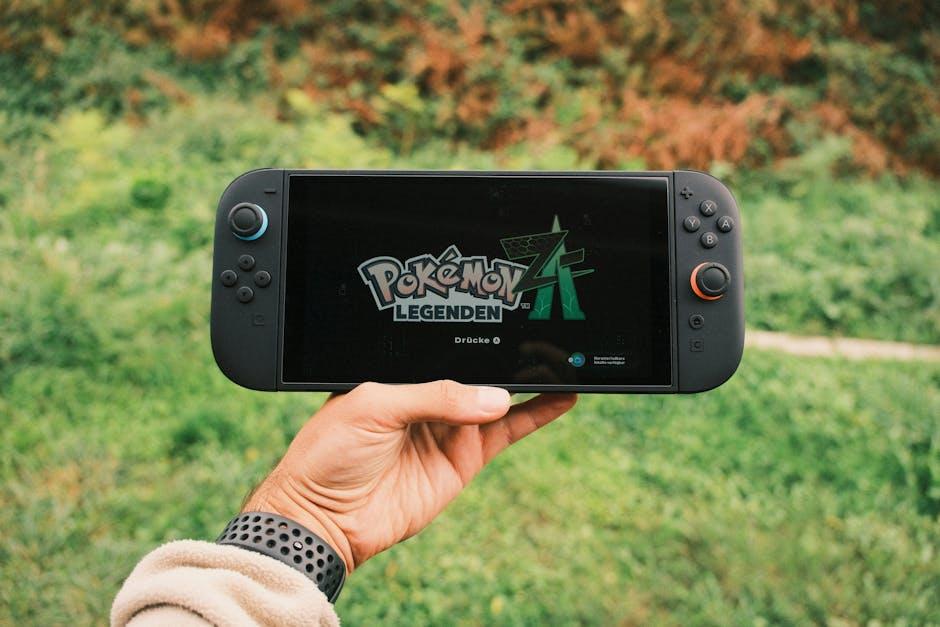
Nintendo’s next console is inching from rumor to inevitability. While the company has not made a formal announcement and continues to decline comment on speculation, reports from suppliers, developers, and analysts suggest a follow-up that preserves the Switch’s hybrid DNA while boosting power, display, and overall performance. Timelines commonly point to a launch window sometime after 2024, with chatter coalescing around 2025, though plans remain fluid.
This article aggregates the most credible reporting to date-what’s likely, what’s possible, and what’s still unknown-about the so‑called “Switch 2,” separating well-sourced details from wishful thinking as anticipation builds for Nintendo’s next move.
Table of Contents
- Inside the hardware leap Chipset targets display tech and real performance expectations
- Backward compatibility and digital libraries How to safeguard saves and make smart upgrade choices
- Launch timing pricing and supply What to expect and how to secure a fair preorder
- Games accessories and storage Practical launch day buys and what to skip
- Future Outlook
Inside the hardware leap Chipset targets display tech and real performance expectations
Supplier notes and developer chatter point to a custom NVIDIA SoC built on an Ampere-class design, often referenced as T239, aiming to pair console-grade features with handheld power limits. The silicon is expected to lean on DLSS Super Resolution to elevate image quality, with ray-tracing support used selectively rather than as a baseline. Memory is widely tipped to move to LPDDR5-class for bandwidth, with faster UFS-style storage improving asset streaming. Combined with a revamped NVN2 graphics stack, sources expect reduced CPU bottlenecks and steadier frame pacing-practical gains that matter more than headline TFLOPS.
- Graphics target: DLSS-assisted rendering, limited RT effects where budgets allow
- CPU uplift: newer ARM cores for better threading and simulation workload
- Memory/IO: higher bandwidth plus quicker storage for faster loads and fewer hitches
- Thermals: tuned for handheld power envelopes; peak clocks more likely in dock
On the display front, multiple supply chain signals suggest an 8-inch LCD at handheld resolution, with the dock handling higher-output modes. Realistic performance targets cited by people familiar with kits point to 720p-class handheld play with dynamic resolution and DLSS where feasible, while the dock could push 1080p-1440p internal resolutions upscaled toward 4K in select titles. Expectations should skew toward stable frame-time delivery-think consistent 30 or 60 fps depending on genre-over blanket promises of native 4K or universal ray tracing.
- Handheld: 720p dynamic, DLSS/temporal upscaling for clarity, 30-60 fps targets
- Docked: 1080p-1440p internal with DLSS to 4K output on compatible displays
- Features to watch: potential HDR/VRR support via dock remains unconfirmed
- Bottom line: meaningful generational leap, but tuned for efficiency over brute force
Backward compatibility and digital libraries How to safeguard saves and make smart upgrade choices
Industry chatter points to Nintendo preserving existing libraries on the next system, with multiple developers indicating that current Switch software is being tested on new hardware and that Nintendo Account identities will continue to anchor purchases. While Nintendo hasn’t formally detailed compatibility, retailers and publishers are preparing contingency plans for both physical and digital ownership, and some partners are reportedly exploring enhancement patches to boost frame rates and load times on legacy titles. Physical media is expected to remain cartridge-based, though it’s unclear whether a new cart format would affect older game performance or require updates. Until official guidance arrives, the prudent read is that continuity is likely-but not guaranteed.
- Digital continuity: Watch for confirmation that the current eShop and Nintendo Account balances, wishlists, and entitlements carry forward.
- Physical collections: Expect broad support for existing cartridges, with potential exceptions noted on a per-title basis once compatibility lists emerge.
- Accessories: Monitor statements on Joy-Con, Pro Controller, and dock interoperability; mixed support is possible if new features are introduced.
- Upgrade paths: Publishers may offer free updates or paid “next-gen” editions; check policies before double-dipping.
Protecting progress now will reduce friction on day one. Prioritize official tools and avoid assumptions about third‑party backups: Cloud Save support through Nintendo Switch Online remains the most reliable safeguard, but not every game participates. For titles that restrict cloud syncing, Nintendo’s built-in System Transfer and per-title Save Data Transfer options remain essential, and you should plan for re-downloads because game data can’t be moved solely by swapping microSD cards between consoles.
- Enable Cloud Save today: Turn it on systemwide, then verify status per game; note exceptions (certain competitive and island-based titles).
- Schedule a full System Transfer: Keep your old Switch powered and signed in until your new device is fully migrated and licenses are restored.
- Secure captures: Back up screenshots and videos from Album to a PC or external drive; microSD cards can be repurposed, but game installs must be re-downloaded.
- Mind account roles: Deactivate your current Primary Console before trading in; confirm two-factor authentication and password health.
- Storage planning: Choose a UHS‑I, A2-rated microSD for faster asset streaming; leave headroom for potential high-res texture updates.
- Trade-in timing: Don’t surrender your old hardware until saves, licenses, and profile data are verified on the new system.
- Wait for clarity where needed: Hold purchases on borderline titles until BC lists and upgrade policies are public.
Launch timing pricing and supply What to expect and how to secure a fair preorder
Industry guidance points to an announcement window within Nintendo’s current fiscal year, with retail insiders preparing for a launch no earlier than early-mid 2025. Pricing chatter among distributors centers on a potential $399-$449 USD MSRP depending on configuration, but no official price is confirmed. Expect tight day-one allocations as retailers lean on queue systems and one-per-customer limits to curb bots, with follow-up waves arriving in staggered regional drops. Watch for retailer-exclusive bundles and optional accessories that can blur the true base price at checkout, and anticipate a brief period of elevated secondary-market listings before supply normalizes.
- Announcement timing: Look for formal details via Nintendo’s channels before retailers post listings.
- MSRP clarity: Verify the base-console price vs. add-on bundles to avoid inflated totals.
- Regional rollout: Launch dates may differ by market; allocations often favor flagship territories first.
- Wave scheduling: Initial preorders typically reopen in waves tied to production and logistics updates.
To secure a fair preorder, prepare ahead of time and treat any markup above the official MSRP as a red flag. Create retailer accounts, add verified payment methods, and enable stock alerts before listings go live. Favor first-party stores and major retailers that enforce bot mitigation, transparent queueing, and one-per-household limits. If listings sell out, avoid third-party resellers and instead target second-wave allocations or in-store reservations where ID checks reduce scalping. Keep documentation of order timestamps and price confirmations for price-protection claims.
- Preload your cart: Save shipping details and payment to cut checkout time by seconds that matter.
- Use trusted links: Access listings from Nintendo or verified retailer pages to dodge spoofed sites.
- Queue early: Join virtual lines before the drop; do not refresh unless instructed.
- Consider local pickup: Some stores hold in-person preorder slots with deposit-often less botted.
- Be patient for wave two: Replenishments are common; waiting can mean MSRP, not markup.
Games accessories and storage Practical launch day buys and what to skip
Early buyers looking to avoid launch-day headaches are focusing on essentials that won’t be obsoleted by final specs. For storage, the safest bet remains a UHS‑I, V30, A2 microSD-256-512 GB hits the sweet spot on price-per-GB while covering likely larger installs if higher-res textures arrive. Protection is low-risk and high-return: a tempered glass screen protector and a slim carry case (with a snug interior and vent clearance) are practical buys. Power-wise, a USB‑C PD charger (30-45 W) and a certified 3A/5A e‑marked cable provide reliable handheld and dock charging without overdriving the system. For network stability on day one, a USB Ethernet adapter remains a solid add if you plan to play docked.
- Buy now: UHS‑I V30 A2 microSD (256-512 GB)
- Buy now: Tempered glass screen protector
- Buy now: Protective carry case with cartridge sleeves
- Buy now: USB‑C PD 30-45 W charger + certified e‑marked cable
- Buy now: USB Ethernet adapter for docked play
What to skip until details settle: third‑party docks and USB‑C hubs, given past compatibility and power‑negotiation issues; overspec HDMI “8K/48 Gbps” cables, which don’t improve 1080p/4K output; ultra‑high‑wattage GaN bricks that exceed the console’s PD profile; and early form‑fitted grips, shells, or Joy‑Con rails until final dimensions are confirmed. Hold off on 1 TB+ microSD cards unless pricing is exceptional-capacity needs will become clearer as file sizes and backward compatibility are confirmed. Also skip clip‑on cooling fans and no‑name U1 microSDs, which add noise or bottleneck performance without tangible gains.
- Skip for now: Third‑party docks/USB‑C hubs
- Skip for now: “8K/48 Gbps” HDMI 2.1 cables
- Skip for now: 65-100 W GaN chargers without a clear PD/PPS match
- Skip for now: Form‑fitted shells/grips/rails until specs are final
- Skip for now: 1 TB+ microSD (wait for pricing and file-size clarity)
- Skip for now: Clip‑on fans and low-speed U1/no‑name microSDs
Future Outlook
For now, the only certainty is that Nintendo’s next hardware remains unannounced and subject to change. Timelines, specs, pricing, and launch plans can shift, and past cycles show that credible hints often mingle with noise until an official reveal.
As the rumor mill turns, watch for concrete indicators: regulatory filings, partner briefings, retail materials, and-most decisively-Nintendo’s own announcements. Until then, treat every leak with caution. We’ll continue to monitor developments and update this story as verifiable details emerge.