

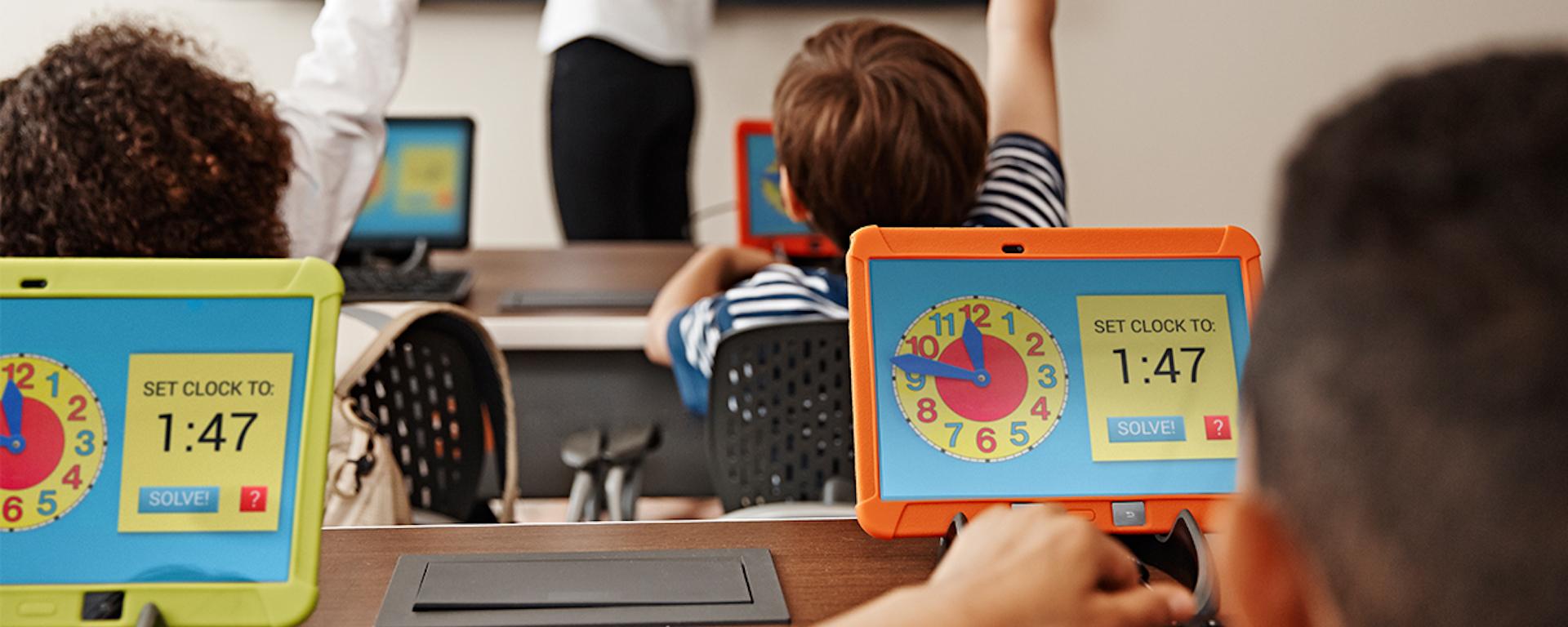
The pop of countdown timers and a flurry of digital badges are becoming as familiar as chalk dust in classrooms nationwide. From elementary math drills to high school history debates, teachers are weaving game mechanics-points, quests, leaderboards-into everyday lessons, betting that the same dynamics that keep teens glued to their phones can also keep them engaged with school.
Once dismissed as a gimmick, gamification is moving into the mainstream as districts search for ways to reverse pandemic-era learning losses and re-energize students. Schools are adopting platforms like Kahoot!, Quizizz, and Minecraft Education Edition to deliver instant feedback, personalize practice, and turn participation into measurable progress. Early research suggests such tools can boost motivation and, in some cases, improve retention, though outcomes vary widely by design and implementation.
The rapid shift is raising fresh questions about equity, screen time, and the risks of replacing intrinsic curiosity with digital rewards. As policymakers, parents, and educators weigh the trade-offs, one thing is clear: the grammar of schooling is changing-and the new vocabulary sounds a lot like games.
Table of Contents
- Gamified Engagement Rises as Badges and Quests Boost Participation While Preserving Rigor
- From Play to Proof Data Driven Feedback Turns Game Play into Formative Assessment
- Mind the Gaps Ensuring Equity Avoiding Reward Fatigue and Protecting Intrinsic Motivation
- What Schools Should Do Set Clear Goals Align to Standards Reward Mastery Not Speed and Train Teachers
- Wrapping Up
Gamified Engagement Rises as Badges and Quests Boost Participation While Preserving Rigor
Schools piloting classroom game mechanics report measurable gains in student participation, with teachers citing sharper focus during work periods and more on-time submissions. Central to the shift are badges that recognize demonstrated skills and multi-step quests tied to standards, replacing one-off worksheets with narrative arcs and clear checkpoints. Educators say the approach reframes practice as progress: learners see where they stand, what’s next, and how to level up-without lowering expectations.
- Participation badges: rewarded for consistent contribution and preparation.
- Collaboration badges: earned through peer feedback, team roles, and shared problem-solving.
- Mastery badges: unlocked only after meeting or exceeding standards-aligned criteria.
Contrary to fears of “points for points’ sake,” districts are anchoring rewards to standards-aligned rubrics, mastery-based grading, and required evidence of learning. Quests demand artifact submission, reflection, and revision, and badges are gated behind proficiency rather than mere completion. To safeguard rigor, teachers are using tiered challenges, time-bound milestones, and analytics dashboards to flag superficial shortcuts while opening pathways for enrichment. Early classroom reports indicate that when the rules are transparent-and rewards hinge on verified understanding-game elements increase buy-in while keeping academic expectations intact.
From Play to Proof Data Driven Feedback Turns Game Play into Formative Assessment
In districts piloting learning games, telemetry once used by designers is now fueling instruction. Teachers open dashboards that surface real‑time accuracy, time‑on‑task, and hint patterns, while items are tagged to standards so each click maps to a skill. The result is ongoing evidence, not end‑unit surprises: adaptive levels adjust challenge, heat maps flag common misconceptions, and automatic item analysis captures where students veer off course-during practice, not after. Early findings from classroom trials point to fewer grading bottlenecks and faster reteaching cycles as activity data is folded into daily plans.
- Signals captured: response latency, first‑try accuracy, retry pathways, hint reliance, error type
- Views for educators: student‑level skill mastery, small‑group recommendations, question difficulty curves
- Student feedback: progress bars tied to goals, just‑in‑time hints, growth badges linked to specific skills
Because feedback arrives during practice, teachers intervene within minutes-shifting groups, pushing targeted mini‑lessons, or issuing scaffolded challenges to keep momentum. Vendors report that micro‑metrics translate into actionable prompts rather than post‑hoc reports, aligning with formative assessment best practices and easing documentation for IEP goals and family updates. Privacy remains a checkpoint, but districts adopting data‑minimization policies say the instructional gains-particularly for students needing rapid correction-are tangible.
- Classroom impact: quicker reteach triggers, reduced idle time, clearer evidence for conferences
- Equity supports: multilingual prompts and adaptive scaffolds guided by error trends
- Instructional cadence: play‑analyze‑adjust cycles embedded within a single period
Mind the Gaps Ensuring Equity Avoiding Reward Fatigue and Protecting Intrinsic Motivation
As game mechanics move from pilots to district policy, the equity stakes rise. Uneven device access, literacy differences, and sensory needs can skew results long before the first point is awarded. Administrators and teachers are beginning to audit mechanics for bias, asking who appears on the leaderboard and who disappears in the margins. The aim, they say, is to convert points into participation-not privilege-and ensure that engagement tools don’t become gatekeepers to learning.
- Design for low-bandwidth and offline contexts (printable quests, device-sharing schedules, asynchronous play windows).
- Reduce public comparison with anonymized leaderboards and private progress dashboards.
- Offer multimodal pathways (audio, visuals, manipulatives, simplified text) to meet varied language and neurodiversity needs.
- Publish transparent scoring and include student input; add an appeals process for challenge outcomes.
- Meet accessibility standards: WCAG-aligned color palettes, high-contrast UI, alt text, captions, and keyboard navigation.
Classrooms also report a new challenge: when every task carries a token, novelty fades and students chase points over progress. Researchers and practitioners are recalibrating incentives to prevent reward fatigue while protecting curiosity and mastery. The shift reflects a newsroom’s mantra-signal over noise-where fewer, clearer reinforcers align with learning goals rather than distract from them.
- Decouple grades from currency; use competency-based badges tied to standards, not streaks.
- Adopt fewer, meaningful milestones with variable intervals to avoid constant dopamine drip.
- Rotate mechanics-collaborative “boss” challenges, time-boxed seasons, and opt-in quests-to prevent habituation.
- Center process feedback and self-assessment rubrics; spotlight strategy, not just speed.
- Cap prizes and highlight effort, reflection, and transfer (showcases, peer reviews, portfolios) as the real rewards.
- Build autonomy through choice boards and personal goal tracking so motivation outlasts the game layer.
What Schools Should Do Set Clear Goals Align to Standards Reward Mastery Not Speed and Train Teachers
Districts adopting game mechanics are setting clear, measurable learning goals explicitly aligned to state and national standards. Administrators report that transparent “quests” tied to standards codes help students track progress and give teachers auditable evidence of proficiency. To avoid novelty-driven rollouts, leaders are linking platform features to pacing guides, IEP accommodations, and common rubrics, with progress dashboards monitored like gradebooks and reviewed in PLCs.
- Map quests to standards: tag each challenge to the relevant benchmark and rubric criterion.
- Define mastery thresholds: set cut scores and artifact requirements before implementation.
- Use formative checkpoints: short, standards-referenced missions that surface misconceptions early.
- Publish progress: family-facing trackers to reduce ambiguity and disputes over grades.
Experts caution that points and leaderboards can distort incentives. The emerging practice is to reward mastery, not speed, while investing in teacher training to run these systems with fidelity. Mastery-based badges, unlimited retakes, and time-flexible quests shift attention to evidence of learning, and professional development in data use, accessibility, and game design basics keeps the focus on equity and rigor.
- Replace timers with tiers: award badges for proficiency, with higher tiers for depth and transfer.
- Offer redo pathways: allow retries with targeted feedback; cap points but never cap attempts.
- Calibrate grading: convert badges to standards-based marks to prevent grade inflation.
- Train teachers: provide PD on UDL, bias checks in reward systems, privacy, and formative analytics; recognize completion with micro-credentials.
Wrapping Up
As districts emerge from years of disrupted learning, gamified lessons are moving from classroom experiments to line items in procurement plans. Teachers report higher participation and quicker feedback loops; platform providers promise real-time data and personalized pathways. The question now shifts from whether students will play to whether the games consistently lift learning.
Skeptics warn of overreliance on extrinsic rewards, uneven access to devices, and data practices that outpace policy. Researchers, too, call for larger, longer trials to separate novelty effects from durable gains. With budgets tight and standards in flux, administrators are pressing for proof that points and badges translate into skills and scores.
The next phase will hinge on design and governance: tools that prioritize mastery over speed, give educators control, align with curricula, and safeguard student information. If those conditions hold, gamification could move from buzzword to backbone. For now, classrooms remain the test bed-and the results will set the pace.