

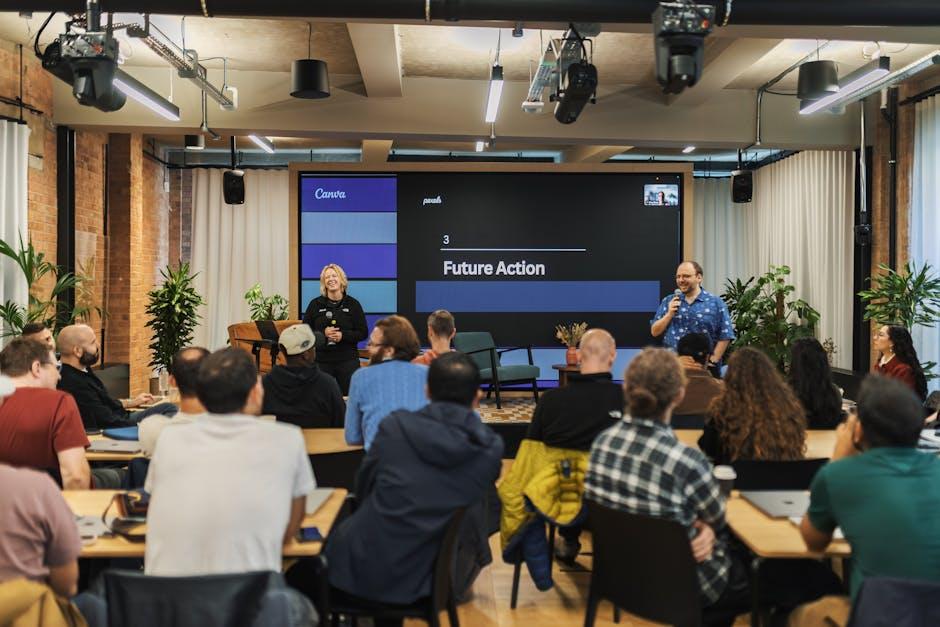
Leadership and communication are moving to the center of education and career pathways as schools and employers recalibrate for a labor market that prizes collaboration, influence and clarity as much as technical expertise. From K-12 classrooms to graduate programs and corporate training floors, curricula and hiring criteria are being rewritten to elevate candidates who can lead teams, navigate ambiguity and articulate ideas across disciplines.
Driven by hybrid work, automation and globalized projects, the shift is reshaping how students are taught and assessed-and how workers advance. Capstone projects, peer-led learning and client-facing internships are proliferating, alongside micro-credentials in public speaking, negotiation and conflict management. Performance reviews are placing greater weight on communication, empathy and adaptability, giving an edge to those who can pair hard skills with a leadership mindset and pressuring institutions to measure what has long been difficult to quantify.
Table of Contents
- Employers Reward Communicators as Colleges Expand Leadership Labs
- Data Show Clear Writing and Active Listening Predict Faster Promotions and Higher Retention
- Classroom Strategies Adopt Weekly Briefings Structured Debate and Real Time Feedback
- Career Playbook Set Measurable Goals Find Mentors and Lead Cross Functional Projects
- Insights and Conclusions
Employers Reward Communicators as Colleges Expand Leadership Labs
Companies are reshaping hiring and pay decisions around candidates who can turn complex ideas into clear, actionable messages. Recruiters cite faster promotion tracks and stronger client outcomes when early-career hires brief executives with precision, frame trade-offs, and translate data for nontechnical stakeholders. In response, universities are scaling studio-style programs that mimic high-stakes meetings, crisis updates, and boardroom pitches, often with AI-generated feedback and recorded performance reviews. What is converting interviews into offers now centers on verifiable evidence of real communication work:
- Audience analysis that anticipates objections and tailors tone
- Concise writing under deadline with clear recommendations
- Data storytelling that pairs visuals with narrative and risk context
- Meeting facilitation that surfaces decisions and next steps
- Cross-functional collaboration with documented outcomes
On campus, the fastest growth is in cross-disciplinary labs housed in business, engineering, and health schools, where lectures give way to iterative sprints and peer coaching. Corporate partners are co-designing scenarios and issuing micro-credentials tied to competencies, and registrars are beginning to feature these signals on transcripts. Program directors say the early results-shorter time-to-offer, higher intern-to-hire conversions, and quicker time-to-team-lead-are persuading departments to standardize the model, with lab portfolios now common alongside GPAs in candidate packets:
- Simulation briefings for crisis, product launch, and stakeholder updates
- Peer review loops with transparent rubrics and revision checkpoints
- Executive-in-residence critiques on clarity, influence, and ethics
- Intercultural communication drills for distributed teams
- Negotiation and stakeholder mapping as capstone assessments
Data Show Clear Writing and Active Listening Predict Faster Promotions and Higher Retention
Across sectors, HR analytics and promotion committee notes converge on a simple pattern: professionals who communicate with concise, audience-aware writing and demonstrate reflective, action-oriented listening move through career bands sooner and stay with their organizations longer. Managers link these habits to fewer clarification loops, quicker cross-functional decisions, and higher stakeholder trust-effects that are especially pronounced on distributed teams where written artifacts and meeting discipline carry most of the execution load. Leading indicators appear months before review cycles, showing up in collaboration exhaust, performance feedback, and cycle-time data.
- Fewer clarification cycles: reduced back-and-forth messages per task and faster sign‑offs on briefs, PRDs, and proposals.
- Decision-first documentation: summaries and clear next steps placed at the top of notes, improving alignment across time zones.
- Peer feedback signals: higher “heard and understood” scores, effective paraphrasing in meetings, and consistent capture of action items with owners and deadlines.
- Lower rework due to ambiguity: fewer scope changes and defects traceable to unclear requirements.
- Manager calibration comments: repeated mentions of clarity under pressure, tight email subject lines, and balanced talk‑listen ratios.
Organizations treating communication as a promotion accelerant and retention lever report tangible gains within a quarter when they standardize expectations and instrument the basics. Small, low-cost changes-paired with visible executive modeling-create fast feedback loops and make strong communicators easy to recognize in talent reviews.
- Codify writing norms: require a two‑sentence executive summary atop all memos; adopt templates with “Decision, Rationale, Risks, Next Steps.”
- Institutionalize listening: implement a “listen‑back” practice (paraphrase, confirm, commit) for high‑stakes meetings; score it in 360s.
- Make artifacts searchable: centralize notes and decisions; tag owners and due dates to reduce dependency on hallway context.
- Coach to signal: provide micro‑reviews of emails and briefs; reward clear writing and active listening explicitly in promotion packets.
- Measure what matters: track decision latency, revision counts, and meeting follow‑through rates alongside output quality.
Classroom Strategies Adopt Weekly Briefings Structured Debate and Real Time Feedback
Schools increasingly standardize weekly briefings to mirror professional routines, aligning learning goals with measurable outputs and shared accountability. Faculty report clearer expectations and faster pivots, while student leaders practice agenda-setting, status reporting, and time management-skills directly tied to workplace readiness. The format elevates voice and responsibility, turning classrooms into labs for leadership and communication under real deadlines.
- Cadence: short, timed updates with rotating student facilitators
- Clarity: goals and deliverables surfaced via shared dashboards
- Coordination: cross-course checkpoints to reduce bottlenecks
- Accountability: visible action items and follow-through each week
In parallel, instructors are adopting structured debate and real-time feedback to convert discussion into evidence-based practice. Time-boxed roles-moderator, advocate, skeptic-promote concise argumentation and active listening, while live rubrics and polling provide immediate performance signals. The result is a disciplined arena for reasoning, negotiation, and presence that connects classroom performance to career-facing competencies.
- Format: adjudicated rounds with source verification checkpoints
- Signals: instant rubric scores and concise micro-notes to guide revision
- Equity: structured turns ensure participation across groups
- Transfer: reflection prompts translate debate takeaways to workplace scenarios
Career Playbook Set Measurable Goals Find Mentors and Lead Cross Functional Projects
Career acceleration now looks like an operating plan: professionals who translate aspirations into quantified objectives, instrument progress with KPIs, and report on a predictable cadence are moving faster across industries, hiring managers say. The playbook favors clarity over volume-pick a small number of outcomes that tie to revenue, cost, risk or customer metrics, define the evidence that proves success, and communicate what will be delivered and by when. Transparency matters as much as output; the leaders getting tapped for stretch roles are the ones who publish their assumptions, risks and trade‑offs-and then adapt based on signal, not noise.
- Anchor goals to business outcomes: replace task lists with quarterly OKRs and numeric targets.
- Instrument the work: simple dashboards tracking leading and lagging indicators, updated weekly.
- Time-box reviews: 15‑minute Friday readouts with blockers, decisions needed, and next steps.
- Tell the story with data: charts plus one-sentence headlines that answer “so what?” for stakeholders.
Advancement also hinges on relationships and scope. A deliberate network of advisers-a sponsor with influence, a technical coach, and a peer sounding board-shortens learning cycles and opens doors. Pair that with cross‑team initiatives that solve end‑to‑end problems, and communication becomes the differentiator: leaders who listen across functions, frame trade‑offs in plain language and facilitate decisions are the ones delivering durable wins. The pattern mirrors newsroom discipline-verify facts, synthesize viewpoints, and ship on deadline-only here the byline is a ship-ready product or process.
- Build a personal board: identify one sponsor, one skills mentor, and one peer coach; set monthly 30‑minute sessions.
- Secure cross‑functional alignment early: name an executive sponsor, draft a brief with problem, scope, metrics and risks.
- Operationalize collaboration: define RACI, decision SLAs and a shared glossary to prevent handoff friction.
- De‑risk in the open: run pre‑mortems, log assumptions, and close with a post‑mortem linking results to business impact.
Insights and Conclusions
As labor markets shift and automation expands, employers continue to rank leadership and communication among the clearest predictors of on-the-job performance, prompting schools to embed team projects, presentations and work-based learning into coursework while credential providers expand offerings in so-called power skills. Researchers note gaps persist in measurement and access, raising questions about how equitably these skills are taught, signaled and rewarded.
With hybrid work and AI changing how teams coordinate, demand for these competencies is expected to intensify, even in technical roles. Policymakers, districts and companies are betting on closer partnerships and new assessments to track outcomes.
For students and workers, the trend line is steady: technical know-how may open the door, but leadership and communication will help determine who advances.