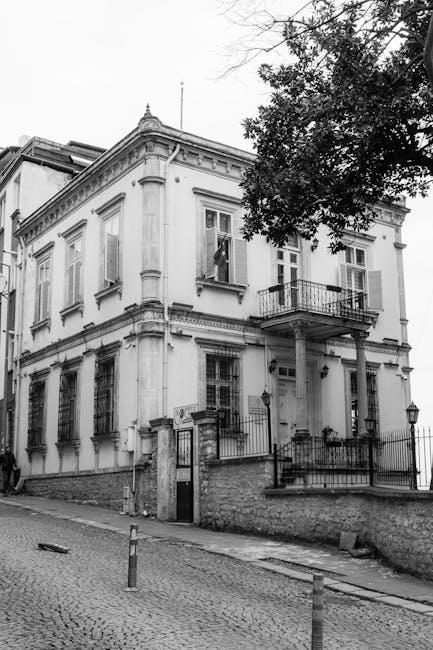
Across the country, museums and galleries are recasting themselves as entry points to local history, shifting from object-first showcases to community-centered storytellers. White walls now share space with neighborhood maps, oral histories and pop-up archives that invite residents to contribute their own photographs, artifacts and memories.
The pivot-accelerated by post-pandemic recovery, cultural reckoning and new funding tied to civic engagement-is reshaping how institutions collect, interpret and share the past. Partnerships with libraries, tribal nations, churches and schools are pushing exhibitions beyond building walls through mobile displays, QR-coded walking tours and digitized collections accessible on a phone.
For cultural institutions, the approach promises broader audiences, deeper trust and fresh relevance to daily life, while offering towns a tool for education and heritage tourism. But it also raises hard questions about authority, accuracy and whose stories get told, testing staff capacity and curatorial standards as public participation grows. As galleries become gateways to place-based history, they are redefining what it means to “visit” a museum-and who gets to write the first draft of local memory.
Table of Contents
- Museums and galleries become gateways to local history as curators share the stage with residents
- Inside the shift pop up exhibits oral history labs and digitized archives bring hidden stories forward
- What to do next co curate with community groups pay culture bearers map walking trails and publish open access collections
- Wrapping Up
Museums and galleries become gateways to local history as curators share the stage with residents
In a visible pivot from curator-only narratives, cultural institutions are piloting co-curation models that invite neighbors to help shape exhibits-bringing family albums, storefront artifacts, and oral histories into the gallery alongside scholarly interpretation; organizers say the approach expands authorship, draws first-time visitors, and rebuilds trust, while new safeguards-informed consent, clear crediting, and provenance checks-aim to protect contributors; on the floor, QR-linked audio, bilingual labels, and interactive neighborhood maps connect collections to streets beyond the museum, and rotating panels of resident advisors now vet labels, lending policies, and programming to keep storytelling grounded and accountable.
- Resident Curatorships: paid, time-bound roles for local historians and storytellers to co-lead exhibitions.
- Community Accession Days: pop-up intake sessions to digitize photos, record memories, and document objects without requiring permanent donation.
- Neighborhood Loan Programs: short-term, insured loans of everyday artifacts with flexible return terms and shared decision-making.
- Open Metadata Labs: public edit sessions to correct captions, add context, and surface underrepresented voices in catalogs.
- Revenue-Sharing Agreements: transparent splits on ticketed talks, reproductions, and publications tied to co-created shows.
- Mobile Micro-Galleries: modular displays that travel to libraries, markets, and schools, extending access beyond downtown corridors.
Inside the shift pop up exhibits oral history labs and digitized archives bring hidden stories forward
Cultural institutions are rapidly adopting agile displays, recording suites, and searchable repositories to surface neighborhood narratives long kept out of the public record. Curators cite rising turnout as families bring photos, diaries, and ephemera, while technologists deploy AI-assisted transcription, high-resolution scanning, and geo-tagged catalogs to make materials discoverable. Mobile units gather testimonies in libraries and markets; cross-referencing with public records strengthens provenance; and community review panels vet context to avoid romanticization or harm. The outcome is measurable: more inclusive timelines, more accountable storytelling, and a living archive the public can query in real time.
- Pop-up galleries: modular cases and projection walls activated in under an hour.
- Oral history labs: consent-forward workflows, quiet pods, instant noise cleanup.
- Digitized archives: IIIF viewers, OCR across multiple scripts, open APIs for reuse.
- Access and equity: multilingual labels, screen-reader-ready metadata, free downloads.
- Safeguards: community permissions, redaction options, culturally sensitive handling.
What to do next co curate with community groups pay culture bearers map walking trails and publish open access collections
Cultural institutions are shifting from gatekeeping to partnership, formalizing paid roles for tradition bearers, co-designing exhibitions with neighborhood groups, and widening access by mapping story-rich walking routes and releasing digitized holdings under open licenses; the following steps outline an implementation roadmap grounded in equity, consent, and measurable public benefit.
- Co-curate with local groups: Create standing community curatorial boards, with MOUs, rotating seats, and transparent decision logs.
- Pay culture bearers: Budget stipends at professional rates, honor intellectual property, and include travel, childcare, and translation costs.
- Map walking trails: Co-design routes featuring neighborhood historians, Indigenous place names, accessibility data, and QR-linked audio stops.
- Publish open collections: Release digitized materials via CC BY/CC0, IIIF manifests, and bulk downloads, with plain-language rights statements.
- Protect consent and data sovereignty: Use community-specific permissions, cultural sensitivity flags, and opt-out pathways.
- Build multilingual storytelling: Commission oral histories and captions in prevalent community languages and ASL.
- Equip educators and guides: Provide downloadable field kits, walking-tour scripts, and printable maps.
- Fund and sustain: Reallocate acquisition budgets to community regrants; seek municipal, tribal, and BIPOC-led fund partnerships.
- Measure impact: Track participation, creator payments, trail usage, downloads, and local business tie-ins; publish quarterly dashboards.
Wrapping Up
As museums and galleries expand beyond exhibition walls to host oral histories, neighborhood archives and community programs, they are reshaping how residents encounter the past. The shift positions cultural institutions as connectors-linking personal memory with public record and bringing lesser-heard voices into view.
With new partnerships, modest grants and digital tools, many are betting that local stories can draw repeat visitors and classroom collaborations as readily as blockbuster shows. The test ahead is sustaining that momentum with stable funding and trust.
For communities where history can be easy to overlook, these venues are making it harder to ignore-turning familiar corners into entry points to a shared, and still unfolding, civic record.