

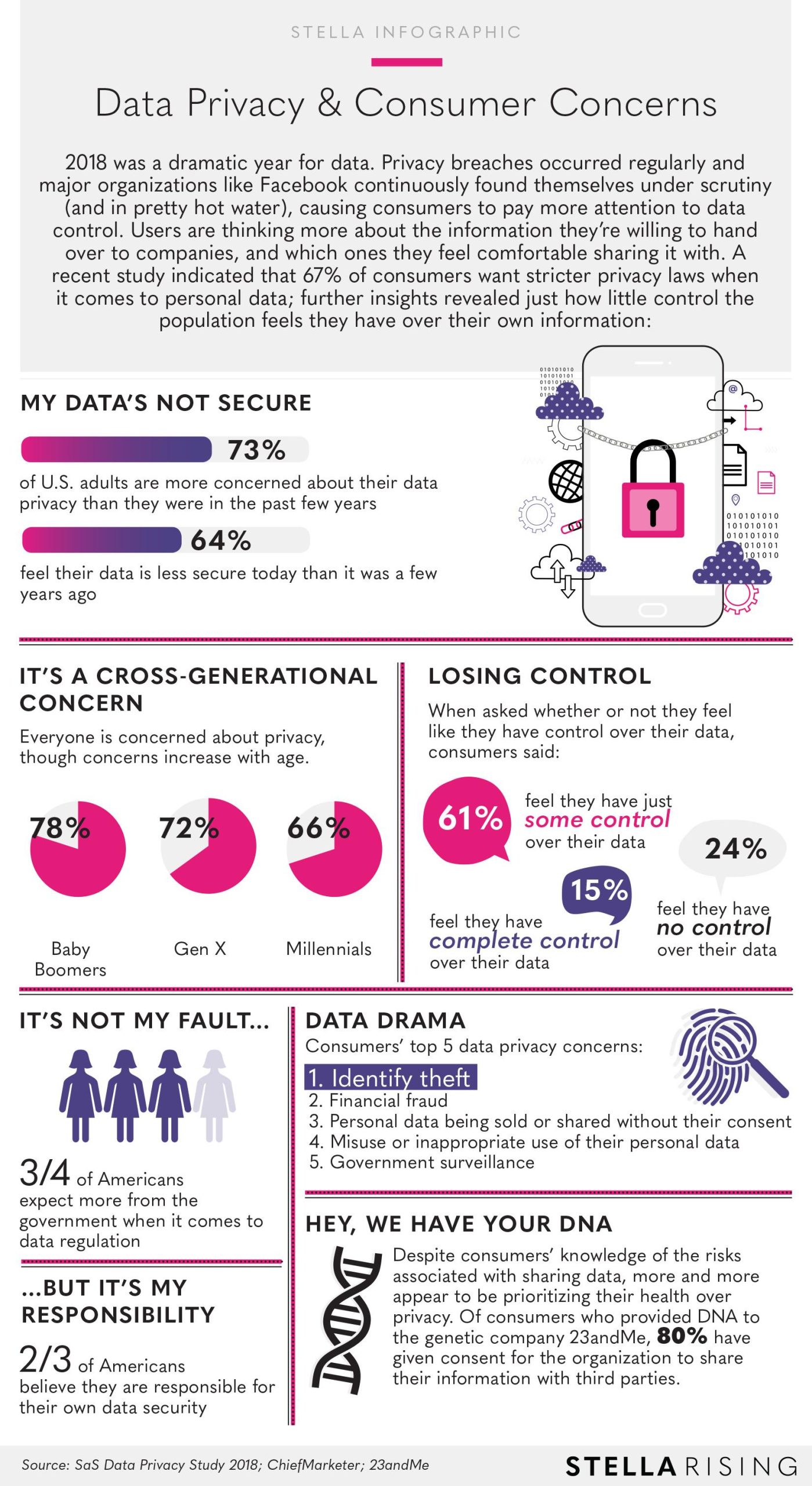
As public scrutiny of data collection intensifies and regulators tighten oversight, companies across sectors are rapidly retooling how they gather, store, and monetize consumer information. From Silicon Valley to Main Street, businesses are shifting away from opaque tracking toward first‑party data strategies, transparent consent practices, and “privacy‑by‑design” product development-moves aimed at preserving trust while keeping digital marketing and personalization intact.
The pivot is driven by a confluence of forces: high‑profile breaches that have eroded confidence, the phase‑out of third‑party cookies, platform changes that curb cross‑app tracking, and a wave of privacy laws reshaping the rules from Europe to multiple U.S. states. In response, firms are investing in consent management tools, data minimization, secure data “clean rooms,” and contextual advertising, even as they test new analytics techniques that promise insights with fewer identifiers.
This article examines how the privacy reset is redrawing competitive lines-rewarding brands that can turn compliance into an advantage, pressuring laggards with operational and legal risk, and redefining what “personalization” means in a world where consumer trust is as valuable as the data itself.
Table of Contents
- as Trust Becomes a Competitive Edge
- Regulators Tighten the Rules Driving Data Minimization Consent Reviews and First Party Measurement
- Playbook for Leaders Map Data Flows Reduce Third Party Sharing Adopt Privacy by Design and Offer Clear Opt Out
- In Conclusion
as Trust Becomes a Competitive Edge
Major brands are overhauling data practices amid regulatory pressure and cookie deprecation, shifting from opaque tracking to transparent, consent-led engagement as trust emerges as a measurable differentiator in customer acquisition and loyalty; executives report new performance metrics-consented reach, data minimization rate, and deletion SLA compliance-while product teams redesign privacy UX and security leaders deploy privacy-preserving tech to sustain analytics without identifying individuals.
- First‑party and zero‑party data programs replace third‑party cookies with clear value exchanges for consumers.
- Privacy‑preserving measurement using aggregation, differential privacy, and on‑device processing to keep insights while limiting risk.
- Transparent consent flows with plain language, granular controls, and region‑aware defaults aligned to local laws.
- Supply‑chain audits and stricter vendor clauses to prevent shadow data sharing and ensure downstream compliance.
- Trust dashboards that disclose data use, retention timelines, access logs, and real‑time deletion status.
Regulators Tighten the Rules Driving Data Minimization Consent Reviews and First Party Measurement
With privacy watchdogs escalating enforcement across the EU and U.S., companies are recalibrating data strategies to prove necessity, limit scope, and validate opt-ins that hold up under audit; high-profile actions from the Irish DPC, CNIL, and the FTC are narrowing the room for broad tracking, while the shift to privacy-safe analytics is accelerating as marketing teams retool attribution around consented signals, shorter retention windows, and direct publisher relationships.
- Enforcement surge: Authorities are prioritizing cases on unlawful tracking, excessive retention, and inadequate notices, pushing organizations to document lawful bases per purpose and show measurable reduction of personal data.
- Designing for less: Teams are stripping superfluous event parameters, truncating IP/UA data, and adopting configurable retention to align with the data minimization principle baked into modern statutes.
- Consent scrutiny: CMPs face deeper reviews for granular choices, equal “reject all” prominence, and vendor transparency; dark patterns and pre-ticked boxes draw corrective orders and fines.
- Measurement shifts: First-party analytics, server-side tagging, clean rooms, and modeled conversions are replacing cross-site IDs; platforms increasingly require compliant opt-in (e.g., Consent Mode v2 in the EEA) before activating ad features.
- Vendor accountability: Contracts now codify purpose limits, subprocessor lists, and deletion SLAs, with ongoing DPIAs and event-level mapping to prove only the minimum data flows to third parties.
Playbook for Leaders Map Data Flows Reduce Third Party Sharing Adopt Privacy by Design and Offer Clear Opt Out
Under mounting regulatory pressure and rising consumer skepticism, executive teams are formalizing a pragmatic course of action that traces information end‑to‑end, limits exposure to external vendors, builds safeguards into product development, and simplifies refusal mechanisms-seeking measurable risk reduction without throttling growth.
- Map data flows: Companies are publishing living inventories of collection points, system-to-system transfers, and retention touchpoints; generating data lineage diagrams from apps to warehouses; tagging personal and sensitive fields; and linking features to DPIAs and purpose statements to surface shadow pipelines before they spread.
- Reduce third‑party sharing: Firms are deprecating nonessential SDKs, shifting to server-side tagging with strict allowlists, pruning data sent to adtech, refreshing DPAs and SCCs, tiering vendors by risk, enforcing broker suppression lists, and deploying kill switches that halt outbound feeds on policy violations.
- Privacy by design: Product roadmaps now include default‑off telemetry, data minimization, purpose limitation, retention-as-code, and edge anonymization; engineering teams are trialing differential privacy, federated analytics, and reidentification red‑team tests, with privacy checklists embedded in PRDs and CI gates.
- Clear opt‑out: Businesses are standardizing one‑click controls, honoring Global Privacy Control signals, avoiding dark patterns, offering account‑level and device‑level choices across platforms, issuing confirmation receipts, and measuring time‑to‑honor requests as a KPI alongside reduction in external data flows.
In Conclusion
As consumers grow more vocal about how their data is used, companies are recalibrating strategies once built on unfettered collection and third-party tracking. The shift is visible in redesigned consent flows, pared-back data practices, and heavier bets on first‑party relationships-moves aimed as much at preserving access to customers as at meeting evolving legal requirements.
The next phase will likely be shaped by tighter enforcement, the continued phaseout of third‑party cookies, and a patchwork of national and state rules that raises both costs and complexity, particularly for smaller firms. Privacy-enhancing technologies and clean-room partnerships are moving from pilots to production, even as organizations test how far they can personalize with less data.
What to watch: clearer industry standards for consent and data sharing, independent audits and certifications, and the durability of new cross‑border transfer mechanisms. With regulators signaling more scrutiny and consumers rewarding transparency, the competitive edge may come less from data volume and more from credible governance. For businesses, the question now is whether they can turn compliance into trust-and trust into growth.