

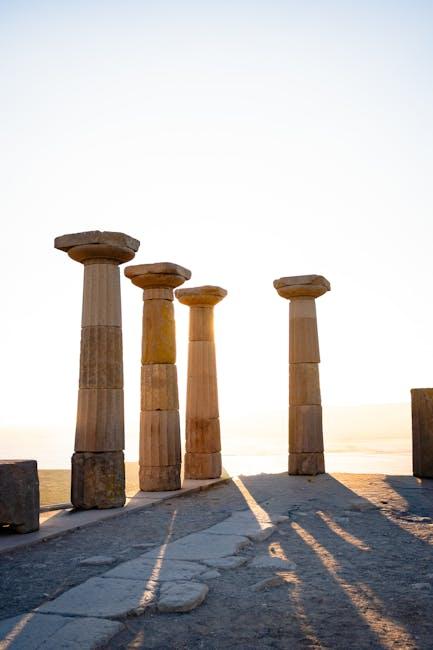
From desert necropolises to rainforest-shrouded pyramids, travelers are increasingly seeking out the places where the earliest cities rose, writing systems emerged and empires took shape. Heritage tourism is growing as countries expand site museums, unveil new interpretive centers and deploy digital tools that bring ancient worlds into sharper focus. Yet the rush to rediscover the past comes amid pressures from climate change, conflict and overtourism, sharpening the debate over how to balance access with preservation.
This report highlights top destinations where the archaeology is accessible, the scholarship is current and the storytelling is grounded in evidence. It points to sites with strong on-the-ground interpretation, reputable museums and community-led initiatives that add cultural context. It also outlines practical considerations-from seasonality to site etiquette-so travelers can engage with ancient civilizations responsibly and leave the least possible footprint on the legacies they’ve come to see.
Table of Contents
- Luxor and Aswan Deliver Immersive Nile Civilization Study with Sunrise Entry to Karnak and a Licensed Guide in the Valley of the Kings
- Athens and Delphi Pair Iconic Temples with the Acropolis Museum and On Site Archaeology Talks for Context You Can Use Immediately
- Mexico City and Oaxaca Link Museum Masterworks to Living Sites with a Day at the National Museum of Anthropology Followed by Teotihuacan and Monte Alban
- In Conclusion
Luxor and Aswan Deliver Immersive Nile Civilization Study with Sunrise Entry to Karnak and a Licensed Guide in the Valley of the Kings
With pre-arranged dawn access illuminating Karnak’s pylons in amber light and credentialed Egyptologists decoding royal tomb iconography in the Theban necropolis, the Luxor-Aswan corridor is reporting record demand for field-style cultural learning: temple reliefs at Ipet‑sut correlate with Nile flood cycles; hypostyle halls reveal state ideology at monumental scale; and in the Valley, artisan brushstrokes and astronomical ceilings in KV17 and KV9 narrate royal afterlife doctrine with forensic clarity. Farther south, Aswan’s granite quarries and the UNESCO-relocated Philae complex on Agilkia Island anchor a chronicle of engineering feats, while felucca transits to Elephantine expose the Nilometer and Nubian heritage sites shaping regional identity. On the ground, museum curation at Luxor and Aswan complements site work with authenticated artifacts and conservation updates, and new rail-and-cruise pairings are synchronizing itineraries with low-crowd windows, tighter photography protocols, and sustainability thresholds designed to preserve pigments and plaster for future study.
- Sunrise Access: Limited early entry at Karnak reduces heat and congestion, improving epigraphic visibility.
- Licensed Guidance: Egyptologist-led briefings in the Valley detail cartouches, Book of the Dead vignettes, and tomb sequencing.
- Core Sites: Hypostyle Hall, Avenue of Sphinxes, KV17 (Seti I), KV9 (Ramses V/VI), Philae Temple, Unfinished Obelisk.
- Museums: Luxor Museum, Mummification Museum, and the Nubian Museum offer provenance-rich context.
- Logistics: Combo tickets, no-flash rules in tombs, and timed entries align with conservation standards.
- Seasonality: Peak clarity for reliefs in cooler months; felucca conditions favorable year-round with afternoon winds.
Athens and Delphi Pair Iconic Temples with the Acropolis Museum and On Site Archaeology Talks for Context You Can Use Immediately
From the Parthenon’s Pentelic marble to the omphalos at Delphi, Greece is aligning site access with expert-led briefings and museum context, giving travelers practical interpretive skills on the ground. Licensed archaeologists are delivering concise, on-site talks that decode column orders, quarry marks, and restoration phases, while the Acropolis Museum’s glass-floored excavations and labeled friezes supply the missing stratigraphy and iconography. With coordinated entry slots and morning sessions before peak footfall, visitors report leaving with actionable literacy-reading inscriptions, dating capitals, and tracing Athenian dedications up the Sacred Way-usable the same day.
- Where: Acropolis and Acropolis Museum (Athens); Sanctuary of Apollo and Treasury of the Athenians (Delphi).
- When: Early entry for cooler conditions and clear sightlines; museum immediately after site for artifact-to-context alignment.
- What to watch: Caryatid replicas vs. originals; tool marks on column drums; layered oracle dedications and reuse.
- How to learn fast: Join 20-30 minute scholar talks; scan gallery QR timelines; compare metopes in situ with museum panels.
Mexico City and Oaxaca Link Museum Masterworks to Living Sites with a Day at the National Museum of Anthropology Followed by Teotihuacan and Monte Alban
Travel planners are charting a two-city circuit that turns scholarship into terrain: start in Mexico City at the National Museum of Anthropology, where Teotihuacan murals, greenstone masks, and obsidian industries frame an ancient metropolis, then test those narratives on the Avenue of the Dead at Teotihuacan; continue in Oaxaca, where the hilltop grid of Monte Albán-its Danzantes reliefs, Ball Court, and star-aligned Building J-corroborates Zapotec statecraft and ritual with the clarity of elevation and horizon lines.
- What to connect: Museum talud-tablero models ↔ pyramid facades; mural pigments ↔ on-site plaster traces; lapidary masks ↔ elite burials; calendrics ↔ carved glyphs on stelae.
- On-site highlights: Teotihuacan’s Avenue of the Dead vistas and apartment-compound murals; Monte Albán’s Great Plaza, Tomb façades, and panoramic surveys of the Oaxaca Valley.
- Practical brief: The museum is typically closed on Mondays; arrive early at both sites for cooler conditions and clearer sightlines; bring sun protection, water, and cash for tickets; altitude and stairs require steady pacing.
- Context tips: Read gallery labels on urban planning before walking site axes; compare museum ceramics with strata at on-site museums; note sightlines at solar events and how shadow play informs ritual architecture.
- Responsible travel: Use authorized guides, keep to marked paths to protect fragile stucco and flora, and support community-run services in both valleys.
In Conclusion
From the Nile Valley to the Andes and beyond, these destinations function as open-air archives, where digs, museums and living communities continue to refine what is known about the ancient world. Access and interpretation are evolving: visitor caps, seasonal closures and updated site rules are increasingly common as authorities try to balance education with conservation. Experts advise pairing any visit with on-site museums, licensed guides and reputable local sources to place monuments in cultural context and to respect descendant communities.
For travelers, planning now means checking official advisories, booking timed entries where required and budgeting for conservation fees. For those unable to go, major institutions and site authorities are expanding high-resolution digital collections and virtual tours that mirror current scholarship. The broader takeaway is clear: engaging with ancient civilizations is less about spectacle than stewardship. The places that anchor humanity’s earliest stories are finite. Seeing them-whether in person or online-comes with an obligation to tread lightly, listen carefully and leave the record intact for the next generation of inquiry.