

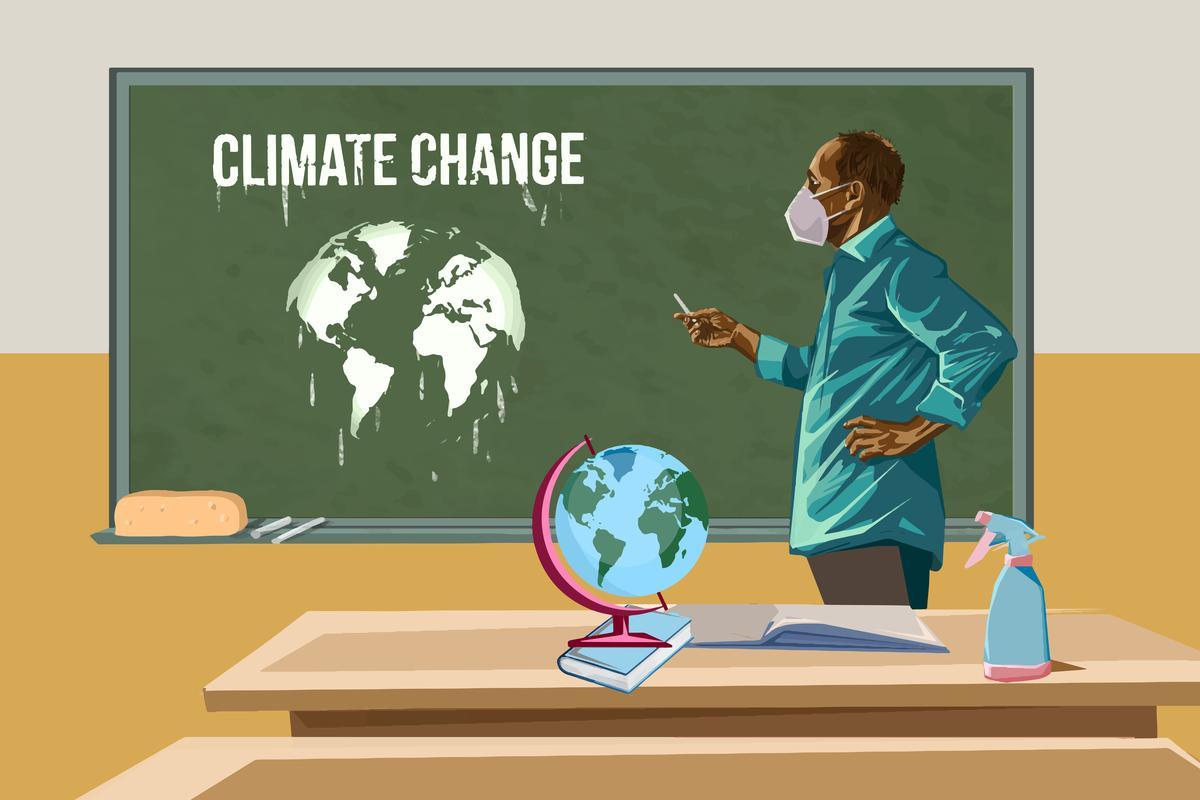
As heat waves, floods and wildfire smoke become seasonal fixtures, classrooms are emerging as a front line in the effort to make sense of a warming world. From primary schools to vocational programs, education systems are being asked to do more than teach the science of climate change: they are being tasked with building climate awareness-equipping young people and adults with the knowledge, skills and judgment to navigate misinformation, weigh trade-offs and participate in decisions that will shape their communities.
Policymakers and school leaders are moving to embed climate content across subjects, update teacher training and link lessons to local risks. Early studies suggest that targeted instruction can shift perceptions and influence behavior, yet access remains uneven. Many teachers report limited time and resources, and in some regions the topic has become politically charged. The stakes are practical as well as civic: communities need residents who understand adaptation, and employers increasingly seek workers with “green” competencies.
This article examines how education is being used to build climate awareness, what approaches show results, where efforts are stalling, and why the classroom has become a critical arena in the wider climate debate.
Table of Contents
- Classrooms Connect Local Climate Impacts to Core Science and Civics Standards
- Teacher Preparation Focuses on Data Literacy Media Analysis and Culturally Relevant Examples
- Project Based Learning Turns Students Into Community Energy Auditors and Resilience Planners
- Policy and Funding Mandate Open Curriculum Support Green Facilities and Require Annual Climate Reporting
- The Way Forward
Classrooms Connect Local Climate Impacts to Core Science and Civics Standards
School districts are turning neighborhood evidence-heat-mapping walks, tidal flooding logs, and low-cost sensor readings-into standards-aligned inquiry. Teachers anchor labs and projects to the Next Generation Science Standards (NGSS), emphasizing data analysis, modeling, and cause-and-effect across local systems. Students graph temperature disparities between tree-lined streets and asphalt corridors, compare stormwater runoff before and after rainfall events, and test mitigation strategies such as reflective roofs or native plantings. The result is a clear line from place-based investigations to core benchmarks in Earth and Environmental Science, Engineering Design, and Scientific Argumentation.
Classrooms are also translating evidence into democratic practice aligned with the C3 Framework for Social Studies. Using their own datasets, students draft public comments, weigh policy trade-offs, and simulate hearings on zoning, transportation, and school facility upgrades. District leaders say the approach strengthens media literacy and civic reasoning while connecting climate literacy to workforce pathways in planning, public health, and infrastructure. Early pilots report improved attendance during field-based units, higher engagement among multilingual learners, and stronger cross-department collaboration between science and social studies teams.
- Science alignment: Local datasets drive NGSS practices in modeling, CER writing, and engineering optimization.
- Civics alignment: C3 indicators guide stakeholder mapping, policy analysis, and evidence-based testimony.
- Assessment shifts: Performance tasks replace unit tests with portfolios, rubrics, and community presentations.
- Equity focus: Projects center heat islands, flood-prone blocks, and transit gaps affecting underserved neighborhoods.
- Partnerships: Cities, tribes, universities, and nonprofits co-create curricula and host student data on public dashboards.
Teacher Preparation Focuses on Data Literacy Media Analysis and Culturally Relevant Examples
Teacher education programs are retooling curricula to help new educators translate complex climate information for the classroom. Institutions report expanded coursework in data literacy and media analysis, pairing statistical reasoning with source verification and visualization skills. Trainees are practicing with local datasets, open-source tools, and case files that show how to handle uncertainty, interpret model outputs, and communicate risk without sensationalism-skills now seen as essential across science, social studies, and language arts.
- Hands-on data labs: Working with temperature, precipitation, and air-quality records; building charts and maps; reading margins of error.
- Verification workflows: Triangulating claims across peer-reviewed studies, government repositories, and reputable news outlets.
- Visualization standards: Color choices, scales, and annotations that clarify trends and avoid misleading cues.
- Assessment alignment: Rubrics that evaluate reasoning, sourcing, and communication alongside content knowledge.
Programs are also centering culturally relevant examples that connect climate concepts to students’ lived experiences. Pilot cohorts are designing lessons on urban heat islands, coastal flooding, and water access that incorporate community histories, Indigenous knowledge, and multilingual resources. Media-literacy drills train candidates to identify misinformation patterns, analyze narratives, and explain algorithmic amplification-linking classroom inquiry to local reporting and civic dialogue.
- Community-based case studies: Place-specific projects co-developed with local organizations and families.
- Critical media protocols: Step-by-step guides for source tracing, claim testing, and bias detection.
- Inclusive materials: Translations, accessible visuals, and student choice in demonstration of learning.
- Practice portfolios: Micro-credentialed lesson plans and reflections reviewed against practice-based rubrics.
Project Based Learning Turns Students Into Community Energy Auditors and Resilience Planners
Across districts, students are moving from lab experiments to fieldwork-testing insulation, logging plug loads, and mapping heat exposure-for public buildings and neighborhood blocks. Equipped with infrared cameras, smart meters, and utility-bill analytics, they compile real-world datasets and brief facilities managers and city staff with actionable recommendations. Partnerships with municipal sustainability offices and local co-ops give learners access to professional protocols while teachers align projects with science, civics, and career-tech standards, turning class time into evidence-based service for local governments and nonprofits.
- Energy baselines for schools, libraries, and small businesses
- Plug-load inventories and behavioral interventions that curb waste
- Urban heat maps informing tree-planting and cooling center siting
- Critical-load plans for backup power at clinics and shelters
- Grant-ready project sheets with cost, savings, and emissions estimates
Local leaders describe measurable benefits: lower utility bills, clearer capital plans, and a pipeline of residents trained in building science and emergency planning. Schools report rising participation in internships and micro-credentials, while community events-weatherization fairs, LED swap drives, and resilience workshops-draw families into decision-making. With an equity lens that prioritizes high-burden blocks, students spotlight cooling access, transit during outages, and microgrid opportunities, helping jurisdictions shift from ad-hoc responses to long-horizon resilience strategies grounded in data and community trust.
Policy and Funding Mandate Open Curriculum Support Green Facilities and Require Annual Climate Reporting
A policy package gaining traction would link public education dollars to measurable climate action, converting campuses into engines of decarbonization and civic literacy. Under the approach, base appropriations and new grants unlock when institutions deliver an open, standards-aligned climate curriculum, upgrade to high-performance, low-carbon facilities, and publish audited annual climate disclosures. The funding-with-conditions model is designed to scale classroom access to open resources while speeding capital retrofits and transparent reporting, with staged timelines and public dashboards enabling district-to-district comparisons.
- Curriculum: Tie a portion of operating funds to adoption of open-licensed climate modules, teacher training, and integration across science, civics, and career pathways.
- Facilities: Offer capital grants and green bonds for heat pumps, solar, storage, and deep retrofits; require energy-use intensity targets and all-electric new builds.
- Procurement: Condition purchases on low-carbon materials, eco-labels, and local workforce participation; prioritize resilience projects that double as learning labs.
- Transparency: Publish real-time utility data and maintenance logs; embed student-led audits into coursework for community oversight.
Accountability hinges on comparable metrics and independent verification. Annual disclosures would align with the GHG Protocol and risk frameworks such as TCFD, covering Scope 1-3 emissions, climate risk exposure, resilience plans, and interim targets to 2030. Equity guardrails would channel higher incentives to high-need and rural districts, while noncompliance triggers corrective action plans rather than blunt cuts. A centralized, open-data registry-complete with APIs-would let researchers, families, and journalists track performance and outcomes in real time.
- Emissions and operations: Scope 1-3 footprints, energy intensity, renewable share, fleet electrification, waste and water metrics.
- Learning outcomes: Percent of credits with climate competencies, OER adoption rates, and educator upskilling hours.
- Governance: Board-level climate oversight, student representation, and procurement compliance checks.
- Assurance and incentives: Third-party audits, data quality ratings, and performance-based bonuses or remediation plans.
The Way Forward
As districts revise standards and ministries weigh new funding, the next phase will hinge on turning pilot projects into systemic practice-training teachers at scale, embedding climate across subjects, and measuring outcomes without overloading classrooms. Researchers say credible, locally relevant materials and stronger media literacy will be key to countering misinformation, while students continue to press for hands-on learning tied to real community needs.
With national curricula under review in several countries and global climate negotiations highlighting education’s role, policymakers face a practical test: can schools deliver consistent, science-based climate literacy amid tight budgets and polarized debate? The answer, educators note, will shape not only how quickly young people understand the risks and opportunities of a warming world, but also how prepared societies are to act. For now, the lesson plan is clear; the implementation remains the story to watch.