

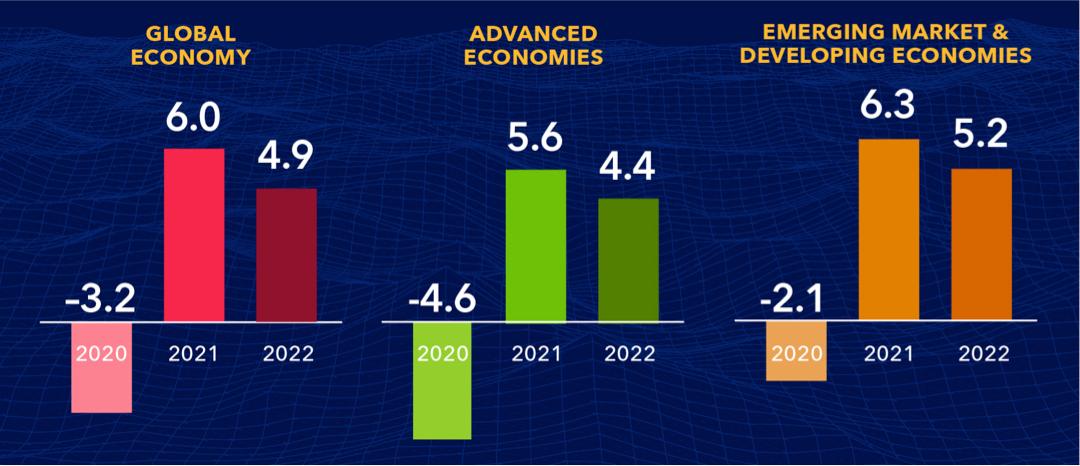
Emerging markets are increasingly driving the world economy as growth in advanced nations slows and supply chains are rewired. From South and Southeast Asia to parts of Africa and Latin America, rising incomes, rapid urbanization and a surge in digital adoption are expanding consumer demand and reshaping trade. International lenders and development agencies now expect these economies to contribute the bulk of global growth in the years ahead, underscoring a structural shift that is redefining investment and policy priorities.
This article examines how emerging markets power that expansion: through scale effects in domestic consumption, leapfrogging in fintech and e-commerce, large-scale infrastructure programs, and export diversification as companies pursue “China-plus-one” strategies and nearshoring. It also assesses the risks-elevated debt burdens, inflation pressures, political volatility and climate exposure-that could test the resilience of this growth engine. The stakes are global: what happens in Lagos, Jakarta or Monterrey will increasingly influence inflation, capital flows and corporate strategy from Frankfurt to San Francisco.
Table of Contents
- Manufacturing relocates to Asia and Latin America as supply chains seek resilience
- Target infrastructure digital finance and vocational training to accelerate productivity gains
- Mitigate currency and political risk with local partnerships diversified sourcing and hedging strategies
- Key Takeaways
Manufacturing relocates to Asia and Latin America as supply chains seek resilience
Factory footprints are shifting as companies rebalance risk, with electronics and apparel expanding in Vietnam and India, autos and appliances scaling in Mexico, and renewable components and agritech gaining in Brazil and Colombia; back-end chip work is growing in Malaysia while supplier parks spring up along new trade corridors from the Gulf of Mexico to the Indo-Pacific, reflecting a pivot from pure cost-cutting to resilience, market access, and shorter lead times; executives cite energy volatility, geopolitics, extreme weather, and tariff uncertainty as catalysts, accelerating dual‑sourcing, China+1, and nearshoring models that compress delivery cycles, deepen regional integration under USMCA and ASEAN rules, and channel capital into ports, rail, and power, seeding regionalized value chains that still tap global demand and lift exports, jobs, and infrastructure investment across high‑growth economies.
- Hotspots: Mexico, Vietnam, India, Indonesia, Brazil, Malaysia, and Costa Rica draw new plants and supplier clusters.
- Playbook: Dual‑sourcing, nearshoring, supplier co‑location, and digital traceability to manage compliance and visibility.
- On the ground: Industrial parks, upgraded ports and rail, grid expansions, and cold‑chain capacity to stabilize inventories.
- Knock‑on effects: Logistics, trade‑finance fintech, workforce training, and renewables developers ride capex waves.
- Risks to monitor: Capacity bottlenecks, regulatory whiplash, environmental constraints, and skills gaps slowing scale‑up.
Target infrastructure digital finance and vocational training to accelerate productivity gains
As capital rotates toward resilient growth, policymakers are channeling funds into complementary systems that lift output per worker and crowd in private investment: upgraded ports and power to cut logistics and energy bottlenecks; interoperable payment rails and digital IDs to formalize transactions and widen credit access; and industry-aligned training that matches curricula to factory floors. Evidence from Kenya’s mobile-money ecosystem and India’s instant-payments network shows faster firm formation and lower transaction costs, while expanded broadband and reliable grids raise capacity utilization and export readiness. To lock in these gains and spread them to SMEs and informal workers, officials are sequencing reforms and targeted subsidies with clear performance benchmarks and blended finance structures.
- Hard + soft infrastructure: last‑mile roads, modern ports, stable power, and open broadband spur scale and reduce unit costs.
- Digital finance rails: interoperable wallets, instant payments, e‑invoicing, and credit scoring widen access to working capital.
- Workforce pipelines: competency‑based TVET, apprenticeships, and micro‑credentials aligned to cluster demand.
- SME enablement: procurement portals, collateral registries, and receivables finance to ease cash‑flow constraints.
- Accountability: data standards, competition policy, and KPI‑linked PPPs to crowd in private capital and safeguard consumers.
Mitigate currency and political risk with local partnerships diversified sourcing and hedging strategies
Across emerging economies, currency swings, policy pivots, and capital-flow interruptions can compress margins and stall expansion; operators are responding with structured, on-the-ground tactics that turn volatility into measurable, auditable exposure while safeguarding growth trajectories.
- Local alliances that de-risk execution: Joint ventures with reputable domestic firms, engagement with chambers of commerce, and community stakeholder compacts improve regulatory navigation, shorten permitting timelines, and strengthen the social license to operate.
- Diversified sourcing and routing: Multi-node procurement across regions and currencies, dual- or triple-sourcing of critical inputs, and vendor redundancy tied to risk scores reduce single-point failure and price shock transmission.
- Disciplined FX protection: Rolling forwards, NDFs, and options collars; natural hedges by matching revenues and costs; value-at-risk limits, stop-loss rules, and IFRS 9/ASC 815 hedge-effectiveness testing bring rigor to exposure management.
- Contractual and insurance safeguards: FX pass-through clauses, change-in-law and hardship provisions, escrow and step-in rights, plus trade credit cover and political risk insurance (including multilateral options) cushion policy and payment shocks.
- Liquidity and working-capital resilience: Multi-currency cash buffers and revolvers, local factoring and supply-chain finance, and automated cash pooling/netting help stabilize cash flows when markets dislocate.
Key Takeaways
As supply chains are rewired and financing costs stay higher for longer, the next phase of global expansion will hinge on whether emerging economies can convert demographic heft and digital adoption into sustained productivity gains. Reforms that deepen capital markets, stabilize inflation, and accelerate the energy transition could widen their contribution; policy slippage, debt stress, or political shocks could narrow it.
For companies and investors, dispersion will define the landscape. Markets that pair macro stability with credible institutions and trade openness are positioned to attract long-term capital; others face a tougher path as protectionism, climate risks, and geopolitical rifts complicate planning.
With many advanced economies slowing under aging populations and heavy debt loads, the incremental demand engine is likely to remain in the developing world. How these markets navigate reform and risk-and how advanced economies manage fragmentation-will help set the pace and resilience of global growth in the decade ahead.