

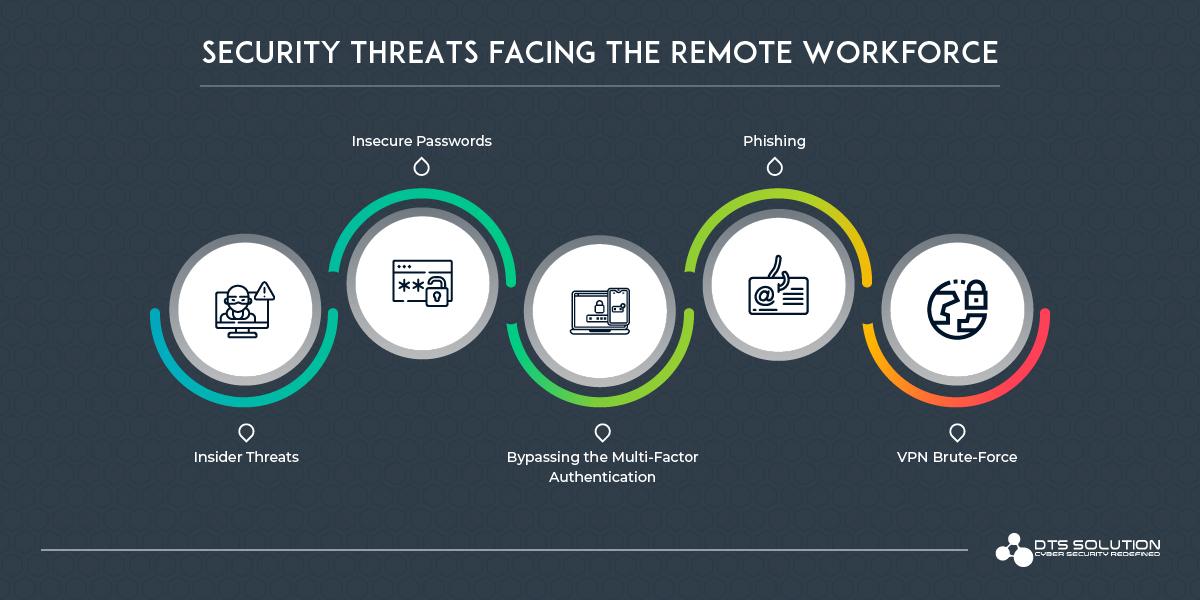
As hybrid and remote work harden into the new normal, cybercriminals are recalibrating their playbooks to target the distributed enterprise. Attackers are shifting from breaching network perimeters to hijacking identities, exploiting personal devices, home Wi‑Fi, and the cloud collaboration tools that keep far‑flung teams connected. Government alerts and industry reports point to a rise in phishing that mimics workplace chats, “MFA fatigue” push‑notification attacks, and the theft of session tokens and OAuth credentials that let intruders “log in” rather than break in.
The pivot is reshaping the threat landscape. Ransomware groups increasingly buy or steal access via compromised accounts before deploying encryption. Business email compromise schemes mine remote workflows and approval chains, while supply‑chain risks move upstream into software updates and downstream into unmanaged SaaS. With data and users everywhere, the attack surface extends well beyond corporate endpoints to printers, routers, and shadow IT in the home office.
The stakes are rising alongside regulatory and insurance pressures. New disclosure rules, evolving standards in the U.S. and Europe, and tightened underwriting are pushing boards and security leaders to reassess how they verify users, harden endpoints, and secure cloud services. This article examines how remote work has redrawn the map of enterprise risk-and how defenders are racing to keep pace as adversaries evolve.
Table of Contents
- Home Networks Replace Office Perimeters as Attackers Exploit Weak Routers Legacy VPNs and Smart Devices
- Phishing Impersonates HR and Collaboration Tools as Deepfake Audio Undermines Voice Verification
- Zero Trust With Conditional Access Device Posture Checks and Just in Time Privileges Becomes the Remote Work Default
- Secure the Endpoint and the Data With EDR Full Disk Encryption DNS Filtering and Regular Tabletop Exercises
- Closing Remarks
Home Networks Replace Office Perimeters as Attackers Exploit Weak Routers Legacy VPNs and Smart Devices
With staff logging in from spare bedrooms and kitchen tables, the security edge has shifted to living rooms and local ISPs. Criminal crews are quietly weaponizing consumer-grade routers, outdated VPN gateways, and always-on smart devices to bypass traditional defenses, investigators say. Compromised home gear provides persistence, hides attacker traffic, and enables credential theft that later appears to originate from a trusted user. Analysts are tracking campaigns that chain router firmware flaws, default credentials, and legacy remote-access bugs to plant proxies, hijack DNS, and intercept encrypted sessions before they ever reach corporate tooling.
- Pivot through SOHO routers to build covert proxy networks that mask command-and-control.
- Exploit end-of-life VPN appliances for initial access and token theft.
- Leverage weak Wi‑Fi and UPnP to expose services and reroute traffic.
- Abuse IoT hubs, cameras, and TVs as low-noise footholds on home LANs.
- Hijack DNS and TLS via man-in-the-middle on compromised gateways.
- Blend in using split-tunnel and sync clients to laterally reach cloud apps.
Enterprises are responding by treating residential environments as untrusted territory and shifting controls closer to identity, device posture, and application context. Security teams report accelerated rollouts of zero trust network access, phishing-resistant MFA, and endpoint detection across both corporate and bring‑your‑own devices, alongside targeted hygiene guidance for home users. The new playbook prioritizes continuous verification over implicit trust in IP address or tunnel presence, while shrinking exposure of internet-facing remote access infrastructure.
- Retire or isolate legacy VPNs; adopt ZTNA/SASE with device posture checks.
- Mandate hardware-based MFA and conditional access for high-risk actions.
- Harden home edges: change router defaults, update firmware, disable UPnP.
- Segment or ban smart devices from work subnets; prefer separate SSIDs.
- Deploy EDR/MDM to remote endpoints; enforce disk encryption and app control.
- Monitor for impossible travel, anomalous MFA prompts, and DNS tampering.
Phishing Impersonates HR and Collaboration Tools as Deepfake Audio Undermines Voice Verification
Threat actors are pivoting to corporate vernacular, posing as HR portals and collaboration suites to compromise remote workers at scale. Campaigns increasingly mirror benefits enrollment pages, payroll change notices, and performance review alerts, while counterfeit invites from Teams, Slack, and Zoom push employees into fake single sign-on flows or prompt approval of rogue OAuth apps with mail and file-scoped permissions. Investigators report a sharp rise in cross-channel lures-email, in-app messages, calendar notifications, and shared document comments-designed to look indistinguishable from legitimate SaaS activity and to survive basic MFA through token theft, consent phishing, and session hijacking.
- “Updated W‑2/Payroll discrepancy” emails linking to counterfeit Microsoft 365 or Okta pages.
- “New remote-work policy acknowledgment” hosted on lookalike HR portals with embedded credential capture.
- “Meeting recording available” notices from spoofed Zoom/Teams domains prompting OAuth consent (Mail.Read, Files.ReadWrite).
- External Teams/Slack DMs from “IT/HR” bots delivering malware-laced attachments or token-stealing links.
- Google Docs/Drive comments that @mention employees and redirect to session-farming sites.
At the same time, adversaries are deploying deepfake voice to erode phone-based identity checks, imitating executives or HR staff to authorize payouts, share MFA codes, or validate suspicious access requests. Security teams note cases where cloned audio was paired with live chat or email threads for added credibility, undermining “call-back” verification workflows. In response, enterprises are shifting toward zero-trust identity controls-hardware-bound MFA, OAuth governance, and conditional access-while retooling verification playbooks to require out-of-band and multi-person approval for sensitive changes, and augmenting voice biometrics with liveness and playback detection.
- Lock down OAuth consent: disable user consent by default; enforce admin approval and publisher verification.
- Harden collaboration tenants: restrict external chats, block unverified apps, apply safe links/file scanning.
- Phishing resilience: brand indicators, domain allowlists, and browser isolation for unfamiliar SaaS domains.
- MFA elevation: prefer FIDO2 security keys; step-up auth for HR/payroll, SSO, and OAuth approvals.
- Voice verification redesign: use pre-shared codewords, secondary channels, and dual-control for financial or access changes.
- Detections: alert on anomalous OAuth scopes, impossible travel, and sudden mailbox/SharePoint permission grants.
- Training: simulate HR and meeting-invite lures; teach staff to verify URLs and report suspicious in-app messages.
Zero Trust With Conditional Access Device Posture Checks and Just in Time Privileges Becomes the Remote Work Default
Security teams are standardizing on continuous verification, binding identity to device health before and during every session as remote access becomes the norm. Instead of trusting a password or a single MFA prompt, policy engines evaluate device posture signals in real time and shape access accordingly-full, limited, or blocked. Unmanaged endpoints are steered into safer paths such as virtualized apps or browser-isolated sessions, while noncompliant managed devices face remediation gates and step-up MFA. The result is a default stance where access is adaptive, revocable, and tied to provable context rather than location or network.
- Signals checked: OS version and patch currency, EDR/AV health, disk encryption and secure boot, firewall status, jailbreak/root detection
- Trust anchors: device certificates, MDM compliance, hardware attestation, phishing-resistant MFA
- Risk inputs: geolocation and IP reputation, impossible travel, anomalous behavior, sensitive app classification
- Access outcomes: full access, read-only, web-only, session isolation, or block with guided remediation
Standing privileges are being retired in favor of just-in-time elevation, aligning administrative power with the exact task, time window, and approval trail required. Least privilege is enforced through ephemeral tokens, on-demand roles, and session policies that can record, watermark, and terminate activity when risk rises. Cloud entitlements and on-prem roles are unified under privileged access workflows that auto-expire, while break-glass accounts are locked behind stronger controls and exhaustive audit. The operational impact is a smaller blast radius, fewer lateral movement opportunities, and faster containment when anomalies surface.
- Elevation flow: request → risk evaluation → approver or policy auto-grant → time-boxed access → auto-revoke
- Controls in session: command restrictions, clipboard/download limits, authentication context, and step-up challenges on sensitive actions
- Governance: periodic access reviews, credential hygiene checks, and immutable logs routed to SIEM with SOAR-driven remediation
- Remote-work fit: chat-integrated approvals, self-service portals, and API hooks to codify access in CI/CD pipelines
Secure the Endpoint and the Data With EDR Full Disk Encryption DNS Filtering and Regular Tabletop Exercises
As home networks and personal devices blend into corporate workflows, endpoint hardening becomes a frontline obligation. Deploying EDR on every managed device delivers continuous telemetry, behavior-based detection, and rapid containment that travels with the user; pairing it with full‑disk encryption safeguards data at rest when laptops are lost, stolen, or seized. Meanwhile, DNS filtering adds an internet-wide safety net, intercepting command‑and‑control beacons, malware hosts, and typosquatted domains before connections are made-crucial when staff operate outside traditional perimeter defenses.
- EDR: Auto-isolate compromised endpoints, roll back malicious changes, and enrich alerts with process lineage to reduce investigation time.
- Full‑disk encryption: Enforce hardware‑backed keys and pre‑boot authentication; verify encryption state via MDM for audit readiness.
- DNS filtering: Apply policy by user and device, block high‑risk categories, and log queries to support threat hunting and incident reconstruction.
Resilience hinges on rehearsal. Conducting regular, cross‑functional tabletop exercises-spanning IT, security, legal, communications, and executive stakeholders-validates that playbooks work under remote conditions and that escalation paths are unambiguous. Organizations that war‑game ransomware, SaaS account compromise, and supplier intrusion scenarios report faster MTTD and MTTR, clearer decision rights on notifications and containment, and fewer surprises when real events unfold; they also uncover gaps in backup integrity, endpoint visibility, and out‑of‑band communications that can be closed before adversaries find them.
Closing Remarks
As remote and hybrid models become entrenched, the threat landscape continues to shift away from fixed perimeters to people, identities and distributed endpoints. Security teams are leaning into zero-trust principles, stronger identity and access controls, and continuous monitoring, even as attackers probe collaboration platforms, home networks and third-party dependencies.
Experts say the next phase will test basic discipline as much as advanced tooling: consistent patching, multi-factor authentication, device management, incident response drills and resilience planning across suppliers. With regulatory scrutiny rising and talent in short supply, organizations are being pushed to prove not just prevention, but recovery.
In a work world defined by distance, cyber risk remains close. The pace of adaptation-on both sides-will determine how secure the remote economy becomes in the months ahead.