

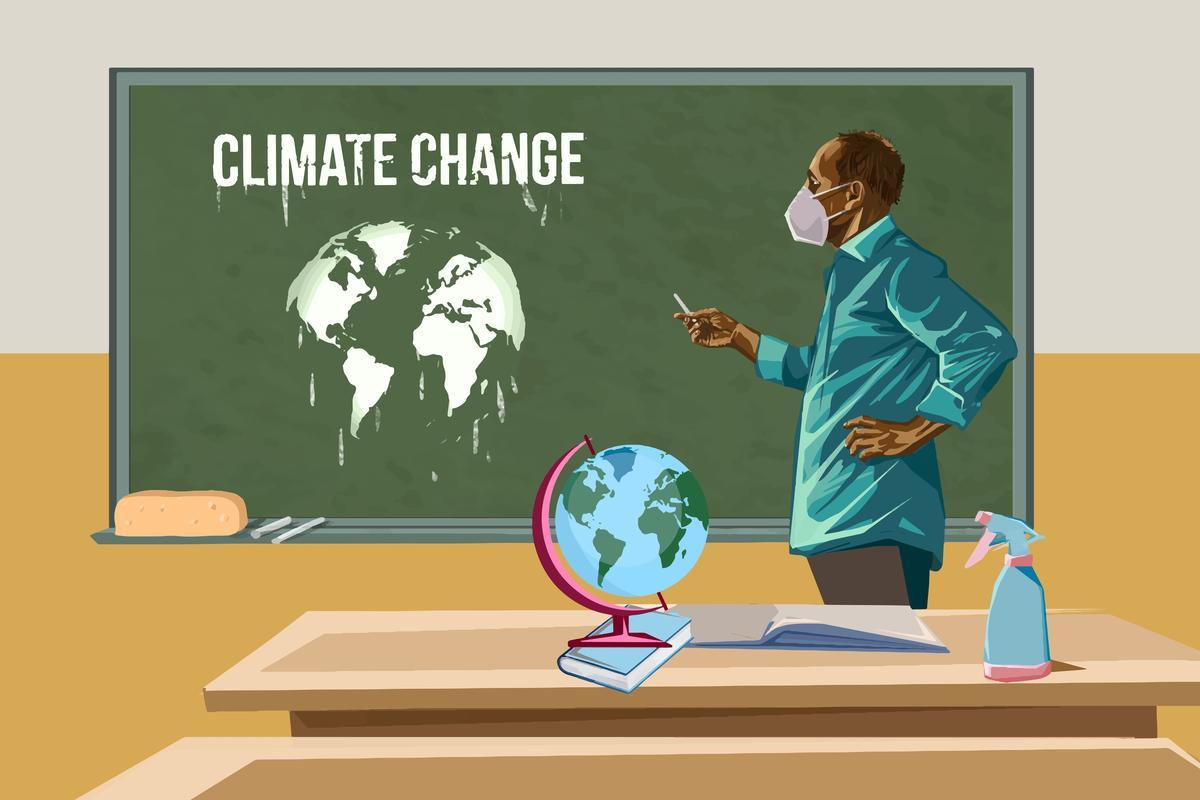
Education is emerging as a pivotal tool in building public understanding of climate change and support for action, as schools, universities and community programs move to embed climate literacy across subjects and age groups. Policymakers and educators say the shift reflects a recognition that informed citizens are more likely to back mitigation measures, adopt low-carbon habits and prepare for growing climate risks.
The momentum is visible in new curricula, teacher training efforts and partnerships that translate complex science into practical knowledge. Yet access remains uneven, and classrooms are increasingly on the front line of political and resource constraints. As governments look for scalable ways to close the awareness gap, the question is not whether to teach climate change, but how to do it effectively-and equitably-at a time when the stakes for public understanding have never been higher.
Table of Contents
- New Data Links Classroom Instruction to Measurable Climate Literacy Gains
- Curricula Overhaul Urged With Local Risk Mapping Project Based Learning and Media Literacy
- Teachers Need Funded Training and Evidence Based Materials to Counter Misinformation
- Policy Playbook Recommends Mandatory Climate Standards Middle School Benchmarks and Community Partnerships
- To Conclude
New Data Links Classroom Instruction to Measurable Climate Literacy Gains
Newly released district data indicate that classroom-based climate instruction is translating into quantifiable literacy gains. An analysis spanning multiple states and grades 5-12 found that students exposed to standards-aligned, inquiry-driven units posted higher scores on pre/post assessments measuring core concepts such as the greenhouse effect, carbon cycles, and risk attribution. Gains held across urban, suburban, and rural settings, with the sharpest improvements in schools serving higher proportions of low-income students. Researchers report that results persisted at follow-up intervals, suggesting not just short-term recall but retention and transfer of knowledge to novel scenarios.
- Assessment performance: Double-digit increases on concept inventories and data-interpretation items
- Misconception reduction: Fewer incorrect beliefs about weather vs. climate and human drivers of warming
- Source evaluation: Higher accuracy distinguishing peer-reviewed findings from opinion content
- Data literacy: Improved ability to read anomaly maps and interpret uncertainty bands
- Efficacy indicators: More students reporting confidence applying evidence to local decisions
Analysts attribute the shift to pedagogy rather than demographics, noting that outcomes remained significant after controlling for prior achievement and attendance. They highlight several instructional levers: explicit teaching of systems thinking, use of local datasets and place-based case studies, and project-based tasks that culminate in public-facing products. District leaders are being urged to embed climate content across science, geography, and civics; invest in short-cycle teacher training; and adopt common rubrics to monitor literacy growth without adding testing burden.
- What works in classrooms: Inquiry labs tied to real measurements (e.g., school energy audits)
- Place-based cases: Lessons linking regional hazards to resilience planning
- Data tools: Student use of open climate datasets and visualization platforms
- Cross-curricular ties: Integrating media literacy to counter misinformation
- Formative checks: Short, frequent probes that track growth and guide feedback
Curricula Overhaul Urged With Local Risk Mapping Project Based Learning and Media Literacy
Education officials, climate scientists, and community organizations are pressing districts to embed local risk mapping, project-based learning, and media literacy into core subjects, arguing that current syllabi fail to prepare students for rapidly escalating hazards. Under the proposed shift, classrooms would use neighborhood data-heat, flood, wildfire smoke, drought stress-to turn streets and schoolyards into living labs, linking science standards to civics, public health, and infrastructure planning. Advocates say the approach addresses equity gaps by centering the experiences of communities facing disproportionate exposure to climate threats, while building students’ capacity to analyze sources and spot misinformation that spreads during extreme weather events.
- Local risk mapping: Students collect on-the-ground readings, compare them to municipal datasets, and visualize neighborhood hotspots for heat and flooding.
- Project-based learning: Interdisciplinary teams co-design mitigation ideas-shade corridors, rain gardens, cooling centers-paired with cost, feasibility, and policy briefs.
- Media literacy: Lessons vet claims on social platforms, trace funding and biases, and distinguish peer-reviewed evidence from opinion or clickbait.
- Community partnerships: Collaboration with city planners, public works, and health departments to align student findings with resilience plans.
- Teacher development and assessment: Training on data tools and climate communication; evaluation shifts toward portfolios, prototypes, and public presentations.
Early pilots in coastal and inland districts report measurable gains: students produced actionable maps used by city agencies, improved source verification scores in news literacy assessments, and secured small grants to implement campus cooling projects. Superintendents cite reduced absenteeism during heat waves where student-led shade interventions were adopted, while state boards weigh guidance to standardize cross-curricular climate competencies and fund equipment-from sensors to air-quality monitors-so data literacy becomes routine rather than enrichment. Policymakers say the timeline for adoption could align with the next textbook cycle, with districts encouraged to publish open-source modules to accelerate replication.
Teachers Need Funded Training and Evidence Based Materials to Counter Misinformation
School systems across high- and low-income regions report that social feeds and politicized talking points are spilling into classrooms faster than lesson plans can keep up. Districts say educators are being asked to adjudicate claims without the time, training, or vetted resources to do so. Unions and policy analysts warn that without designated funding lines for professional development, release time, and classroom-ready toolkits, teachers are forced to counter polished falsehoods with ad‑hoc materials. Officials and training providers describe a model that prioritizes micro‑credentials, statewide coaching networks, and partnerships with universities to ensure content rigor and local relevance.
- Core science refreshers: greenhouse effect, feedbacks, regional impacts, and uncertainties clearly explained.
- Media literacy protocols: source tracing, claims verification, and distinguishing consensus from debate.
- Pedagogy for controversy: discussion norms, depolarization strategies, and safeguarding student wellbeing.
- Culturally responsive framing: locally grounded examples and community histories that build trust.
- Industry transparency: guidelines to identify and screen sponsor-influenced materials.
- Micro-credential pathways: paid time, stackable badges, and workload protections to make training feasible.
Curriculum directors emphasize that materials must be evidence-based, openly licensed, and aligned with national and state standards, with transparent authorship and peer review. Data providers, from meteorological agencies to universities, are increasingly making classroom datasets available, but educators need easy-to-navigate repositories, translation into multiple languages, and offline options where connectivity is weak. Procurement teams are adopting repeatable vetting rubrics and version control so updates reflect new findings and local risk. Observers say the approach mirrors other public health communication efforts: build trusted channels, audit the pipeline for accuracy, and measure learning outcomes to justify continued investment.
- Adopt a vetted repository: a state- or district-level library with standard-aligned lesson bundles and data visuals.
- Mandate independent review: clear conflict-of-interest disclosures and external peer assessment.
- Guarantee update cycles: scheduled revisions tied to major scientific assessments and local hazard data.
- Support low-tech delivery: printable kits, radio segments, and USB content for bandwidth-limited schools.
- Protect educators: policy guidance and legal support against harassment over accurate instruction.
- Track impact: pre/post assessments and classroom observation to link funding to student learning gains.
Policy Playbook Recommends Mandatory Climate Standards Middle School Benchmarks and Community Partnerships
A new policy blueprint from education and climate analysts urges states and districts to adopt mandatory climate literacy standards, anchored by grade 8 benchmarks that integrate science, civics, and media literacy. The document frames climate competence as a core academic outcome, aligning with existing coursework and emphasizing equity for underserved communities. It proposes cross-curricular skills-understanding local risks, the carbon cycle, and adaptation-versus-mitigation tradeoffs-backed by common assessments, teacher training, and transparent reporting to families and school boards.
- Scope and sequence: K-8 progression with clear performance descriptors by the end of middle school.
- Assessment rubrics: Project-based tasks tied to local data, supplemented by short, standards-aligned checks.
- Instructional support: Professional development, open-source materials, and culturally responsive examples.
- Accountability: Public dashboards on student proficiency and curriculum implementation.
- Periodic review: Three-year cycles to update content with current science and community priorities.
The report also spotlights community partnerships as a delivery engine, linking schools with local governments, tribal and neighborhood organizations, universities, and employers to convert standards into hands-on learning and real-world impact. Recommended agreements include shared data protocols, student safety provisions, and equity guardrails, while funding strategies point to state climate funds, federal grants, and utility rebates to scale facilities upgrades, citizen science, and work-based learning.
- Measurable outcomes: Campus greenhouse gas inventories and resilience audits published annually.
- Applied learning: Place-based projects-urban heat mapping, water quality monitoring, and schoolyard greening.
- Career pathways: Paid internships and apprenticeships with clean energy and resilience employers.
- Family engagement: Community workshops, multilingual materials, and student-led briefings.
- Impact tracking: Attendance, proficiency gains, and facility efficiency metrics reported each semester.
To Conclude
As governments set new targets and communities grapple with more frequent climate shocks, the classroom is emerging as a decisive arena. Turning science into civic literacy will depend not just on updated curricula, but on trained teachers, sustained funding, and equitable access-especially where the impacts are already greatest. The measure of success will be whether lessons translate into informed choices, from household decisions to public policy.
The stakes are immediate and practical. If education keeps pace-helping people read the data, weigh trade-offs, and spot misinformation-it can convert awareness into durable support for solutions and adaptation. In a decade that will shape the long-term trajectory of warming, how quickly education systems adapt may prove as consequential as any new technology or treaty.