

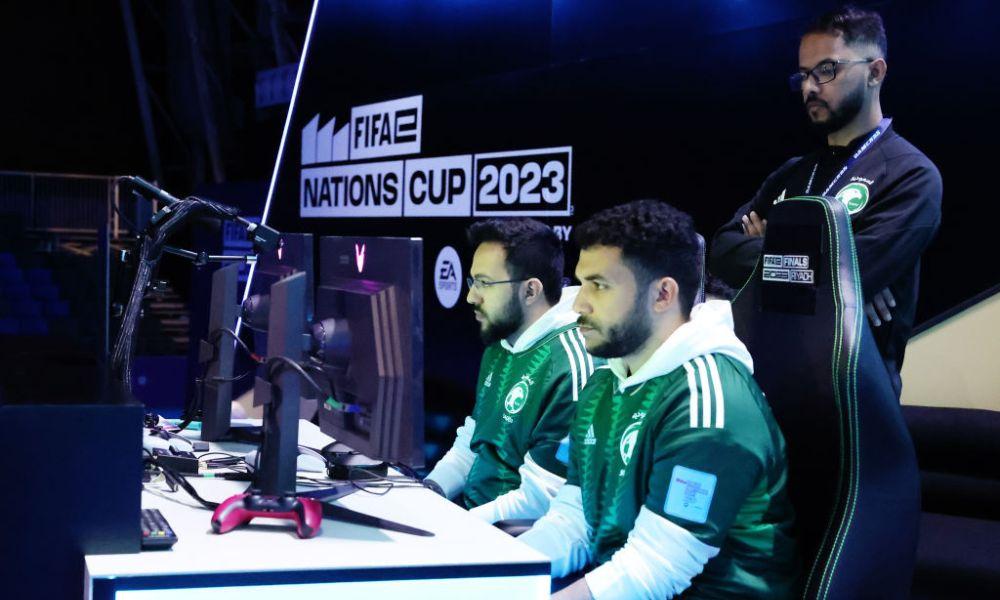
Saudi Arabia has launched a $500 million esports investment fund, intensifying its push to become a global hub for competitive gaming as part of its Vision 2030 economic diversification agenda. The initiative aims to accelerate industry growth by backing teams, tournament organizers, technology platforms, and infrastructure, positioning the kingdom to attract international partners and develop local talent.
The move underscores Riyadh’s broader strategy to expand its footprint in entertainment and sports while seeking new sources of non-oil revenue. It also comes at a pivotal moment for the global esports market, which is seeking sustainable business models after years of rapid expansion. Further details on governance, deployment timelines, and target sectors are expected to clarify how the fund will be allocated and measured for impact.
Table of Contents
- Strategy And Vision For Building A Global Esports Hub
- Deployment Priorities And Market Impact Across Teams Leagues Infrastructure And IP
- Governance Transparency And Risk Management To Ensure Credibility And Compliance
- Recommended Actions For Teams Publishers Investors And Startups To Engage Responsibly
- Final Thoughts
Strategy And Vision For Building A Global Esports Hub
Backed by a $500 million commitment, Saudi Arabia is outlining a phased roadmap to elevate Riyadh as a global nexus for competitive gaming and interactive entertainment. The strategy blends large-scale capital for venue and network buildouts with targeted seeding of teams, studios, and tournament operators, aiming to convert an expansive regional player base into sustainable viewership, tourism, and exportable intellectual property. Aligned with broader diversification plans, the fund emphasizes local-to-global value creation-anchoring premium events, cultivating talent pipelines, and scaling production capacity to serve international circuits.
- Infrastructure first: purpose-built arenas, broadcast-ready studios, and low-latency backbone to host tier-one events and continuous league play.
- Talent and education: academies, coaching certifications, and university partnerships to professionalize player, coaching, and production careers.
- Publisher partnerships: incentives for IP holders to locate regional operations, pilot leagues, and content localization hubs in the Kingdom.
- Event portfolio: anchor championships complemented by a year-round calendar of qualifiers, festivals, and collegiate circuits to smooth demand.
- Startups and tools: investment in tournament tech, anti-cheat, analytics, and fan engagement platforms to enhance integrity and monetization.
- Community and inclusion: grassroots support, women’s pathways, and accessible entry points to broaden participation and audience growth.
- Sustainability standards: green venue operations and responsible travel frameworks embedded into bid criteria and vendor contracts.
- Regulatory alignment: streamlined event permitting, player protections, and data/privacy compliance to meet international benchmarks.
Execution will be milestone-led, with governance and third-party advisory oversight tied to measurable outcomes-including events hosted, studio output, jobs created, inward investment, and viewership hours. Deployment is expected through co-investments, revenue-sharing, and catalytic grants, alongside transparency on player welfare and competitive integrity. By pairing capital with policy coordination and predictable delivery, officials aim to compete on quality rather than subsidies alone-securing flagship rights while scaling domestic leagues, and ultimately positioning the Kingdom as a reliable, year-round hub for the global esports economy.
Deployment Priorities And Market Impact Across Teams Leagues Infrastructure And IP
The $500 million allocation is expected to triage near-term needs while laying a multi-year runway for growth, with capital weighted toward competitive readiness and commercial durability. Early deployment will likely emphasize liquidity for undercapitalized teams, strategic entry and slot security within elite leagues, and performance operations that meet international standards. Observers anticipate a dual-track approach-stabilize domestic assets while acquiring or partnering abroad to accelerate knowledge transfer, audience scale, and media rights leverage.
- Teams: equity injections to professionalize front offices, analytics and coaching upgrades, athlete welfare and compliance programs, and disciplined roster spending.
- Leagues: minority stakes or long-term agreements to secure participation rights, revenue-sharing alignment, and calendar harmonization with global majors.
- Commercialization: brand partnerships packaged with hospitality and tourism, localized merchandise pipelines, and creator-led audience activation.
Market impact is poised to extend beyond competitive results, reshaping the regional stack from venues to content ownership. Investment in hard and soft infrastructure-from broadcast studios and event operations to low-latency edge nodes-should compress production costs and elevate international hosting viability. Parallel bets on IP development, including co-created event formats, Arabic-first broadcasts, and licensing frameworks with publishers, could diversify revenue and reduce exposure to a single title or circuit.
- Infrastructure: modular arenas, touring event kits, centralized training hubs, integrity tools, and anti-cheat integrations.
- IP and content: co-owned tournament properties, localized media rights packages, and narrative-driven shoulder programming to deepen fan engagement.
- Market dynamics: upward pressure on player salaries and franchise valuations, new sponsorship inventory, and MENA audience growth translating into higher CPMs and global scheduling relevance.
Governance Transparency And Risk Management To Ensure Credibility And Compliance
As the $500 million vehicle moves to back teams, tournament infrastructure, and gaming technologies, market observers say its credibility will hinge on verifiable oversight and defensible controls. That includes a clearly published mandate, independent committee decision-making, and traceable disclosures on fees and related-party dealings. Transparent reporting under IFRS, third-party audits, and standardized term sheets for investees are viewed as baseline expectations, alongside explicit conflict-of-interest safeguards and a public register of material holdings.
- Disclosure cadence: Quarterly portfolio updates and audited annual statements, with look-through exposure by publisher, geography, and stage.
- Independent oversight: Majority-independent investment committee, documented recusals, and a separate risk and audit function with direct board access.
- Related-party controls: Pre-clearance thresholds, competitive tendering, and full visibility on service providers and fee arrangements.
- Compliance stack: AML/KYC and sanctions screening, data protection requirements, and age-safeguarding for youth participants.
- Competitive integrity: Anti-cheat and match-fixing clauses embedded in funding agreements, with monitoring and reporting obligations.
- Whistleblowing and grievance channels: Confidential reporting lines and anti-retaliation policies applicable across portfolio companies.
- ESG and safety standards: Health, cyber, and event safety protocols, plus minimum labor and contractor safeguards.
Risk management will focus on concentration limits by publisher and asset class, stress tests for sponsorship and ticketing shocks, and currency and regulatory exposure assessments across key esports hubs. Diligence is expected to cover IP licensing, cybersecurity posture, and insurance adequacy, with scenario analysis and exit planning built into each deal. Benchmarking against sovereign investor norms (e.g., Santiago Principles) and OECD guidance, the fund can track KPIs such as incident rates, training completion, sanctions-rescreening intervals, and time-to-close compliance alerts-measures likely to facilitate co-investments with global partners and reduce friction with regulators in the U.S., EU, and APAC markets.
Recommended Actions For Teams Publishers Investors And Startups To Engage Responsibly
With fresh capital earmarked for competitive gaming, operational discipline will be scrutinized alongside growth. Stakeholders are expected to demonstrate concrete safeguards around player welfare, data use, and event integrity when partnering on tournaments, leagues, and content pipelines inside the Kingdom and across cross-border circuits.
- Teams: Adopt enforceable player welfare standards (minimum pay, medical and mental-health support, anti-harassment protocols), codify protections for minors, and publish clear timelines for prize-money disbursement and contract releases.
- Teams: Implement integrity systems (anti-match-fixing training, whistleblower channels, conflict-of-interest disclosures) and ensure compliant travel, visas, and safe accommodation for talent at KSA-hosted events.
- Publishers: Use transparent event rights and IP licensing processes; align anti-cheat and telemetry with Saudi PDPL and global privacy norms, retaining minimal necessary data and clear retention schedules.
- Publishers: Localize responsibly (Arabic language support, culturally aware assets), expand robust parental controls and loot-box transparency, and standardize third-party APIs to support a fair tooling ecosystem.
As capital is deployed, funders and founders will be measured on governance, disclosure, and the sustainability of their monetization. Market entrants that prioritize compliance-by-design and credible community investment are positioned to capture momentum without compromising standards.
- Investors: Conduct enhanced due diligence on governance and human-rights risk, verify AML/sanctions compliance, and require portfolio-level ESG KPIs (player safety, data protection, diversity) with quarterly reporting.
- Investors: Manage conflicts proactively (board seats, event ownership, team equity), establish clear side-letter transparency, and scenario-plan for regulatory shifts in the Kingdom and key export markets.
- Startups: Build compliance into product (PDPL-ready data flows, age-gating, ad and influencer disclosure), and adopt ethical monetization for minors and vulnerable users; document security audits before scaling.
- Startups: Form local partnerships (academies, universities, community orgs), invest in Arabic content and women’s participation pathways, and publish sustainability baselines for events, venues, and supply chains.
Final Thoughts
With $500 million earmarked for competitive gaming, Saudi Arabia is positioning itself as a pivotal financier in a sector grappling with consolidation, shifting business models, and tighter capital. How the fund sets its investment criteria-across teams, tournaments, infrastructure, publishers, or technology-will determine whether it shores up short-term liquidity or drives longer-term structural change.
The initiative also extends the kingdom’s wider push into entertainment and digital industries as it seeks to diversify its economy. Transparency around deployment timelines, governance, and returns will be closely watched by global stakeholders, alongside reactions from publishers that control key esports IP. As the industry recalibrates after years of rapid expansion, the scale and pace of Saudi capital could shape where the next phase of growth happens-and who benefits from it.