

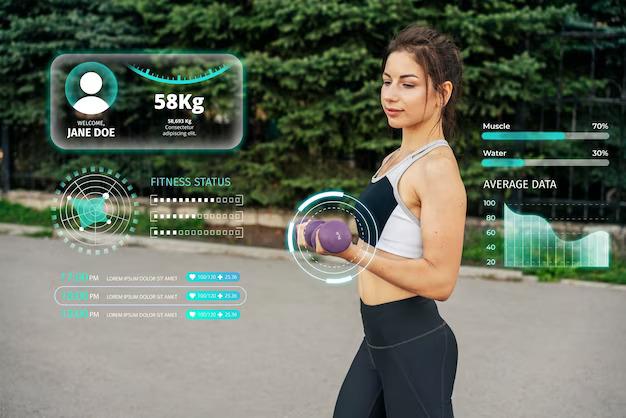
From step counters to stress monitors and sleep labs on the wrist, wearables are moving beyond simple activity tracking and into real-time coaching, recovery guidance, and health screening. As devices add sensors for heart rhythm, blood oxygen, skin temperature and heart-rate variability-and pair them with machine-learning insights-they are reshaping how people train, how gyms program workouts, and how employers and insurers promote wellness.
The shift is measurable across the fitness economy. Personal trainers now analyze recovery scores as often as rep counts. Studios sync classes to live wearable data. App-based coaching calibrates intensity minute by minute. Employers and health plans are expanding incentive programs tied to verified activity, while sports bodies and researchers tap de-identified datasets to study performance and injury risk at scale.
The transformation is not without friction. Accuracy varies by device and skin tone, metrics aren’t standardized, and much of the data sits outside traditional health-privacy rules. Consumer fatigue with subscriptions is rising, even as new features arrive. Still, with hardware maturing and software updates pushing more insights to the wrist, wearable tech is set to play a central role in the next phase of fitness-personalized, data-driven, and increasingly integrated with the broader health system.
Table of Contents
- Sensors move beyond step counts toward clinical grade insights choose wearables with independently validated heart rhythm and oxygen saturation tracking
- AI coaches personalize training from your biometrics prioritize adaptive plans recovery guidance and clear explanations over generic prompts
- Privacy becomes the new vital sign audit app permissions favor on device processing and disable data sharing with advertisers
- Interoperability and endurance determine daily adherence pick devices that sync with your health record offer extended battery life accurate GPS and a comfortable fit
- In Summary
Sensors move beyond step counts toward clinical grade insights choose wearables with independently validated heart rhythm and oxygen saturation tracking
Wearables are pivoting from simple activity tallies to clinical-grade metrics, as manufacturers court independent labs to verify heart rhythm and oxygen saturation performance. The shift is driven by hospitals, coaches, and insurers demanding transparent accuracy, pushing devices to prove arrhythmia detection against ECG references and SpO₂ error rates within medical norms. Early leaders are publishing protocols, reporting error margins, and disclosing limitations under motion, skin tone, and low perfusion-signs the category is maturing beyond consumer wellness.
- Independent validation: Peer‑reviewed or registered studies versus gold standards (Holter/12‑lead ECG for rhythm; co‑oximetry or arterial blood gas for SpO₂).
- Reportable accuracy: Sensitivity/specificity/AUC for AFib aligned with ANSI/AAMI EC57; SpO₂ Arms ≤ 3% across 70-100% per ISO 80601‑2‑61.
- Diverse cohorts: Testing across skin tones, temperatures, motion profiles, low perfusion, and overnight conditions.
- Regulatory status: FDA 510(k)/De Novo or CE marking for stated functions; beware “wellness only” labels that restrict use.
- Reproducibility: Independent lab reports that persist across firmware updates and product generations.
For buyers, the differentiators now sit in the fine print. Favor devices that pair on‑demand ECG with high‑fidelity PPG, robust motion‑artifact handling, and transparent data access that clinicians can trust. Scrutinize data governance, export formats, and whether irregular rhythm notifications and nocturnal desaturation alerts are enabled in your region. As the market tightens, evidence, not hype, will determine which wearables earn a place in training programs and remote monitoring workflows.
- Features to seek: ECG spot checks plus continuous rhythm surveillance (where approved) and overnight SpO₂ with drop detection and signal‑quality flags.
- Technical transparency: Published sampling rates, multi‑wavelength LEDs to mitigate skin‑tone bias, and changelogs for algorithm updates.
- Data portability: Exports in CSV/PDF and interoperability via FHIR, Apple Health, or Health Connect for clinician review.
- Real‑world resilience: Accuracy maintained during exercise, at altitude, and in low perfusion; validated comfort and battery life for 24/7 wear.
- Clear intent: Stated indications, contraindications, and who reviewed claims (notified bodies or independent investigators).
AI coaches personalize training from your biometrics prioritize adaptive plans recovery guidance and clear explanations over generic prompts
AI-led coaching is shifting from one-size-fits-all cues to data-driven decisions as wearables stream continuous biometrics. Instead of pushing generic reps, algorithms parse HRV, sleep architecture, resting heart rate, and muscle load to auto-tune volume, intensity, and rest in near real time. The result is session plans that adapt mid-workout and macrocycles that respond to cumulative stress-prioritizing readiness over routine. Key differentiators include tighter feedback loops, explainable targets, and measurable outcomes tied to individual baselines rather than population averages.
- Dynamic prescription: Intervals, pace zones, and rep schemes shift based on minute-by-minute strain and recovery forecasts.
- Context-aware cues: Heat, altitude, and sleep debt inform changes to load, cadence, and fuel timing.
- Personal thresholds: Alerts and goals track against your rolling norms, not static charts.
Recovery now sits at the center of program design, with coaching models surfacing when to pull back, how to rebuild, and why it matters. Crucially, the systems communicate decisions in plain language, replacing cryptic prompts with rationale users can act on. That transparency is becoming a competitive standard as brands court compliance and trust through clarity, not mystique.
- Plain-English rationale: “Reduce intensity today-HRV is down 12% and sleep efficiency dipped to 76%.”
- Actionable adjustments: Swap HIIT for Zone 2, add mobility blocks, extend cool-downs, and adjust fueling.
- Recovery scoring: Readiness indices explain the weight of each factor-stress, sleep, load-behind the score.
- Informed consent: Data sources and model limits are disclosed, with opt-ins for sensitive metrics.
Privacy becomes the new vital sign audit app permissions favor on device processing and disable data sharing with advertisers
Fitness platforms are treating privacy as a competitive metric, rolling out stricter permission prompts and relocating sensitive analytics to the watch or band itself. Instead of streaming raw heart-rate, sleep, or location data to the cloud, more models now run on-device processing for anomaly detection and coaching, shipping only aggregated or anonymized summaries when absolutely required. App stores are elevating permission audits, and regulators are pressing for data minimization-pushing brands to switch off advertiser IDs and third‑party SDKs by default, publish clearer “nutrition labels,” and log every data egress event. The result: a rapidly closing door on shadow profiles, as manufacturers seek trust as hard currency in a crowded market.
For users, the new baseline looks practical and immediate: per-sensor prompts, encrypted backups, and explicit opt-outs for profiling. Analysts say the next phase will prioritize local AI inference for metrics like sleep staging and form tracking, with federated learning and secure enclaves reducing exposure even during model updates. What to check now:
- Permission hygiene: Revoke unused access to location, contacts, and microphone; require prompts “only while using the app.”
- Advertiser data sharing: Turn off ad personalization and reset the device’s advertising ID; block third‑party trackers in companion apps.
- On-device defaults: Prefer devices that process HRV, ECG, sleep, and movement locally with encrypted storage and offline modes.
- Transparency logs: Look for exportable audit trails showing what left your device, when, and why.
- Granular backups: Enable end‑to‑end encryption and exclude sensitive categories (e.g., precise location) from cloud sync.
Interoperability and endurance determine daily adherence pick devices that sync with your health record offer extended battery life accurate GPS and a comfortable fit
Analysts say long-term use hinges on two factors: seamless data flow and low‑maintenance hardware. Devices that connect to clinical platforms via open standards such as FHIR and secure APIs can funnel workouts, heart rate trends, and sleep metrics into care teams’ dashboards, turning raw activity into actionable context. On the hardware side, fewer charge cycles and steady sensor accuracy help prevent attrition; extended runtimes and reliable GPS mapping cut friction for commuters, runners, and cyclists who log sessions daily.
- Health-record sync: Confirm native integrations with your provider’s portal or major EHRs; look for authenticated, read/write data sharing and granular consent.
- Battery endurance: Check rated hours in mixed use, plus “always‑on” and multi‑day expedition modes; note charge time and power-saving profiles.
- GPS fidelity: Multi‑band GNSS and satellite lock speed improve route accuracy in cities and under canopy; review post‑run track smoothness and cadence stability.
- Comfort and fit: Lightweight casings, breathable straps, and multiple sizing options reduce skin irritation and motion artifacts during long workouts.
- Data controls: On‑device encryption, transparent retention policies, and export options support clinical sharing without sacrificing privacy.
Insurers and employers are aligning incentives around these capabilities, prioritizing platforms that interoperate with coaching apps and clinical workflows. The takeaway for buyers is clear: pick wearables that can move your data where it matters and last through the week, with mapping precision and ergonomics that encourage you to wear them every day-not just on day one.
In Summary
As wearables move from step counters to sophisticated health monitors, the line between consumer gadget and clinical tool is narrowing. Fitness platforms are layering AI coaching onto streams of biometric data, employers and insurers are testing incentive models, and sports teams are retooling training around recovery metrics. At the same time, accuracy gaps, privacy concerns and unclear regulatory boundaries are shaping a more cautious conversation about what these devices should measure-and who benefits.
Analysts expect consolidation and tighter integration with electronic health records as standards mature, while the next wave of sensors aims at continuous blood pressure, hydration and even noninvasive glucose tracking. Whether that progress translates into better outcomes will hinge on interoperability, transparent algorithms and equitable design across diverse users.
For now, wearable tech is not just counting activity; it is redefining it-quietly turning daily motion into a data layer that could redraw the fitness playbook. The question is how fast policy, practice and consumers can keep pace.