

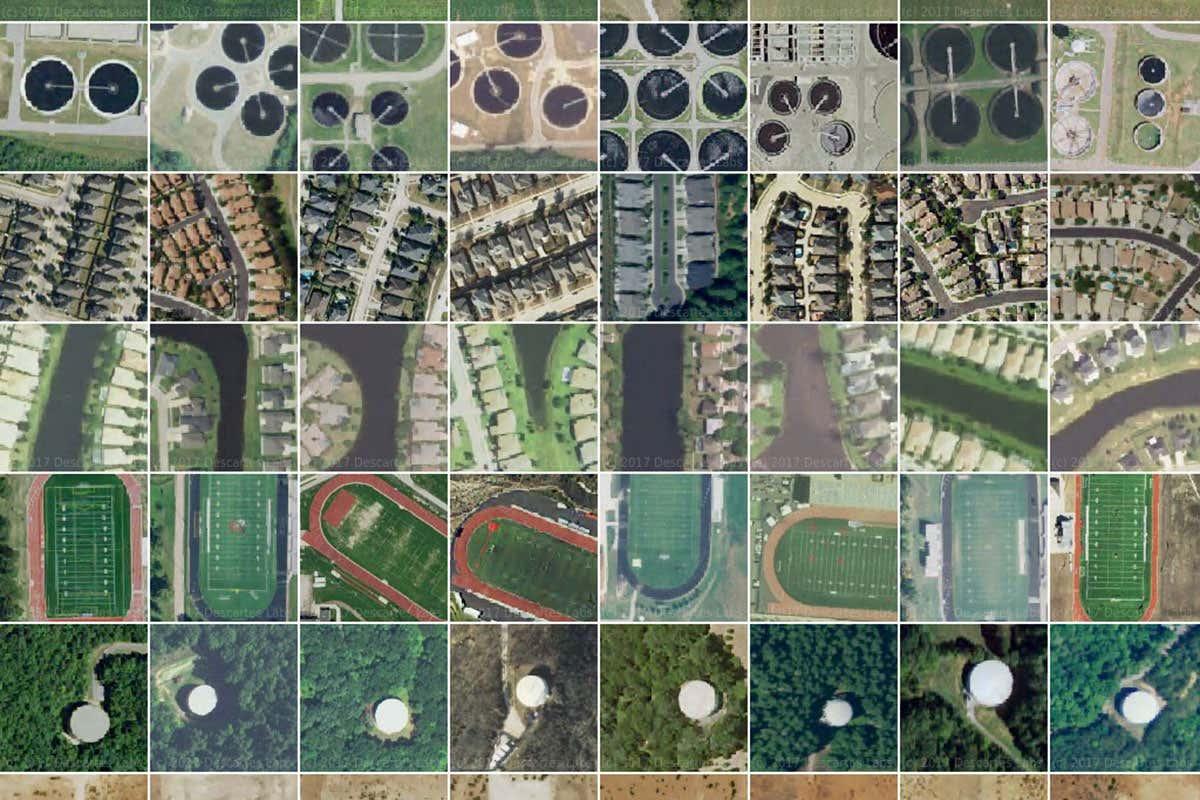
Artificial intelligence is moving from the lab to the front line of satellite imaging, compressing analysis timelines from days to minutes as a surge of new sensors floods the ground with data. Satellite operators, analytics firms and government agencies are embedding machine learning throughout their pipelines-and increasingly on the spacecraft themselves-to flag change, classify land use, and cue follow-up collection in near real time.
The shift reflects both necessity and opportunity: a growing fleet of Earth‑observing satellites is producing more imagery than human analysts can review, while demand for rapid insights has climbed with conflict monitoring, disaster response and climate reporting. Advances in computer vision, fusion of optical and radar data, and edge‑AI are helping cut through clouds, reduce false positives and deliver alerts faster to users ranging from emergency managers to investors.
The acceleration is not without friction. Questions about accuracy, explainability, and export controls shadow the technology’s spread, even as competitive pressures push providers to promise quicker, cheaper answers. As algorithms take on more of the first pass, the race to pair orbiting sensors with smarter software is reshaping who benefits from satellite data-and how fast critical decisions can be made.
Table of Contents
- AI moves from ground post processing to on orbit analysis as satellite fleets expand
- Near real time mapping accelerates change detection for fires floods and crops with gains in speed and cost
- Standards and governance lag sensor advances stressing calibration transparency and shared ground truth
- Policymakers and buyers should require service level agreements accuracy thresholds and human review to ensure trustworthy decisions
- Key Takeaways
AI moves from ground post processing to on orbit analysis as satellite fleets expand
As proliferated constellations flood ground stations with imagery, operators are shifting neural inference from Earth to the spacecraft itself, turning satellites into edge-compute nodes that triage scenes in real time. By extracting features, flagging anomalies, and discarding noise before downlink, spacecraft cut transmission backlogs and deliver time-sensitive intelligence to users ranging from emergency responders to commodity traders. The approach is aided by radiation-tolerant AI accelerators, compact model architectures, and inter-satellite links that route high-value findings to the first available ground window, compressing decision cycles from hours to minutes.
- Onboard detection: Highlights wildfires, ship movements, and infrastructure changes without sending full frames.
- Smart compression: Transmits features, masks, and thumbnails instead of raw pixels to save bandwidth.
- Adaptive tasking: Retargets sensors in-orbit as models spot events, boosting revisit rates on areas of interest.
- Modal fusion: Combines SAR, optical, and RF cues to stabilize alerts under cloud, smoke, or darkness.
The pivot raises new operational and policy questions: model updates must be validated and uplinked securely; explainability and audit trails are needed for automated alerts; and thermal-power budgets dictate how aggressively satellites can compute. Industry groups are moving toward standards for in-space benchmarking and verification, while governments explore accreditation pathways for AI-derived products in defense and disaster workflows. With constellation-scale autonomy reshaping ground roles-from bulk image handling to event-centric delivery-market leaders are investing in toolchains for in-orbit A/B testing, continuous learning against fresh scenes, and safeguards that keep humans-in-the-loop when stakes are high.
Near real time mapping accelerates change detection for fires floods and crops with gains in speed and cost
Satellite operators and emergency agencies are moving from periodic scene deliveries to minute-by-minute mosaics as AI models run at the edge and in cloud pipelines, flagging anomalies as soon as they appear. Multisensor fusion across optical and SAR, paired with temporal baselines, is pushing alert latency from days to minutes, with some providers reporting reductions of 70-90% in time-to-insight and operational costs down by 30-60% due to selective downlink, vectorized change products, and automated triage. The result: fire perimeters, flood extents, and crop stress maps stream to command dashboards in near real time, cutting analyst workloads and enabling earlier, data-backed decisions.
- Disaster response: Incident commanders receive perimeter growth and floodline shifts between satellite passes, improving evacuations and resource placement.
- Utilities and insurers: Exposure models update on the fly, guiding grid shutoffs, claims triage, and loss estimation with verified ground overlays.
- Agriculture: Vigor indices and moisture proxies cue targeted scouting and variable-rate inputs, reducing waste and mitigating yield loss.
- Public transparency: Open dashboards publish explainable change layers, narrowing the gap between detection and public guidance.
Behind the acceleration are foundation models trained on petascale archives, on-orbit inference that transmits features instead of full frames, and serverless, event-driven workflows that spin up only when change is detected. Vendors cite fewer false positives through multi-modal corroboration and ensemble scoring, while active learning retrains detectors on new burn scars, flood signatures, and crop phenology. For buyers, the economics shift from per-scene tasking to streamed, pay-as-you-need change layers, allowing agencies and enterprises to scale coverage without linear headcount growth.
Standards and governance lag sensor advances stressing calibration transparency and shared ground truth
With high-throughput constellations, video-capable payloads, and proliferating hyperspectral bands, hardware is outpacing rulebooks. The result: AI models ingesting imagery with uneven radiometric and geometric pedigrees, making outputs hard to compare across sensors and time. Agencies and commercial buyers are increasingly asking for defensible “chain-of-custody” for pixels-who calibrated what, when, with which coefficients, and how uncertainty was propagated-yet many providers still publish minimal or inconsistent metadata. Industry leaders point to emerging alignment around Analysis Ready Data practices and STAC-like descriptors, but enforcement remains patchy, and black-box pre-processing in AI pipelines can erase critical context.
- Per-scene calibration files: versioned darks/flats, gain tables, and detector health logs tied to each product.
- Geometry and illumination: view angles, solar geometry, BRDF assumptions, and terrain model sources.
- Atmospheric treatment: aerosol models, water vapor estimates, and correction algorithms with parameter sets.
- Uncertainty budgets: pixel-level confidence intervals and end-to-end error propagation, not just sensor SNR.
- Cross-sensor harmonization: documented transforms to common radiometric scales and interoperability tests.
- Ground truth linkages: traceable ties to calibration sites, field campaigns, and vicarious targets with timestamps.
Market momentum is building for shared reference data so AI comparisons mean the same thing across fleets. Operators and research groups are leaning on open test fields, cross-agency field campaigns, and curated benchmark sets to validate models, while cloud platforms pilot auditable calibration registries and third-party checks. Procurement language is tightening-calling for ARD compliance, full metadata lineage, and routine publication of validation metrics-signaling that transparency will be rewarded commercially. Until governance catches up, the differentiator is measurable trust: providers that expose calibration choices and link AI outputs to common ground truth will set the bar for credible, at-scale satellite analytics.
Policymakers and buyers should require service level agreements accuracy thresholds and human review to ensure trustworthy decisions
As agencies move from pilot projects to operational use of AI for wildfire mapping, flood assessment, and maritime monitoring, procurement language is tightening to make performance verifiable rather than aspirational. Buyers are asking vendors to bind commitments in Service Level Agreements (SLAs) with measurable accuracy thresholds that reflect on-orbit realities-varying sensors, seasons, and geographies-backed by third‑party validation and transparent error reporting.
- Task-specific metrics: class-wise precision/recall or F1 for objects like vessels, buildings, and clouds; region/season breakdowns; rare-event performance.
- Confidence calibration: expected calibration error targets and well-formed uncertainty outputs for downstream risk.
- Latency and uptime: P95 end-to-end latency, queueing transparency, and error budgets tied to credits or penalties.
- Drift monitoring: continuous checks for sensor changes and distribution shifts, with retraining triggers and versioned model cards.
- Explainability and audit: provenance logs, immutable inference records, and red-team results for edge cases and adversarial inputs.
- Fail-safe behavior: explicit no-decision states and go/no-go criteria when confidence falls below thresholds.
Oversight frameworks are also centering on human review where decisions affect safety, finance, or policy. Contracts now detail when analysts must be in the loop, how disagreements are resolved, and how public bodies can audit outcomes-aiming to curb automation bias while preserving AI’s speed in time-sensitive missions.
- Escalation triggers: low-confidence outputs, boundary detections, cross-sensor inconsistencies, or material consequences (e.g., disaster aid, sanctions, insurance).
- Review protocols: two-person adjudication for high-impact calls, documented rationale, and reversible actions by default.
- Sampling and audits: statistically valid spot checks, independent re-labeling, and periodic external audits with published summaries.
- Data governance: chain-of-custody for imagery, privacy safeguards for ancillary data, and clear retention/deletion timelines.
- Incident reporting: time-bound disclosure of model regressions or outages and a user appeals process with remediation steps.
Key Takeaways
As operators push more autonomy to the edge and end users demand faster situational awareness, AI is shifting from pilot projects to core infrastructure in satellite imaging. The next phase will be defined as much by validation standards, procurement rules and liability frameworks as by model architectures, with questions of provenance, bias and explainability determining how far automation can go in defense, disaster response, agriculture and insurance.
With new constellations launching onboard processing and cloud pipelines promising near-real-time delivery, the milestone ahead is less about proving speed than proving trust. For now, the orbit-to-insight gap is narrowing-while the debate over how to use that speed responsibly is just beginning.