

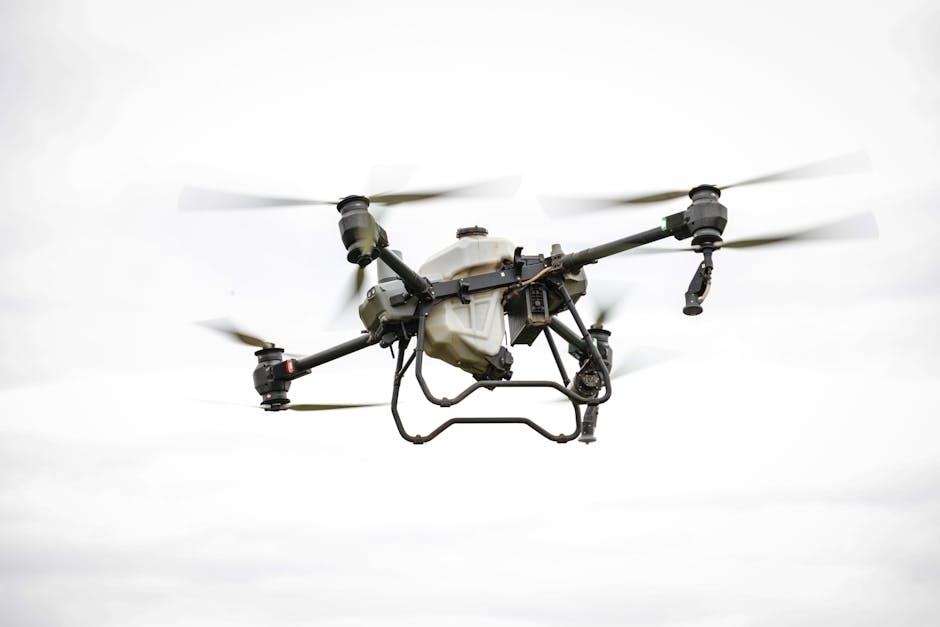
As climate volatility intensifies, labor grows scarcer and the world’s population edges toward 10 billion, farms are turning to an expanding toolkit of technologies to stay productive and profitable. Sensors and satellites now monitor crops in real time, AI models forecast disease and optimize inputs, and autonomous tractors promise to work around the clock. In greenhouses and vertical farms, controlled environments bring harvests closer to cities; in labs, gene editing targets hardier, higher‑yield varieties. The promise: more food with fewer resources and a smaller environmental footprint.
The transformation is accelerating as capital floods into agritech and major equipment makers pivot from machinery to software-driven services. Yet adoption remains uneven, constrained by connectivity gaps, upfront costs and regulatory uncertainty. Questions over data ownership, algorithmic transparency and impacts on smallholders are rising alongside hopes for traceability and climate resilience. This article examines where technology is already reshaping agriculture, where the hype outpaces results and who stands to gain-or be left behind.
Table of Contents
- Precision agriculture turns data into yield gains as sensors drones and satellite imagery guide variable rate decisions
- Artificial intelligence sharpens yield forecasts and price risk with farms urged to establish data governance and deploy simple dashboards
- Field robots and automated platforms ease labor shortages as producers phase in modular tasks and fund safety training
- Climate smart irrigation and nutrient management cut emissions and water use with growers using incentives and on farm carbon measurement
- Future Outlook
Precision agriculture turns data into yield gains as sensors drones and satellite imagery guide variable rate decisions
Farm operations are fusing live sensor feeds with drone and satellite imagery to generate field-by-field instructions that change rates on the move. Multispectral maps flag nutrient gaps, soil probes track moisture, and machine telemetry confirms what actually hit the ground. The result is variable-rate prescriptions that steer planters, sprayers, and pivots with centimeter-level guidance, adjusting inputs by zone rather than by field. When canopy temperatures spike, irrigation pulses increase; when biomass stalls, nitrogen is reallocated. Agronomists say the shift from whole-field averages to data-layered decisions is turning variability into yield stability while tightening input efficiency across crops and regions.
- Data streams: soil moisture/EC sensors, on-rig monitors, weather stations, drone multispectral/thermal, high-resolution satellite.
- Decisions: seeding density, nitrogen top-dress, fungicide timing, targeted irrigation, harvest sequencing.
- Field validation: A/B strips, split-planter tests, zone-by-zone analytics to confirm response.
- Operational gains: input-use efficiency, more uniform stands, reduced runoff, tighter fuel and labor windows.
Economics now hinge on spatially explicit ROI, with analytics platforms testing scenarios before metal moves. New tools export prescriptions over ISOBUS-compatible systems, while APIs sync recommendations from the agronomist’s desktop to the cab display. Adoption hurdles remain-data quality, rural bandwidth, mixed-fleet interoperability, and the skills gap-but on-farm trials are narrowing risk as growers benchmark outcomes plot by plot. As traceability rules expand and sustainability markets mature, data governance and privacy agreements are becoming as critical as algorithms. The next phase points to edge computing that processes imagery at the field edge, faster satellite revisits to catch stress windows, and decision engines that learn from every pass to fine-tune the next.
Artificial intelligence sharpens yield forecasts and price risk with farms urged to establish data governance and deploy simple dashboards
AI-driven models are moving from pilot plots to commercial fields, blending weather, satellite imagery, soil telemetry, and machinery data to refine yield curves and tighten revenue projections. Agribusinesses say the biggest gains come from fusing real-time sensors with historical records, allowing algorithms to recalibrate as conditions shift and to flag pricing windows earlier. Traders and co-ops are also applying probabilistic forecasts to basis and futures spreads, translating agronomic risk into financial exposure that procurement teams can act on. To convert insights into decisions, stakeholders emphasize clean data, clear ownership, and fast visualization over complex, brittle stacks.
- Key inputs: multi-spectral satellite indices, in-field moisture and temperature, planting/harvest timestamps, input applications, localized weather nowcasts.
- Model outputs: field-level yield distributions, disease and heat-stress risk windows, water and fertilizer response curves, price exposure scenarios.
- Operational impact: earlier hedging prompts, dynamic input reallocation, tighter logistics planning, and fewer last-minute contract deviations.
Policy makers and lenders are signaling that farms should codify data governance and deploy simple dashboards that surface only the few metrics that matter per role. Governance frameworks are increasingly required to unlock financing and partnerships, while lightweight interfaces help agronomists, managers, and CFOs act on the same numbers without interpretive gaps. Analysts recommend starting with a single source of truth, role-based access, and audit trails, then layering predictive alerts. The goal: measurable resilience-from field operations to market execution-without overburdening teams or budgets.
- Data governance essentials: ownership and consent definitions; quality rules and lineage; role-based access; interoperability with common ag data standards; retention and compliance policies.
- Dashboard KPIs: forecast range vs. historical yield; input cost per acre; soil moisture deficit; vegetation index trend; hedge coverage ratio; price-at-risk; basis vs. five-year average; storage utilization.
- Implementation tips: start with two fields and one commodity; use mobile-first cards; set alert thresholds; log decisions for audits; plan offline sync for low-connectivity areas.
Field robots and automated platforms ease labor shortages as producers phase in modular tasks and fund safety training
Growers are fielding autonomous weeders, targeted sprayers, and harvest‑assist platforms to bridge seasonal labor gaps, rolling them out as modular task packages that slot into existing crews. Rather than full-farm overhauls, managers phase in row-following carriers, vision-guided implements, and robotic scouting units where repetition and precision matter most. Subscription models and co‑op sharing lower upfront costs, while machine logs feed planning tools so supervisors can reassign people to higher‑skill work and tighten application windows.
As machines operate alongside human teams, farms are underwriting safety programs before scaling up. Managers fund vendor certifications, site-specific drills, and geofencing audits; insurers and buyers increasingly require documented handoff zones, remote supervision protocols, and incident reporting. Early adopters cite fewer near-miss events, clearer accountability in mixed operations, and better retention as workers move into operator and data roles, supported by standardized procedures and audited readiness checks.
- Modular rollout: start with repetitive passes (weeding, thinning, spot spraying), expand to harvest assist and logistics.
- New roles: robot tenders, field safety leads, and data technicians oversee uptime and compliance.
- Controls in the field: speed limits near crews, geofenced blocks, redundant emergency stops, and clearly marked handoff zones.
- Operational metrics: uptime, pass accuracy, chemical use per acre, fuel/electricity consumption, and incident rates.
- Access models: co‑op fleets, seasonal rentals, and service contracts to match peak windows without heavy capital spend.
Climate smart irrigation and nutrient management cut emissions and water use with growers using incentives and on farm carbon measurement
Across irrigated regions, growers are pairing sensor-driven scheduling with precision nutrient delivery to curb pumping hours and fertilizer passes without sacrificing yields. Networks of soil-moisture probes, canopy cameras, and weather-linked evapotranspiration models feed AI decision tools that open and close valves, stage fertigation, and adjust application zones in real time. By tightening timing and dose, these systems are limiting runoff and curbing nitrous oxide (N₂O) emissions from over-applied nitrogen, while variable-speed pumps and pressure-control valves cut energy use at the headworks.
- Smart irrigation: Drip and pivot retrofits, pressure sensors, and automated valves coordinated via field gateways.
- Variable-rate nutrition: Section control, in-line fertigation meters, and rate maps tied to soil variability.
- Integrated decision support: Dashboards that fuse satellite vigor indices, probe data, and short-term forecasts.
- Closed-loop control: Pump VFDs and nutrient injectors adjusted by algorithms to match crop demand.
- Documented outcomes: Fewer truck rolls, reduced leaching risk, and lower fuel and electricity use reported by participating farms.
Financing is increasingly linked to measurable reductions. Water agencies and processors are offering rebates and bonuses for verified efficiency, while emerging carbon programs pay for on-farm emissions cuts from smarter irrigation and nitrogen use. To substantiate claims, producers are adopting MRV stacks that blend soil sampling, machine telemetry, remote sensing, and modelled estimates of N₂O and energy-related CO₂e. Field data flow through APIs to third-party verifiers, enabling pay-for-performance incentives, sustainability-linked loans, and carbon-intensity scoring at the lot level-turning precise irrigation and nutrient management into bankable assets as well as operational savings.
Future Outlook
As agri-tech moves from pilot projects to field-scale deployment, the stakes are coming into sharper focus. Precision tools, robotics, and data platforms promise higher yields, lower inputs, and better resilience to climate volatility. Yet questions around data ownership, interoperability, financing, and who benefits from adoption remain unresolved, especially for small and mid-sized farms.
What happens next will hinge on policy, infrastructure, and trust as much as on code and sensors. Watch for consolidation among platforms, new standards to connect machines and datasets, and tighter links between on-farm data and markets, from carbon credits to crop insurance. The pace of change will vary by region, but the direction is clear: technology is becoming a core input alongside seed, soil, and water. For producers, investors, and consumers alike, the outcome will shape not only farm economics but the security and sustainability of the global food supply. The story is still unfolding.