

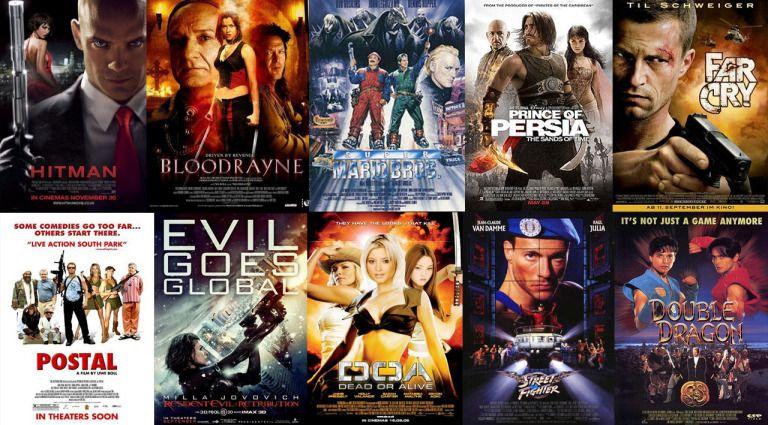
After years of false starts and uneven returns, video game adaptations are now among Hollywood’s most reliable bets, accelerating across theaters and streaming platforms. The Super Mario Bros. Movie powered past $1.3 billion worldwide in 2023 to become the top-grossing game-based film on record, while HBO’s The Last of Us drew tens of millions of viewers per episode and Prime Video’s Fallout quickly ranked among the service’s most-watched series, securing renewals at speed. Even midbudget fare is landing: Universal and Blumhouse’s Five Nights at Freddy’s scored a surprise breakout despite a day-and-date streaming release.
Studios and streamers are racing to lock in franchises with built-in audiences as spending tightens and competition for attention intensifies. A pipeline of projects spans platforms and genres-ranging from live-action takes on The Legend of Zelda and God of War to ongoing series such as Arcane-reflecting a shift toward closer collaboration with game studios and an emphasis on world-building over one-off IP grabs. The result is a reshaped development slate, where consoles and controllers increasingly set the agenda for what shows up on screens large and small.
Table of Contents
- Game Adaptations Emerge as Top Performers Across Box Office Awards and Streaming Retention
- Studios Pivot to Prestige Limited Series and Mid Budget Action and Horror Built on Recognizable IP
- Partner With Original Developers Employ Lore Bibles and Gameplay Literate Writers to Preserve Canon
- Synchronize Global Releases With In Game Tie Ins Robust Localization and Community Led Marketing
- The Conclusion
Game Adaptations Emerge as Top Performers Across Box Office Awards and Streaming Retention
With studios leaning into established IP, recent console-to-screen releases are setting commercial and cultural benchmarks in multiple lanes at once. The Super Mario Bros. Movie crossed the $1B mark worldwide, translating gamer nostalgia into family four-quadrant turnout, while Paramount and Sega’s Sonic franchise sustained momentum with a robust sequel model. Prestige TV has followed suit: HBO’s The Last of Us converted critical favor into major awards traction and rare week-over-week audience growth, as Amazon’s Fallout surged to one of Prime Video’s biggest series launches and held its ground across subsequent weeks. Even hybrid releases are defying gravity-Universal/Blumhouse’s Five Nights at Freddy’s combined a stellar theatrical opening with platform-record viewership on Peacock, underscoring how fan IP can fuel both ticket sales and streaming sessions.
- Box Office: Super Mario Bros. delivers outsized global grosses; Sonic cements a repeatable theatrical playbook.
- Awards: The Last of Us and Arcane convert critical acclaim into Emmys and guild recognition, broadening audience trust in the category.
- Streaming Retention: Fallout posts multi-week Top 10 stability; animated entries like Arcane sustain long-tail engagement beyond premiere windows.
- Pipeline: Fast-tracked slates include Nintendo’s live-action The Legend of Zelda, Amazon’s God of War, Netflix’s Gears of War, and Paramount+’s Knuckles, signaling continued investment across formats.
The throughline is clear: recognizable franchises are delivering box office muscle, awards credibility, and stickier streaming cohorts at once-metrics that rarely align. As talent packages migrate toward brands with built-in communities, expect budgets to skew toward cross-platform plays and release strategies engineered for repeat viewership, from theatrical reappraisals to binge-friendly drops and targeted mid-cycle marketing that converts fandom into retention.
Studios Pivot to Prestige Limited Series and Mid Budget Action and Horror Built on Recognizable IP
Facing cost discipline and subscriber churn, major studios and streamers are channeling game libraries into prestige limited runs that deliver awards-ready craft without open‑ended commitments. The format suits narrative-rich franchises, enabling tighter arcs, marquee talent attachments, and eventized rollouts that convert passionate fan communities into measurable completion rates. Crucially, IP familiarity lowers discovery friction while letting writers reframe lore for mainstream viewers, from origin stories to contained character studies.
- Finite scope, high impact: Six-to-eight episode seasons adapt complex quests without ballooning overhead.
- Talent magnet: Finite schedules and prestige positioning draw A‑list actors and auteurs.
- Programmable hype: Staggered drops and aftershows maximize social chatter and keep catalogs sticky.
- Flexible franchising: Anthology chapters preserve canon while keeping sequel decisions data-driven.
In parallel, film divisions and AVOD/FAST buyers are leaning into mid-budget action and horror built on recognizable game brands-projects engineered for fast turnarounds, global portability, and reliable margins. These titles favor contained settings, practical effects, and clear visual iconography, traveling well across territories and windowing cleanly from targeted theatrical to premium digital. For rights holders, the playbook compounds value: refreshed interest in back catalogs, new licensing lanes, and cross-promotional beats that sync with live-service updates.
- Risk-balanced economics: Moderate spend, outsized upside from genre fandom and repeat viewing.
- Marketing efficiency: Pre-sold characters and symbols cut through crowded release calendars.
- Executional agility: Stunt-forward set pieces and practical creature work compress post timelines.
- Flywheel effect: Tie-ins, collectibles, and in-game events amplify openings and sustain momentum.
Partner With Original Developers Employ Lore Bibles and Gameplay Literate Writers to Preserve Canon
Studios racing to capitalize on games’ built‑in audiences are tightening pipelines with the people who made those worlds work in the first place. Deals now routinely give original creators real authority-executive producer roles with canon vetoes, weekly story-room seats, and sign-off checkpoints. The results are visible: Prime Video’s Fallout kept continuity intact with Bethesda’s Todd Howard embedded in the process; HBO’s The Last of Us paired Craig Mazin with Neil Druckmann to preserve narrative spine; Blumhouse consulted Scott Cawthon on Five Nights at Freddy’s. Where adaptations have skirted source rules, fan blowback has been swift-underscoring that developer partnership is less a courtesy than a risk control.
- Embed authority: Co-showrunner/EP roles for game leads with formal lore sign-off at outline, script, and picture lock.
- Cross-functional councils: Writers, quest designers, narrative leads, and community managers forming a standing “Canon Council.”
- Source transparency: Share internal design docs-quest flowcharts, faction matrices, art bibles, patch notes-to build a unified, versioned lore bible.
- Mechanics translation: Dedicated adapters who map systems (crafting, traversal, party dynamics) to on-screen language and pacing.
The backbone of this approach is a living lore bible maintained like code-versioned, searchable, and enforced in production-paired with writers who are gameplay literate, not just franchise-aware. These writers understand verbs, cooldowns, resource loops, and difficulty curves and can convert them into cinematics without breaking internal logic. In practice, that reduces canon drift, preserves tone, and turns mechanics into signature set pieces that feel earned rather than ornamental.
- Canon deliverables: Master timeline, world map, lexicon/pronunciation guide, no-go list, and continuity matrix across seasons/films.
- Hiring criteria: Documented hours in-game, systems fluency, modding or narrative design experience, and proven adaptation credits.
- Production safeguards: Lore QA passes at beat sheet, draft, and rough cut; red-team reviews for retcon risk; glossary tags in scripts.
- Performance tracking: Fan sentiment analysis, continuity incident logs, and retention during mechanics-driven sequences as KPIs.
Synchronize Global Releases With In Game Tie Ins Robust Localization and Community Led Marketing
Studios and publishers are tightening launch windows so streaming premieres and console/PC updates hit simultaneously, converting premiere-night attention into measurable player activity. The emerging playbook leans on day-and-date drops paired with live-service beats-time-limited quests, crossover skins, and watch-to-unlock rewards-so viewers become participants rather than passive audiences. Campaigns are engineered for global time zones, spoiler control, and app-to-stream switching, with clear KPIs around concurrent sessions, retention, and downstream IAP tied to in-game events that mirror on-screen narratives.
- Co-branded battle passes that refresh with episode arcs and character-driven cosmetics
- Reward tracks for premiere-week challenges, including drops for first 48 hours
- Geo-aware notifications and staggered social assets to minimize spoilers and maximize local primetime
- Anti-leak protocols and server-side toggles that synchronize unlocks across regions
Execution hinges on robust localization and fan-first outreach that moves beyond translation to transcreation, casting recognizable voice talent and adapting cultural references without losing canon. Community programs spotlight creator ecosystems-from regional KOLs to modders-through shareable toolkits, franchise-safe UGC guidelines, and territory-specific activations. The result is a feedback loop where player communities shape momentum, driving tune-in, extending shelf life between episodes, and sustaining engagement after finales.
- Sim-ship dubs/subs with locally resonant taglines, key art, and commerce messaging
- Creator kits (B-roll, overlays, music beds) plus platform-native hooks across TikTok, YouTube, LINE, Weibo, and Discord
- In-market events-LAN cafés, cosplay meets, and esports tie-ins-to convert online hype to attendance
- Community governance via verified forums, spoiler-tag rules, and rapid mod support to keep conversation safe and on-brand
The Conclusion
As studios chase dependable IP and platforms seek event programming, games-to-screen has shifted from gamble to strategy. The pipeline is swelling, partnerships between publishers and producers are tightening, and audiences have shown they will reward faithful, well-made adaptations. Yet the economics remain unforgiving: budgets are rising, franchise fatigue is a risk, and misses can be conspicuous. With a crowded slate ahead and game companies taking a larger hand in development, the next wave will test whether this boom is a durable realignment or a cyclical bet. For now, the message from both box office and streaming dashboards is clear: video game worlds are no longer sidelines but a central arena in the fight for attention-an arena where execution, not just IP, will decide who wins.