

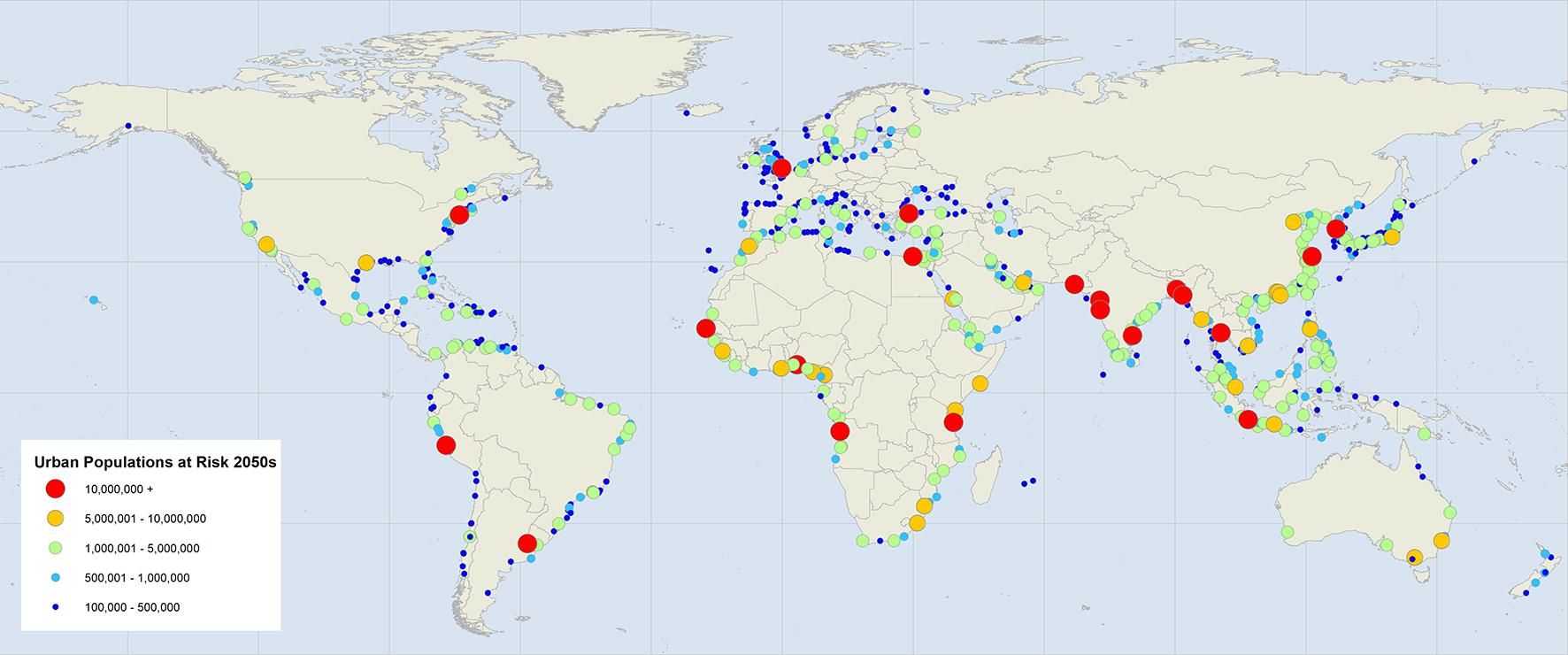
Rising seas, stronger storms and creeping erosion are putting the world’s coastal cities on the front line of climate change, threatening homes, infrastructure and local economies from Miami to Mumbai. Global mean sea level has already climbed by about 20 centimeters since 1900 and is accelerating, scientists warn, with higher tides and storm surges turning once-rare floods into routine emergencies for hundreds of millions living in low-lying urban areas.
The stakes are mounting as subsidence, saltwater intrusion and aging defenses compound the risk to ports, power grids and transit systems that underpin national and global commerce. While some governments race to fortify shorelines and redesign neighborhoods, insurers are retreating from high-risk markets and adaptation costs are rising. For many cities-especially in developing countries-the question is no longer if the water will come, but how fast, how often and who will be left to pay.
Table of Contents
- Rising Seas and Land Subsidence Put Critical Infrastructure at Risk
- New Data Map Extreme Flood Exposure for Miami Mumbai Jakarta and Rotterdam
- Insurance Retreat and Falling Property Values Threaten Local Tax Bases
- Cities Can Act Now with Living Shorelines Stronger Building Codes and Managed Retreat
- Concluding Remarks
Rising Seas and Land Subsidence Put Critical Infrastructure at Risk
Higher baseline water levels combined with sinking ground are eroding safety margins for airports, ports, power stations, and water systems in major coastal hubs. Engineers report more frequent “sunny-day” flooding that corrodes equipment, weakens foundations, and shortens maintenance cycles, while storm surges now push farther inland than design standards anticipated. In Asia, Africa, and the Americas, subsiding deltas and reclaimed shorelines-already compacting under their own weight-are seeing flood thresholds crossed years ahead of schedule. Cities from Jakarta to New Orleans face a compounding risk: even modest sea-level rise can translate into outsized damage when land is settling centimeters per year and defenses were built for past conditions.
- Airports: Runways and navigation equipment exposed to brackish flooding and pavement displacement.
- Ports and logistics hubs: Quay walls and cranes stressed by higher tides; disrupted supply chains.
- Power and telecom: Low-lying substations, cables, and data centers vulnerable to corrosion and outages.
- Water and wastewater: Inflow/infiltration overloads treatment plants; saltwater intrudes into pipes and aquifers.
- Transit tunnels and roads: Chronic seepage and heave increase closure days and repair backlogs.
The operational fallout is already material: insurance premiums and deductibles are rising, bond disclosures are sharpening, and emergency repairs are crowding out long-term upgrades. Officials are fast-tracking elevation projects and surge barriers, but costs are escalating as timelines compress and standards ratchet upward. Groundwater regulation to slow subsidence, stricter siting rules for critical nodes, and nature-based buffers are moving from pilot to policy in several jurisdictions. Analysts say the decisive factor will be funding-whether cities can align public finance, private capital, and insurance to stay ahead of accelerating risks.
- Priorities now: Elevate or relocate key substations and control rooms; harden backup power.
- Manage subsidence: Curb groundwater extraction; expand managed aquifer recharge; enforce building loads.
- Redesign standards: Use forward-looking flood maps and compound-risk scenarios for all new builds.
- Layered defenses: Combine surge barriers with wetlands, living shorelines, and permeable streets.
- Continuity planning: Map interdependencies and stage spares to prevent cascading failures.
New Data Map Extreme Flood Exposure for Miami Mumbai Jakarta and Rotterdam
A new geospatial analysis released this week traces neighborhood-level flood exposure across four coastal hubs, finding that accelerating sea-level rise, heavier rainfall, and-in some cases-ground subsidence are converging to elevate risk. In South Florida, Miami’s barrier islands and low-lying zones around Biscayne Bay show widening pathways for tidal flooding and cyclone-driven surge. Mumbai’s floodplains and reclaimed tracts along the Mithi River and Thane Creek are flagged for deep, longer-duration inundation linked to extreme monsoon events. Jakarta’s north coast posts the most acute exposure, where sinking land compounds coastal hazards. And while Rotterdam benefits from world-class defenses, modeling still indicates a measurable residual risk from compound Rhine-Meuse peaks and North Sea surge, particularly in outer-dike areas and key transit corridors.
- Miami: High-risk neighborhoods include barrier island communities, parts of Little River and Shorecrest, and low-lying pockets around Biscayne Bay; exposure is amplified by king tides and storm surge channels.
- Mumbai: Hotspots cluster along the Mithi floodway, Sion-Dharavi, and eastern waterfronts; drainage chokepoints and encroached wetlands heighten depth and duration of floods.
- Jakarta: Northern districts near river mouths and coastal embankments face compound hazards as subsidence outpaces global sea-level rise; overflow risks extend inland along canal networks.
- Rotterdam: Strong primary defenses and the Maeslantkering reduce catastrophic odds, yet outer-dike zones and industrial assets remain exposed during extreme joint river-coastal events.
The dataset overlays hazard projections with people, infrastructure, and asset value, indicating elevated exposure for critical infrastructure-ports, hospitals, wastewater plants, airports-and for dense, lower-income districts with limited adaptive capacity. Policy signals include fast-tracking drainage upgrades, elevating roads and substations, restoring mangroves and wetlands, enforcing resilient building codes, and piloting strategic relocation where defenses are untenable. Analysts stress better elevation data, open risk-sharing between city agencies and insurers, and improved early warning as near-term priorities, noting that compounding extremes are projected to expand materially in the 2030s-2050s without decisive adaptation.
Insurance Retreat and Falling Property Values Threaten Local Tax Bases
Private carriers are narrowing coverage or exiting high-risk coastal markets as loss costs climb, reinsurance tightens, and catastrophe models are recalibrated. The result is a wave of non-renewals, higher deductibles, and premium spikes that are chilling transactions and resetting comparable sales. As appraisals catch up to discounted closings, assessed values slip, pulling down the tax base in communities where property levies fund schools, first responders, and shoreline defenses. Bond analysts warn that concentrated exposure to climate perils is migrating from insurers’ balance sheets to city budgets, with knock-on effects for credit ratings and the cost of capital.
- Revenues at risk: ad valorem property taxes, transfer and recording fees, tourism-related levies, and special assessment districts tied to waterfront amenities.
- Costs rising: flood control and stormwater upgrades, beach nourishment, emergency response, and premium increases on municipal insurance portfolios.
- Market distortions: reliance on residual “last resort” plans, coverage gaps that stall mortgages, and buyer discounts that depress neighborhood benchmarks.
Local officials are weighing millage hikes, parcel fees, and targeted resilience bonds to plug gaps while pursuing buyouts, revised zoning, and nature-based defenses to stabilize risk profiles. Some states are expanding backstops and FAIR plans, but affordability and moral hazard concerns persist, particularly for lower-income homeowners who face rising costs and declining equity simultaneously. Without a credible path to risk reduction and sustainable insurance, analysts expect widening structural deficits within five years in the most exposed districts, forcing difficult choices between service cuts, higher rates, or accelerated retreat-and reshaping coastal fiscal maps well beyond the shoreline.
Cities Can Act Now with Living Shorelines Stronger Building Codes and Managed Retreat
City officials are moving from studies to deployment as seas inch higher and storms intensify. Nature-based defenses and tougher construction rules are being fast-tracked to blunt surge, reduce losses, and keep critical services online. Immediate options include:
- Nature-based buffers: Restore wetlands, seed oyster reefs, and rebuild dune systems to absorb wave energy and stabilize shorelines without hard walls.
- Resilient design standards: Update codes to require higher freeboard, breakaway walls, elevated utilities, and floodproofing for homes, hospitals, and transit hubs.
- Risk-informed zoning: Map high-hazard zones and adopt overlay districts with wider setbacks, limits on ground-floor uses, and no new critical facilities in repetitive-loss areas.
- Rapid retrofits: Offer grants and fee waivers for flood vents, roof tie-downs, storm shutters, and dry/wet floodproofing to harden existing buildings before the next season.
Where staying in place is no longer safe or economical, planners are turning to structured, equitable relocation-moving people and infrastructure out of harm’s way while protecting livelihoods and tax bases. Tools now on the table:
- Voluntary buyouts and rolling easements: Prioritize repetitive-loss properties with fair-market-plus payouts and timelines that avoid displacement shocks.
- Phased relocation: Use land banking and transferable development rights to shift growth inland; relocate roads, substations, and water lines from flood corridors in stages.
- Financing mechanisms: Issue resilience bonds and catastrophe-linked debt; pair federal mitigation funds with insurance rebates tied to verified risk reduction.
- Community-led planning: Guarantee bilingual outreach, tenant protections, and preservation of cultural assets so at-risk neighborhoods shape-and benefit from-where and how they move.
Concluding Remarks
As projections point to higher seas and more frequent extreme weather, officials from Miami to Mumbai face costly choices that will define their shorelines for decades. Engineers are testing defenses, insurers are recalibrating risk, and residents are weighing whether to raise homes, relocate or stay put – decisions increasingly shaped by tightening budgets and shifting timelines.
Much now hinges on the pace of global emissions cuts and the speed of adaptation funding. With new flood maps due in several countries and climate negotiations set to resume at the next UN summit, policymakers say the window to reduce future losses is narrowing, even as cities work to manage the impacts already arriving at their doors.